Desserts
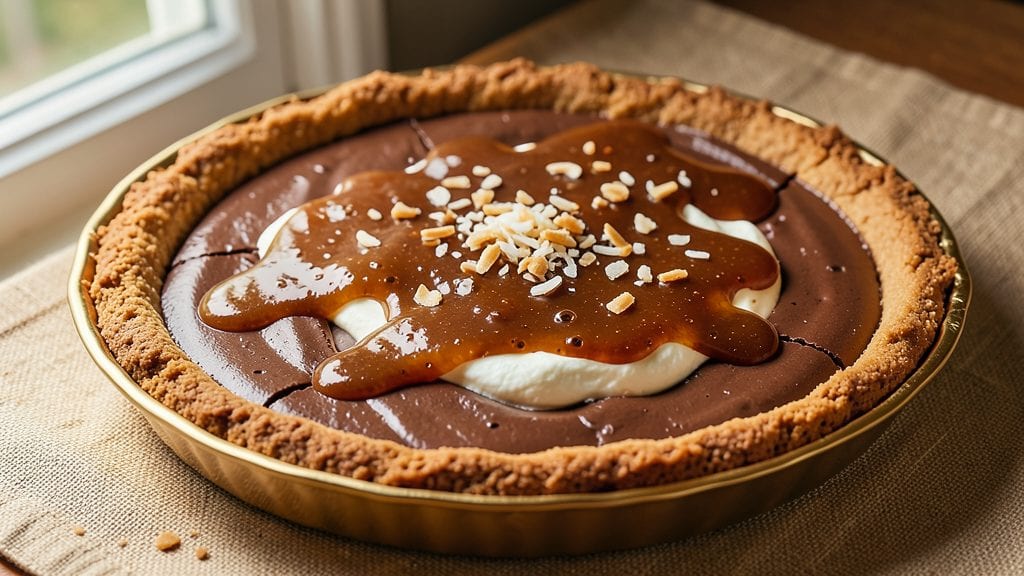
Baker's original German chocolate pie delivers the perfect marriage of rich cocoa, toasted nuts, and velvety vanilla custard—all crowned with that signature oat crunch.
The secret lies in balancing a buttery graham cracker crust with a fudgy filling that's both dense and tender, infused with coffee notes that define authentic German chocolate flavor.
After years of perfecting this recipe, I've found the key is precise timing in the custard stage and toasting the pecans just enough to enhance their natural sweetness without burning.
What sets this pie apart is the layered texture experience: the crispy graham cracker crust gives way to a creamy custard base, then the nutty oat topping adds that satisfying crunch with every bite.
The recipe uses simple pantry staples but requires attention to detail during the baking process—particularly when baking the filling to achieve that signature fudgy texture without cracking.
For those who prefer a lighter version, substituting half the graham crackers with a shortbread crust works beautifully while maintaining the same rich flavor profile.
The result is a pie that's rich enough to satisfy chocolate cravings but balanced enough to serve as a satisfying dessert after a hearty meal. The coffee-infused custard adds depth that store-bought versions simply can't match, while the toasted pecans and oat topping provide that essential crunch.
This recipe delivers restaurant-quality German chocolate pie with the convenience of homemade baking—perfect for holiday gatherings or when you want to impress without spending hours in the kitchen.
Once baked and cooled, the pie develops even more complex flavors as it rests, making it ideal to prepare a day ahead. The combination of warm spices, toasted nuts, and velvety chocolate creates a dessert that feels both nostalgic and luxurious.
Whether you're recreating a childhood favorite or introducing someone to German chocolate pie for the first time, this recipe delivers the authentic taste experience that made it a classic.
Ingredients for baker's original german chocolate pie
Essential ingredients for a German chocolate pie with restaurant-quality depth and texture.
| Ingredient | Amount | Notes |
|---|---|---|
| Graham Cracker Crust 🍪 | 1 package | 15 oz box, crushed into fine crumbs |
| Unsalted Butter 🧈 | 1 cup | Cold, cubed for crust texture |
| Granulated Sugar 🍚 | 1 ½ cups | White sugar, standard grade |
| Large Eggs 🥚 | 2 whole | Room temperature for smooth batter |
| Vanilla Extract 🌿 | 2 tsp | Pure, high-quality vanilla |
| All-Purpose Flour 🌾 | ½ cup | For crust reinforcement |
| Instant Espresso Powder ☕ | 1 tbsp | For authentic coffee depth |
| Semi-Sweet Chocolate Chips 🍫 | 1 ½ cups | High-quality, 60% cacao |
| Pecans 🌰 | 1 ½ cups | Chopped, toasted to perfection |
| Old-Fashioned Rolled Oats 🍞 | 1 cup | For signature oat topping |
| Light Brown Sugar 🍚 | ½ cup | Packed, for topping sweetness |
| Melted Butter 🧈 | ½ cup | Cooled, for oat mixture |
| Heavy Cream 🥛 | 1 cup | Full-fat for custard richness |
| Cornstarch 🌾 | 2 tbsp | For custard thickening |
| Salt 🧂 | ½ tsp | Fine sea salt for balance |
The graham cracker crust sets the foundation, so Hershey's or Keebler boxes work best—they're consistently buttery and sturdy. For the pecans, raw, shelled pecans from the bulk section toast beautifully, but pre-toasted from Trader Joe's saves time. The espresso powder matters—Starbucks or La Espresso brands ensure that authentic coffee note without bitterness. Chocolate chips should be 60-65% cacao; Ghirardelli or Guittard are reliable choices. Brown sugar should be light and packed—Domino or C&H brands work perfectly.
No instant espresso powder? 1 tbsp strong brewed coffee works as a substitute, but reduce the liquid slightly to avoid sogginess. Substituting pecans with walnuts or almonds changes the flavor profile—pecans are non-negotiable for authenticity. For a lighter crust, replace half the graham crackers with shortbread cookie crumbs. The oats must be old-fashioned rolled—not quick oats, which won't toast properly. If you're short on heavy cream, half-and-half plus 1 tbsp butter mimics the richness.
Toast the pecans in a dry skillet over medium heat until fragrant—about 5-7 minutes. Store the crust mixture in the fridge for up to 2 days, while the oat topping keeps for 3 days covered at room temperature. The custard filling can be prepped a day ahead and chilled, but bake it within 24 hours for optimal texture. The pie develops deeper flavors as it rests—overnight in the fridge is ideal before serving.
Why You'll Love This Recipe
- No-Fuss Crust: I swear by the graham cracker crust here—it’s pre-crushed, pre-measured, and just snaps into place. No rolling dough, no stress, and it holds up like a dream, even when you’re cutting seconds.
- Rich Without Effort: That creamy filling? It’s basically a hug in dessert form. The butter and sugar melt into something velvety, while the vanilla extract (don’t skimp!) adds this warm, cozy depth that makes it taste like a bakery secret.
- Holiday or Hangry Fix: Serve it at Thanksgiving when you’re drowning in casseroles, or pull it out on a Tuesday when you just need something sweet. Honestly, it’s my go-to for potlucks because it’s always a crowd-pleaser—no one leaves a slice.
- Budget-Friendly Luxury: You’re using pantry staples here: butter, sugar, eggs. The graham crackers? Cheap and versatile. And the best part? It keeps for days in the fridge, so you get multiple servings without breaking the bank—or buying more ingredients.
Step-by-step instructions for baker's original German chocolate pie
This classic pie delivers a perfect balance of textures—crispy graham crust, rich chocolate custard, and a nutty oat crown.
Prepare the Graham Cracker Crust
Preheat your oven to 375°F. Open the 1 package Graham Cracker Crust and carefully press the entire crust into an ungreased 9-inch pie dish, forming an even layer along the bottom and up the sides. Use a rolling pin or your fingers to create a smooth, flat surface—press firmly to eliminate any air pockets. This ensures a sturdy base that won't crack during baking.
For extra insurance, chill the prepared crust in the refrigerator for 15 minutes while you prepare the filling. This step prevents the crust from absorbing too much moisture from the custard, which could make it soggy. If you notice any tears or gaps, patch them with additional crushed graham cracker crumbs mixed with a small amount of melted butter.
Make the Chocolate Custard Filling
In a medium saucepan, melt 1 cup unsalted butter over medium heat. Once fully melted, remove from heat and whisk in 1.5 cups granulated sugar, 2 whole large eggs, 2 teaspoons vanilla extract, 0.5 cup all-purpose flour, 1 tablespoon instant espresso powder, 1.5 cups semi-sweet chocolate chips, and 0.5 teaspoon salt. The mixture should be smooth but slightly thick—this is your base custard.
Return the saucepan to low heat and stir constantly with a wooden spoon for 5-7 minutes until the mixture thickens enough to coat the back of the spoon. You're aiming for a pudding-like consistency—if it's too runny, add 1 tablespoon cornstarch mixed with 1 tablespoon cold water to stabilize it. Pour the warm custard into the chilled crust, spreading it evenly with a spatula.
Assemble the Pecan-Oat Topping
In a separate bowl, combine 1.5 cups pecans, 1 cup old-fashioned rolled oats, 0.5 cup light brown sugar, and the 0.5 cup melted butter. Mix thoroughly until the oats and pecans are evenly coated. This topping is the secret to the pie's signature texture—it should hold together when pressed but still crumble slightly for a rustic finish.
Sprinkle the pecan-oat mixture evenly over the custard, pressing down gently with the back of a spoon to create a compact layer. The goal is to create a cohesive crown that will brown beautifully in the oven. For extra flavor, lightly toast the pecans in a dry skillet over medium heat for 3-4 minutes before mixing them into the topping—this enhances their natural sweetness and adds depth to the pie.
Bake to Golden Perfection
Place the assembled pie on a baking sheet lined with parchment paper to catch any drips. Bake in the preheated 375°F oven for 45-50 minutes, or until the filling is set and the topping is golden brown with crisp edges. You'll know it's done when the center of the pie jiggles slightly but doesn't wobble like uncooked custard.
Remove the pie from the oven and let it cool completely on a wire rack for at least 2 hours. This resting period allows the custard to fully set and the layers to meld together. Serve chilled or at room temperature, and enjoy the perfect harmony of textures—crispy crust, creamy chocolate filling, and nutty oat crown in every bite.
Pro Tips For Making Baker'S Original German Chocolate Pie
- Preheat Crust Properly: After assembling your graham cracker crust, pop it in the oven for 5–7 minutes at 350°F before adding the filling. This prevents a soggy bottom—trust me, I’ve seen enough pies where the crust turned to mush because someone skipped this. A lightly toasted crust holds up better and keeps the texture crisp.
- Whisk Eggs Until Ribbon Stage: Don’t just crack and stir those eggs—whisk them until the mixture forms a slow ribbon when you lift the whisk. This ensures a smoother, silkier filling that won’t curdle when it hits the hot butter and sugar. I learned this the hard way when my first batch had a weird, lumpy texture.
- Temper the Butter: Cut your unsalted butter into small cubes and let it sit at room temperature for 20–30 minutes before mixing it into the hot sugar-egg mixture. Cold butter clumps and makes the filling grainy, while room-temp butter blends in silky smooth. Sounds simple, but it’s the thing that matters most for that classic German chocolate creaminess.
- Cool Before Chilling: Let the pie sit at room temperature for 1–2 hours after baking before transferring it to the fridge. Rushing this step causes condensation, which turns your crust soggy. I was skeptical until I tried it—now I swear by the patience. (Yes, even if you’re impatient like me.)
Regional styles of this baker's original german chocolate pie
German Chocolate Origins
The German chocolate pie actually traces its roots to Sam German, a candy maker from Pennsylvania in the 1850s—not Germany at all! His German's Chocolate baking bar, infused with cocoa, coffee, and nuts, became the inspiration for this dessert.
The classic pie emerged in the 1950s when bakers combined the bar's flavors with custard and a nutty topping. 🌰
Southern U.S. Twist
In the Southern United States, German chocolate pie became a staple at holiday gatherings, often served with whipped cream and a sprinkle of powdered sugar. The region's love for rich, buttery desserts led to variations like pecan-free versions (using walnuts) and boozy custards with bourbon or Kahlúa.
The graham cracker crust became iconic here, replacing traditional pie dough.
Midwest Homestyle Adaptation
Midwestern bakers often double the pecan-oat topping for extra crunch, creating a "nut crown" that's almost like a separate layer. They also frequently add a pinch of cinnamon to the custard for warmth.
In Minnesota and Wisconsin, it's common to serve this pie with vanilla ice cream instead of whipped cream, balancing the richness.
Modern Gourmet Upgrades
Today's chefs elevate German chocolate pie with techniques like dark chocolate ganache in the custard (replacing half the semi-sweet chips) or caramelized pecans in the topping.
Some even use espresso-infused butter in the crust for deeper coffee notes. The oat topping might include toasted coconut or chopped dates for texture variety. 💫
European-Inspired Variations
In Germany and Austria, bakers sometimes replace graham crackers with a shortbread crust and add almond paste to the custard. The pecans are often swapped for hazelnuts, and the pie is served with crème fraîche instead of whipped cream.
These versions lean into lighter, less sweet profiles while keeping the chocolate-coffee-nut essence intact.
Vegan-Friendly Adaptations
For plant-based diets, coconut oil replaces butter, flax eggs bind the custard, and vegan chocolate chips (like Enjoy Life brand) ensure richness.
The graham crust can be made with vegan graham crackers or a nut-based crust of almonds and dates. Coconut whipped cream is the go-to topping, though it lacks the traditional airiness. 🌱
Nutrition facts
Frequently asked questions
Why does this recipe call for instant espresso powder instead of regular coffee?
Instant espresso powder provides a concentrated coffee flavor without adding extra liquid to the custard, which could make the filling too runny. Just 1 tablespoon delivers that signature German chocolate depth without bitterness. For a quick swap, use 1 tablespoon strong brewed coffee and reduce other liquids by 1 tablespoon to maintain texture.
Can I make the crust ahead of time?
The graham cracker crust mixture can be prepped and chilled for up to 2 days before baking. For extra stability, press it into the pie dish and freeze it for 30 minutes before adding the filling. This prevents sogginess while you work on the custard and topping.
What's the secret to getting the custard just right?
The custard needs to thicken to a pudding-like consistency—it should coat the back of a spoon but still be pourable. If it's too thin, whisk in 1 tablespoon cornstarch mixed with 1 tablespoon cold water to stabilize it. Overcooking will make it grainy, so remove it from heat as soon as it thickens.
How do I store leftovers?
Cover the pie tightly with plastic wrap and refrigerate for up to 4 days. For longer storage, wrap individual slices in plastic and freeze for up to 2 months. Thaw overnight in the fridge—never at room temperature—to preserve texture. The flavors actually improve after 24 hours of resting!
Can I substitute walnuts for pecans?
While walnuts will work, they lack the buttery richness of pecans that makes this pie special. If you must substitute, toast the walnuts longer (5-7 minutes) to enhance their flavor. For authenticity, pecans are non-negotiable—they provide that signature crunch and sweetness that defines German chocolate pie.