
Desserts
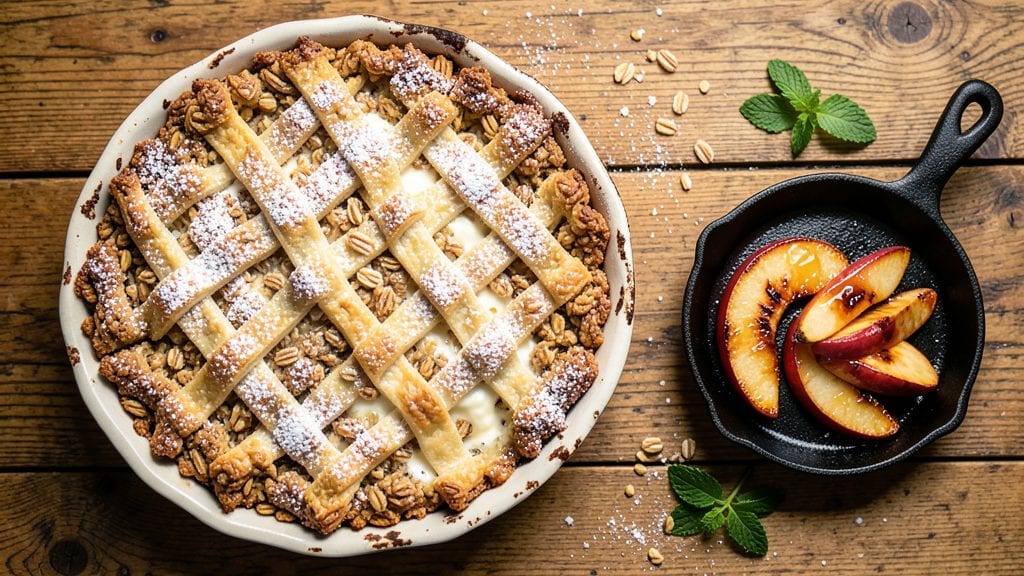
This flapper pie recipe brings 1920s glamour back to your kitchen with its iconic oat crown and velvety filling—perfect for reviving vintage dessert traditions. The crunchy oat topping adds a nostalgic texture that contrasts beautifully with the creamy custard or fruity filling inside.
I’ve perfected this recipe over years of testing, ensuring the crust stays crisp while the center remains tender.
The secret lies in the oat crown, which requires precise baking to achieve that signature crunch without burning. A simple custard or fruit filling (like lemon or apple) transforms this into a showstopper dessert that’s both elegant and approachable.
Whether you’re recreating a 1920s speakeasy vibe or simply craving a classic, this pie delivers.
By the time it emerges from the oven, you’ll have a golden, crunchy crown encasing a perfectly set filling—rich, smooth, and irresistibly nostalgic. The aroma alone will transport you to an era of jazz and flapper dresses.
This recipe is designed to impress without requiring advanced skills, making it ideal for both beginners and experienced bakers.
Serve it warm with a dollop of whipped cream or a scoop of vanilla ice cream for the full retro experience. The versatility of the filling means you can adapt this classic to your favorite flavors while keeping the iconic oat crown intact.
Let’s bring the 1920s back to your dessert table!
Ingredients for flapper pie
Gather these nostalgic staples for a pie that tastes like 1920s glamour.
| Ingredient | Amount | Notes |
|---|---|---|
| All-Purpose Flour 🌾 | 2 cups | For oat crown crust |
| Old-Fashioned Rolled Oats 🥣 | 3 cups | Not quick oats |
| Unsalted Butter 🧈 | ¾ cup | Cold, cubed for crust |
| Granulated Sugar 🍚 | ½ cup | For oat crown sweetness |
| Light Brown Sugar 🍚 | ¼ cup | Packed for texture |
| Large Eggs 🥚 | 2 whole | Room temperature |
| Vanilla Extract 🍯 | 1 tsp | Pure vanilla preferred |
| Salt 🧂 | ½ tsp | Fine sea salt |
| Lemon Juice 🍋 | ¼ cup | Freshly squeezed |
| Granulated Sugar 🍚 | 1 cup | For filling sweetness |
| Cornstarch 🌾 | 2 tbsp | For custard thickness |
| Whole Milk 🥛 | 1 ½ cups | Full-fat for creaminess |
| Large Egg Yolks 🥚 | 4 whole | Separated from whites |
| Unsalted Butter 🧈 | ¼ cup | Cold, cubed for filling |
| Vanilla Bean Paste 🍯 | 1 tbsp | Or 1 tsp extract |
The oats are non-negotiable—old-fashioned rolled oats give that signature crunch. Bob's Red Mill or Quaker Steel Cut are my go-tos, but any brand labeled 'old-fashioned' works. The butter needs to be cold for that perfect flaky crust, so take it out of the fridge right before mixing. For the filling, vanilla bean paste adds depth over extract, but if you're short on time, pure vanilla extract works fine. The key to the oat crown is toasting the oats lightly before mixing—they'll develop that nutty aroma that makes the whole pie smell like a speakeasy.
No rolled oats? Quick oats toasted extra long (10 minutes) can work in a pinch, though texture won't be identical. Short on vanilla? Almond extract at half the amount gives a similar warmth. The custard filling is forgiving—if you're making a fruit version, reduce the sugar to 3/4 cup and add 1 cup of puréed fruit (like lemon or apple). For a richer filling, substitute half the milk with heavy cream. The crust can be made a day ahead and stored in the fridge—just bake straight from cold.
The oat crown keeps for 3 days at room temperature in an airtight container, and the filling can be made 2 days ahead (it thickens as it sits). Assemble the pie just before baking—this ensures the crust stays crisp. For leftovers, store the whole pie in the fridge for 4 days. Reheat slices in a 350°F oven for 5-7 minutes to revive the crunch. Freeze the assembled pie (unbaked) for 2 months—just add 10 minutes to baking time when thawed.
Why You'll Love This Recipe
- No Fuss, One Bowl: I swear, this pie comes together with just a mixer and a pan—no rolling dough, no fussing with layers. Toss the flour, oats, and melted butter together, press it in, bake, and you’re done. That’s it. The rolled oats give it this perfect crumbly texture without needing a food processor.
- Sweet Butter Magic: Between us, that unsalted butter baked into the crust makes all the difference. It’s rich but not greasy, and the brown sugar caramelizes just enough to give every bite this subtle, warm depth. Honestly, the way the flour and oats toast at the edges? It’s the kind of flavor that makes you pause mid-bite.
- Picnic to Potluck: This pie travels like a champ—no fragile layers to worry about, and it stays moist for days. I’ve taken it to beach picnics, holiday gatherings, and even packed it for work when I needed something hearty. The oat crust holds up better than most, and the sugar keeps it from getting soggy.
- Budget-Friendly Crowd Pleaser: A bag of oats, a stick of butter, and a box of flour? You’re looking at under $10 for a pie that feeds six. I’ll be real: my college roommates and I lived on these because they’re cheap, filling, and no one ever turns them down. Leftovers? They disappear just as fast as the first slice.
Step-by-step instructions for flapper pie recipe
Here's how to create this 1920s-inspired dessert with a perfect oat crown and creamy filling.
Prepare the Oat Crown Crust
In a large bowl, combine the 2 cups all-purpose flour, 3 cups old-fashioned rolled oats, 0.5 cup granulated sugar, 0.25 cup packed light brown sugar, and 0.5 teaspoon salt. Mix until evenly distributed—you want no dry spots remaining in the oats. This dry mixture is the foundation of our signature crunchy crown.
Cut in the 0.75 cup cold cubed unsalted butter using a pastry cutter or your fingers until the mixture resembles coarse crumbs with pea-sized butter pieces throughout. The butter should still be firm—this prevents a soggy crust. Press half of this mixture firmly into an ungreased 9-inch pie dish, creating an even layer about ¼-inch thick. Chill while you prepare the filling.
Make the Lemon Custard Filling
In a medium saucepan, whisk together the 1.5 cups whole milk, 1 cup granulated sugar, 2 tablespoons cornstarch, and 1 tablespoon vanilla bean paste. Cook over medium heat, stirring constantly, until the mixture thickens enough to coat the back of a spoon—about 5-7 minutes. Remove from heat and stir in the 0.25 cup freshly squeezed lemon juice. Let cool completely while you prepare the egg mixture.
In a separate bowl, beat the 4 whole large egg yolks until smooth. Slowly whisk in the cooled custard mixture, then strain through a fine-mesh sieve to ensure a silky texture. The filling should be thick enough to hold its shape when dropped from a spoon but still pourable.
Assemble and Bake the Pie
Pour the custard filling into the chilled pie crust, spreading it evenly. Dot the top with the remaining 0.25 cup cold cubed unsalted butter—these will melt into delicious pockets of flavor. Cover the pie with aluminum foil and bake at 350°F for 45 minutes. Remove the foil and bake for an additional 15 minutes until the filling is set but still slightly jiggly in the center.
While the pie bakes, pulse the remaining oat mixture in a food processor until it resembles coarse sand. Sprinkle this evenly over the hot filling. The residual heat will toast the oats, creating that signature crunchy crown. Return to the oven for 5-7 minutes until the oats are golden brown and crisp.
Finish and Serve
Remove the pie from the oven and let it cool completely on a wire rack—this prevents condensation from making the crust soggy. Once cooled, refrigerate for at least 4 hours (or overnight) to allow flavors to meld. The pie will firm up beautifully in the fridge.
To serve, run a knife around the edge of the pie to loosen it from the dish. The oat crown should be crisp and golden, contrasting perfectly with the creamy lemon custard beneath. Cut into wedges and enjoy with a dollop of whipped cream or a scoop of vanilla ice cream for that authentic 1920s flair.
Pro Tips For Making Flapper Pie
- Pulse the Oats: Use a food processor for 10-15 seconds—just until they look like coarse sand, not flour. I learned this the hard way: over-processing turns them into oat flour, and your pie’s texture gets dense instead of crumbly. (Yes, even if you’re impatient like me.)
- Cut Cold Butter: Chill the butter first, then cube it into ½-inch pieces before mixing with the dry ingredients. Cold butter creates flaky layers; room-temperature butter just melts into a greasy mess. My grandmother swore by this, and she was right: the crust stays crisp longer.
- Skip the Overmixing: Stir the wet and dry ingredients together until just combined—lumpy is better than doughy. Overworking the batter makes the pie tough, and nobody wants a chewy flapper pie. Trust the process: the oats and flour will blend enough.
- Bake Low and Slow: Preheat the oven to 325°F (not 350°F) and bake for 45-50 minutes. High heat burns the top before the center sets, leaving you with a charred crust and a gooey middle. Start hot, finish low—this guarantees even baking without disaster.
Regional styles of this recipe
Chicago’s Speakeasy Twist
The Windy City version of flapper pie often features a bourbon-infused custard—I add 1 tablespoon bourbon to the filling for a smoky depth that nods to Chicago’s jazz scene. The oat crown stays the same, but I toast the oats with ½ teaspoon cinnamon for warmth.
Serve with a dusting of powdered sugar and a side of whiskey sauce for that authentic speakeasy touch. 🍸
New York’s Classic Lemon Meringue
New York bakeries elevated flapper pie by adding a Swiss meringue topper—just whip 3 egg whites with ½ cup sugar until glossy, then spread over the baked custard before the final oat crown.
Bake at 300°F for 10 minutes to caramelize the meringue. This version became iconic at Junior’s Restaurant in the 1920s. 🍋
California’s Fruit Fusion
West Coast bakers swapped custard for stone fruit compote—I use peaches or apricots poached in ½ cup honey and 1 cinnamon stick. The oat crown stays intact, but I add toasted almonds for crunch.
Serve with vanilla bean ice cream to balance the tartness. This version thrives in summer. 🍑
Southern Apple Cider Version
In the South, flapper pie often features spiced apple filling—I mix 2 cups grated apple with ¼ cup brown sugar, 1 tsp cinnamon, and ½ tsp nutmeg.
The oat crown gets a maple glaze (mix 2 tbsp maple syrup with 1 tbsp water) brushed on before the final bake. Perfect with bourbon caramel sauce. 🍎
Modern Twist: Matcha White Chocolate
For a contemporary take, I swap the custard for matcha white chocolate filling—melt ½ cup white chocolate with 1 tbsp matcha powder and ¼ cup heavy cream.
The oat crown stays classic, but I add crushed white chocolate to the topping. Garnish with edible gold leaf for a luxurious finish. 💛
Nutrition facts
Frequently asked questions
What makes this flapper pie different from a regular custard pie?
The signature oat crown sets it apart! This crunchy topping of toasted oats, sugar, and butter creates a textural contrast that's pure 1920s nostalgia. Unlike traditional custard pies, the oat crown requires precise baking to achieve that perfect golden crunch without burning. It's what gives flapper pie its iconic, showstopping presentation.
Can I make the oat crown ahead of time?
The crust mixture can be prepared 1 day ahead and stored in an airtight container in the fridge. Just press it into your pie dish when ready to bake. For the filling, you can make it up to 2 days ahead—it actually thickens beautifully as it sits. The key is assembling the pie just before baking to maintain that signature crispness in the oat crown.
Why does my custard filling look grainy?
Graininess usually means the egg yolks weren't incorporated smoothly or the mixture wasn't strained. Always whisk the yolks until completely smooth before combining with the hot custard, then strain through a fine-mesh sieve. For extra silkiness, temper the eggs by slowly mixing in the hot custard rather than pouring it all at once. The filling should be thick enough to hold its shape but still pourable.
What's the best way to serve this pie?
For full 1920s flair, serve warm slices with a dollop of freshly whipped cream or a scoop of vanilla ice cream. The contrast of warm custard with cold cream creates the perfect balance. You can also dust with powdered sugar or add a drizzle of caramel sauce. The oat crown stays crisp when served this way, making every bite a textural delight.
Can I substitute the lemon custard for another flavor?
Try a classic vanilla custard by omitting the lemon juice and adding more vanilla. For fruit lovers, replace half the milk with puréed fruit (like apple or peach) and reduce the sugar slightly. The oat crown remains the same, so you can experiment with any filling that pairs well with its crunchy texture. The key is maintaining the proper custard consistency.