
Main Courses
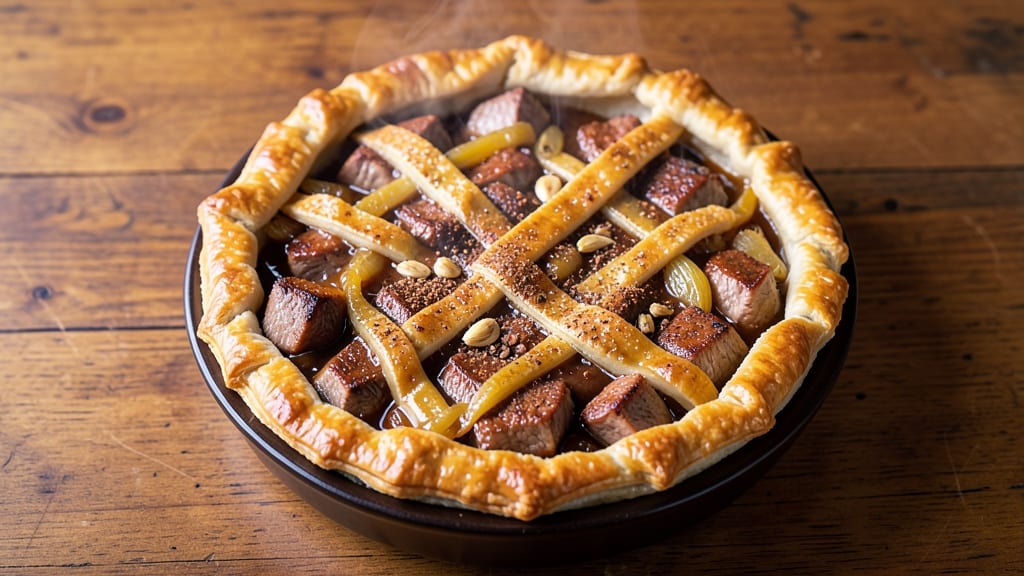
This lamb meat pie recipe delivers the perfect balance of tender spiced filling and flaky pastry crust that separates it from ordinary meat pies.
After years of perfecting the technique—from blind-baking the crust to sealing edges with precision—I’ve developed a method that ensures golden, crisp layers without the dreaded soggy bottom. The secret lies in a well-seasoned lamb filling that simmers until rich and aromatic, while the pastry achieves that signature buttery flakiness.
The filling begins with lamb shoulder, slow-cooked with onions, garlic, and a blend of warm spices like cinnamon and allspice that elevate the dish beyond traditional flavors.
Meanwhile, the pastry gets its signature texture through a combination of cold butter and proper rolling technique, ensuring every bite delivers that satisfying contrast between tender meat and crisp crust. This is the kind of pie that commands attention at any dinner table.
What sets this recipe apart is the attention to detail—from the precise timing of the filling to the art of blind-baking the crust. The result? A pie that’s foolproof for special occasions but simple enough for a weeknight dinner.
The aroma alone will have everyone anticipating that first forkful of rich, spiced lamb encased in golden, flaky pastry. Let’s get started on creating a showstopper.
Serve with a side of minted peas or a simple gravy to soak up every last bit of flavor. The leftovers reheat beautifully, making this the ultimate recipe for meal prep or holiday gatherings.
Each slice is a testament to the harmony of technique and tradition—where every element works together to create something truly memorable.
Ingredients for lamb meat pie
Sixteen ingredients, two layers of perfection—spiced lamb filling meets flaky pastry crust.
| Ingredient | Amount | Notes |
|---|---|---|
| Lamb Shoulder 🐑 | 2 lb | Bone-in, cut into 1.5-inch cubes |
| Yellow Onions 🧅 | 1 whole | Medium, thinly sliced |
| Garlic Cloves 🧄 | 4 cloves | Peeled, finely minced |
| Ground Cinnamon 🌿 | ½ tsp | High-quality, aromatic |
| Ground Allspice 🌶️ | ¼ tsp | Freshly ground preferred |
| Ground Cloves 🌶️ | ¼ tsp | Whole cloves ground |
| Ground Nutmeg 🌶️ | ¼ tsp | Freshly grated nutmeg |
| Diamond Crystal Kosher Salt 🧂 | 1 ½ tsp | Adjust to taste |
| Fresh Thyme Leaves 🌿 | ½ tsp | Or 0.25 tsp dried |
| Unsalted Butter 🧈 | ¾ cup | Cold, cubed for pastry |
| All-Purpose Flour 🌾 | 2 cups | Plus extra for dusting |
| Ice Water 💧 | ⅓ cup | For dough elasticity |
| Heavy Cream 🥛 | ½ cup | For pie filling richness |
| Beef Stock 🍲 | ½ cup | Low-sodium preferred |
| Fresh Parsley 🌿 | ¼ cup | Chopped, for garnish |
The lamb shoulder is non-negotiable for this pie—its collagen-rich connective tissue melts into the filling during slow cooking, creating that signature richness. Opt for a well-marbled cut from Whole Foods or a trusted butcher, where the meat is bright red with visible fat marbling. If you can't find bone-in, substitute with boneless lamb shoulder and add a lamb neck bone for extra depth of flavor. The onions should be sweet, not bitter—Yellow Sweet Onions from Trader Joe's are ideal. For the spices, Penzeys Spices offers high-quality ground cinnamon and allspice, but any reputable brand will suffice as long as the spices are fresh and aromatic. The nutmeg should be freshly grated for optimal flavor, and the thyme should be vibrant green with no signs of wilting.
No lamb shoulder? Lamb leg or neck works equally well, though cooking times may vary. Substituting beef for lamb changes the dish entirely, but if you must, use chuck roast with extra spices—double the allspice and cloves. The pastry requires cold butter for flakiness, so Plugrá or European-style butter is ideal. If your butter isn't cold, chill it for 30 minutes before mixing. For the flour, King Arthur Unbleached All-Purpose Flour is a reliable choice, but any high-quality flour with a protein content of 10-11% will work. The beef stock can be swapped for lamb stock or even vegetable stock, though the latter will yield a less rich filling. If you're short on time, use canned beef stock, but avoid low-quality brands with high sodium content.
The lamb filling can be prepared up to 2 days in advance and stored in an airtight container in the refrigerator. The pastry dough, however, is best used within 24 hours—it loses its flakiness if overworked or stored too long. If you need to prep ahead, shape the dough into a disk, wrap tightly in plastic, and refrigerate. For the final assembly, the pie can be blind-baked for up to 2 hours before adding the filling, making it ideal for holiday prep. Leftovers reheat beautifully in a 350°F oven for 15-20 minutes, covered with foil to prevent drying. Serve with a side of minted peas or gravy to complement the rich filling.
Why You'll Love This Recipe
- One-Pot Magic: That lamb shoulder? It practically cooks itself while you caramelize onions and garlic—no fancy techniques, just slow-simmered richness. Honestly, the cinnamon and allspice turn this into something special with almost no extra work.
- Spiced to Perfection: The lamb shoulder gets so tender it falls apart, but it’s the warm spices that steal the show—just a pinch of cinnamon and allspice for that deep, cozy flavor. It’s the kind of taste that makes you slow down mid-bite.
- Leftovers That Shine: This pie reheats like a dream, so you’ll have a ready-to-go meal for days. Between us, the second night is often better—those flavors meld even more overnight.
- Budget-Friendly Feast: Lamb shoulder stretches far, and the spices cost pennies. It’s my go-to for feeding a crowd without breaking the bank, and the pie crust (store-bought or homemade) lets you control the effort.
Step-by-step instructions for lamb meat pie recipe
Here's the method for achieving that signature flaky crust and rich, aromatic filling.
Prepare the Lamb Filling with Spiced Perfection
In a large Dutch oven, heat 0.75 cup unsalted butter over medium heat until melted. Add the 2 lb lamb shoulder cut into 1.5-inch cubes and brown on all sides, working in batches if needed. This step develops deep flavor through the Maillard reaction.
Once the lamb is golden, remove it from the pot and set aside. In the same pot, add the 1 whole yellow onions sliced thinly and cook until softened and translucent, about 8-10 minutes. Add the 4 cloves garlic cloves minced finely and cook for 30 seconds until fragrant.
Return the lamb to the pot and stir in 0.5 tsp ground cinnamon, 0.25 tsp ground allspice, 0.25 tsp ground cloves, 0.25 tsp ground nutmeg, 1.5 tsp diamond crystal kosher salt, and 0.5 tsp fresh thyme leaves. Pour in 0.5 cup beef stock and bring to a simmer. Cover and cook for 1 hour until the lamb is tender and the liquid has reduced by half.
Create the Flaky Pastry Dough
In a large mixing bowl, combine the 2 cups all-purpose flour and 1.5 tsp diamond crystal kosher salt. Cut in the 0.75 cup unsalted butter using a pastry cutter or your fingers until the mixture resembles coarse crumbs with pea-sized butter pieces.
Gradually add the 0.33 cup ice water, 1 tablespoon at a time, mixing gently with a fork until the dough just comes together. Avoid overmixing—this ensures a tender, flaky crust. Shape the dough into a disk, wrap in plastic, and refrigerate for at least 1 hour.
This chilling step is critical. It allows the gluten to relax and the butter to solidify, which prevents the pastry from shrinking during baking and guarantees those signature flaky layers.
Assemble and Blind-Bake the Crust
Preheat your oven to 375°F. Roll out the chilled dough on a lightly floured surface to a 12-inch round. Transfer to a pie dish and trim the edges, leaving a ½-inch overhang. Prick the base all over with a fork to prevent puffing.
Line the crust with parchment paper and fill with pie weights or dried beans. Bake for 15 minutes until the edges begin to set. Remove the weights and bake for another 5 minutes until the base is lightly golden. This pre-baking step prevents a soggy bottom when you add the filling.
Combine Filling and Finish the Pie
Return the cooked lamb mixture to the Dutch oven and stir in the 0.5 cup heavy cream. Simmer for 5 minutes to thicken the sauce slightly. Remove from heat and let cool for 10 minutes.
Pour the lamb filling into the pre-baked crust. Fold the pastry overhang under itself to seal, creating a decorative edge. Brush the top with a beaten egg wash for a golden finish. Bake at 375°F for 30-35 minutes until the crust is deep golden brown and the filling is bubbling.
Rest and Serve for Maximum Flakiness
Allow the pie to cool for 1 hour before slicing. This resting period lets the filling set and the crust firm up, making it easier to slice cleanly without losing that flaky texture.
Garnish with 0.25 cup fresh parsley chopped finely before serving. Each slice should reveal a rich, spiced lamb filling encased in layers of delicate, buttery pastry. The contrast between the tender meat and the crisp, flaky crust is what makes this pie truly exceptional.
Pro Tips For Making Lamb Meat Pie
- Brown the Lamb First: If you skip this step, your pie will taste bland and dry. Sear the lamb shoulder in batches over high heat until deep brown—this locks in flavor and moisture. I used to rush it, but now I take my time, letting the meat develop that rich crust before anything else touches it.
- Sweat Onions Low and Slow: Yellow onions should melt into a golden jam, not burn into bitterness. Cook them on medium-low heat for 15-20 minutes, stirring occasionally, until they’re soft and translucent. After burning three batches, I finally realized patience here makes all the difference.
- Don’t Overmix the Filling: The moment you combine the cooked lamb, onions, and spices, stop stirring. Overworking the filling makes it dense and tough—just fold gently to distribute the cinnamon and allspice evenly. My grandmother’s pie always had that perfect texture, and this was her trick.
- Blind-Bake the Crust: Skip this, and your pie will turn soggy. Weigh down the pastry with pie weights or dried beans, then bake at 375°F (190°C) for 15 minutes before adding the filling. Yes, it’s an extra step, but it guarantees a crisp bottom—no one wants a mushy crust.
Common mistakes when making this recipe
Undercooked Lamb Filling
Skipping the 1-hour simmer for the lamb filling is a common mistake that leaves the meat tough and chewy. The slow cooking breaks down collagen for tenderness, so never rush this step.
I’ve learned the hard way—undercooked lamb turns the pie into a flavorful but unsatisfying bite. Use a meat thermometer to check for 160°F internal temperature before proceeding. 🌡️
Soggy Pastry Bottom
A soggy bottom ruins all the hard work. This happens when the crust isn’t properly pre-baked or the filling is too wet. Always blind-bake the crust for 15-20 minutes with pie weights before adding filling.
I use a Lodge pie dish for even heat distribution, and I never skip this step—trust me, the difference is night and day. ❄️
Overworking the Dough
Handling the pastry dough too much develops gluten, which makes the crust tough instead of flaky. Mix just until the dough comes together—no more. I use a pastry cutter or my fingers to work in the butter, keeping everything cold.
If the dough feels sticky, chill it for 15 minutes before rolling. Overworking is the fastest way to ruin that perfect flaky texture. 💡
Skipping the Resting Time
Cutting into the pie immediately after baking causes the filling to spill out and the crust to collapse. Always let the pie rest for at least 1 hour before slicing.
This allows the filling to set and the crust to firm up. I’ve seen pies fall apart at the table because someone couldn’t wait—don’t make that mistake. ✨
Uneven Crust Edges
If the crust edges burn while the center stays pale, your oven has hot spots or the pie dish isn’t preheated. Rotate the pie halfway through baking and use a light-colored metal pie dish (like Wilton) for even heat distribution.
I also recommend placing a baking sheet on the rack below to catch drips. Uneven baking is frustrating, but these small adjustments make all the difference. 🔥
Overfilling the Pie
Piling too much filling into the crust causes it to overflow during baking, creating a messy presentation. Fill the crust only ¾ full to allow room for expansion. I use a pie dish with a 9-inch diameter and measure the filling carefully—this ensures a clean, professional finish.
Overfilling is a rookie mistake that ruins the pie’s appearance and can even cause the crust to tear. 💫
Nutrition facts
Frequently asked questions
Can I make this lamb pie ahead of time?
The filling can be prepared up to 2 days in advance and stored in an airtight container. For the pastry, shape it into a disk, wrap tightly, and refrigerate for up to 24 hours. Assemble the pie 1 hour before baking to let the crust relax and prevent shrinking. This makes it perfect for holiday prep!
What's the best way to reheat leftovers?
Slice the pie and reheat portions in a 350°F oven for 15-20 minutes, covered with foil to prevent drying. For a quick option, microwave for 45-60 seconds—just beware of a slightly softer crust. Leftovers keep well for 3-4 days in the fridge.
How do I adjust the spices for a milder flavor?
Reduce the ground spices by half (0.25 tsp cinnamon, 0.125 tsp allspice/cloves/nutmeg) and add 1 tsp dried rosemary for depth without overpowering. Taste the filling before baking—adjust salt to 1 tsp if needed. The spices should complement, not dominate, the lamb's natural flavor.
Can I substitute lamb with another meat?
For best results, stick with lamb shoulder—its fat content ensures juiciness. As a substitute, use beef chuck roast with double the spices (0.5 tsp allspice/cloves) and 1 extra hour simmering time. Avoid lean cuts like chicken—they won't yield the same rich texture. The pie's character changes dramatically with different proteins.
Why did my crust turn out tough instead of flaky?
Overworking the dough develops gluten, which creates toughness. Keep everything cold, mix just until combined, and avoid rolling the dough more than necessary. Use cold butter (chilled for 30 minutes) and handle the dough minimally. If the dough feels sticky, chill it for 15 minutes before rolling—this is key for that signature flakiness.