Desserts
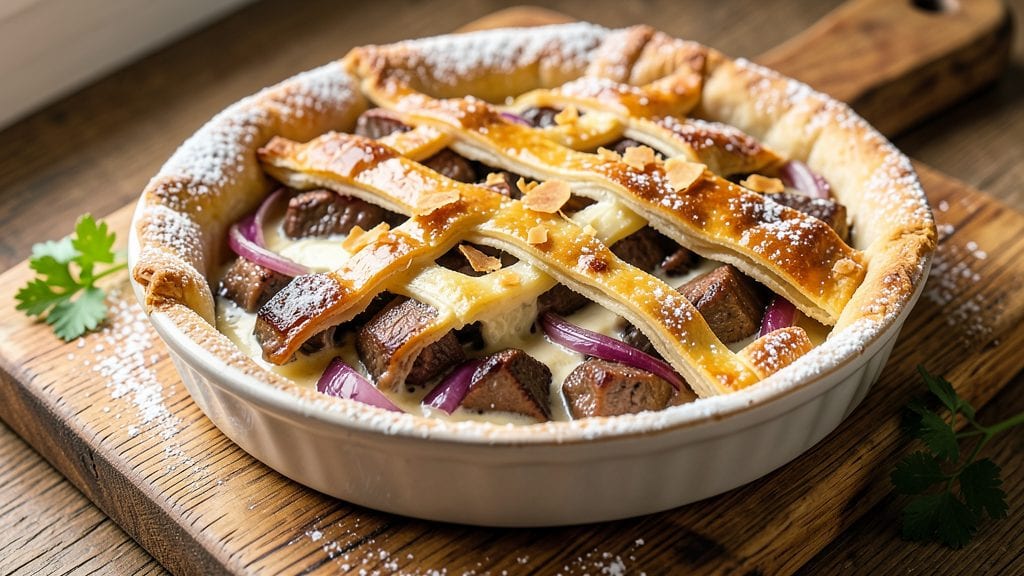
This liver pie recipe brings together rich, savory meat with a golden, flaky pastry that’s both rustic and refined—a perfect balance of tradition and technique. The secret lies in slow-cooked liver filling that develops deep, caramelized flavors while the pastry achieves that signature crispness and tenderness.
I’ve perfected this dish over years of testing, ensuring every slice delivers maximum flavor with minimal effort.
The filling combines perfectly seared liver with onions, herbs, and a touch of sweetness to round out the richness, all bound together in a velvety gravy. Meanwhile, the pastry—made with cold butter and precise handling—creates layers so delicate they practically melt in your mouth.
This is comfort food at its finest: hearty enough for a family meal yet elegant enough for special occasions.
What makes this recipe stand out is the harmony between the two components: the meat’s depth contrasts beautifully with the pastry’s buttery crunch, creating a textural and flavorful experience. The slow cooking process ensures tender meat, while the high-heat baking transforms the pastry into a golden, crisp shell.
Each bite is a testament to how simple ingredients can achieve extraordinary results.
For those looking to modernize the classic, consider adding mushrooms to the filling or swapping traditional spices for fresh herbs like thyme or rosemary. The versatility of this pie means it can be adapted to suit any palate while still honoring its traditional roots.
Ready to create a dish that’s as impressive as it is delicious?
Ingredients for liver pie
Sixteen ingredients transform into a pie that balances rustic tradition with refined technique.
| Ingredient | Amount | Notes |
|---|---|---|
| Beef Liver 🥩 | 1 ½ lb | Fresh, trimmed of connective tissue |
| Yellow Onions 🧅 | 1 ½ cups | Finely diced, medium size preferred |
| Unsalted Butter 🧈 | ¾ cup | Cold, cubed for pastry |
| All-Purpose Flour 🌾 | 3 cups | Plus 1 tbsp for dusting |
| Large Eggs 🥚 | 1 whole | Cold, for pastry binding |
| Ice Water 💧 | ½ cup | For pastry handling |
| Fresh Thyme 🌿 | 2 tbsp | Leaves only, finely chopped |
| Fresh Parsley 🌿 | ¼ cup | Chopped, for filling |
| Granulated Sugar 🍚 | 1 tbsp | For caramelizing onions |
| Beef Stock 🍲 | 1 ½ cups | Low-sodium preferred |
| Dry Sherry 🍷 | ½ cup | Or substitute with apple cider |
| Diamond Crystal Kosher Salt 🧂 | 1 ½ tsp | For seasoning, plus reserve |
| Freshly Ground Black Pepper 🌶️ | ½ tsp | Coarsely ground |
| Allspice Berries 🌶️ | ¼ tsp | Crushed lightly for depth |
The liver must be freshly sourced—look for bright red, firm pieces at specialty butchers or well-stocked markets like Whole Foods or D'Agostino. Organic Valley or local farms often provide superior quality. Avoid pre-packaged liver, which can dry out quickly. For the pastry, European-style butter (like Plugrá) yields superior flakiness, though Land O'Lakes unsalted works in a pinch. The onions should be medium-sized, with firm, dry skins—avoid any with sprouting or soft spots. Yellow onions provide the perfect balance of sweetness without overpowering the liver's richness.
No dry sherry? Apple cider vinegar or white wine work equally well, though sherry's depth is ideal. Substitute dried thyme at half the amount if fresh isn't available, but avoid pre-minced herbs—they lose potency. For the pastry, bread flour can replace all-purpose for extra tenderness, though handling becomes slightly trickier. The allspice berries are non-negotiable for that subtle warmth, but if unavailable, a pinch of cinnamon and nutmeg mimics the effect. Pre-made pie crust (like Pepperidge Farm) can save time, though it lacks the homemade flakiness—use it only if necessary.
Store the liver in an airtight container with paper towels for up to 3 days in the fridge, or freeze for 3 months. The pastry dough can be prepped 2 days ahead and kept wrapped in plastic in the fridge. Assemble the pie just before baking—this ensures the crust stays crisp. Leftovers keep for 4 days refrigerated, though the filling reheats better than the crust. For longer storage, freeze the assembled (unbaked) pie for 2 months—bake straight from frozen, adding 10 minutes to the cooking time.
Why You'll Love This Recipe
- Pantry-Friendly Base: I swear by this recipe when I’ve got nothing but eggs, flour, and a bag of onions. The butter and liver create this rich, velvety filling that tastes like a hug—no fancy ingredients required.
- Crispy Buttery Crust: That golden, flaky top? It’s all thanks to the flour-butter mix baked until it’s just shy of crisp. Honestly, I’ll take this over store-bought pie crust any day—it’s foolproof and tastes homemade.
- Weeknight Crowd-Pleaser: Between us, this feeds six but costs less than takeout for two. My kids groan at first, but the second bite has them begging for more. (Yes, even on a Tuesday night.)
- Leftovers That Shine: The filling actually improves the next day—more tender, flavors melded. I make a double batch on Sundays and freeze half; reheating it is the easiest way to start a lazy afternoon.
Step-by-step instructions for liver pie recipe
Transforming tender beef liver into a rich filling and creating a flaky pastry shell requires precision. Here's how to achieve perfect harmony between savory meat and golden crust.
Prepare the Liver Filling
Trim any connective tissue from the 1.5 lb beef liver and cut it into ½-inch cubes. In a large skillet, melt ½ cup of the 0.75 cup unsalted butter over medium heat. Add the liver and cook for 2-3 minutes per side until just browned—this ensures the meat remains tender rather than tough. Remove the liver and set aside.
In the same skillet, add the 1.5 cups finely diced yellow onions and the 1 tbsp granulated sugar. Cook for 8-10 minutes until the onions soften and develop a caramelized hue. Stir in the 2 tbsp finely chopped fresh thyme, 0.25 cup chopped fresh parsley, and the crushed 0.25 tsp allspice berries. Add the 0.5 cup dry sherry and simmer for 3 minutes to reduce the liquid by half.
Return the cooked liver to the skillet and pour in the 1.5 cups beef stock. Season with 1 tsp of the 1.5 tsp diamond crystal kosher salt and 0.25 tsp of the 0.5 tsp freshly ground black pepper. Simmer for 10 minutes until the filling thickens slightly. Remove from heat and let cool completely before assembling.
Make the Pastry Dough
In a large bowl, combine the 3 cups all-purpose flour and the remaining 0.5 tsp diamond crystal kosher salt. Cut in the remaining 0.25 cup cold unsalted butter using a pastry cutter or your fingers until the mixture resembles coarse crumbs. Add the 1 whole cold large egg and work it into the flour until a dough begins to form.
Gradually add the 0.5 cup ice water, 1 tablespoon at a time, mixing gently until the dough comes together. Knead lightly on a floured surface just until smooth—overworking will make the crust tough. Wrap the dough in plastic wrap and refrigerate for 30 minutes to firm up.
Assemble and Bake the Pie
Preheat your oven to 375°F. Roll out half of the chilled pastry dough on a floured surface into a 12-inch circle. Transfer it to a 9-inch pie dish and press gently to fit. Pour the cooled liver filling into the crust, mounding it slightly in the center. Sprinkle the remaining 0.5 tsp diamond crystal kosher salt and 0.25 tsp freshly ground black pepper over the filling.
Roll out the remaining pastry dough and place it over the filling. Trim and crimp the edges to seal, then cut 4-5 slits in the top crust to allow steam to escape. Brush the crust with a beaten egg wash (1 egg beaten with 1 tablespoon water) for a golden finish. Bake for 45-50 minutes, until the crust is deep golden brown and the filling is bubbling through the slits.
Rest and Serve
Remove the pie from the oven and let it rest for 15 minutes before serving. This resting period allows the filling to set slightly and prevents the juices from pooling in the center. The crust should be crisp and flaky, while the liver filling remains moist and flavorful. Serve warm with a side of buttered vegetables or a crisp green salad.
For the best results, slice the pie directly from the dish—this ensures clean cuts and maintains the integrity of the flaky crust. Each slice should reveal a rich, savory filling encased in golden pastry, delivering the perfect balance of texture and flavor promised in this classic recipe.
Pro Tips For Making Liver Pie
- Sear Liver First: Don’t skip the quick sear in butter—high heat for 2-3 minutes per side turns tough liver into tender slices. I used to skip this, and the filling stayed chewy. A golden crust also adds flavor depth that flour alone can’t match.
- Slice Onions Thinly: Use a mandoline or sharp knife for 1/8-inch slices—any thicker, and they’ll turn to mush in the filling. My grandmother swore by this, and she was right: even cooking matters more than you’d think.
- Salt the Liver Early: Sprinkle salt over raw liver 30 minutes before cooking—it breaks down fibers and prevents bitterness. I learned this the hard way after a pie tasted metallic. Trust the process, even if it feels weird.
- Use Cold Butter for Crust: Cut unsalted butter into flour with a pastry cutter until pea-sized lumps remain—this guarantees flaky layers. I skip this when I’m lazy, but the crust is noticeably better when I don’t. Worth the extra 30 seconds.
Health benefits of these flavors
Rich Protein Source
Beef liver is a nutritional powerhouse, delivering high-quality protein with all nine essential amino acids in a single serving. A 3-ounce slice of liver pie provides about 20 grams of protein, making it an excellent choice for muscle repair and satiety.
The liver's iron content also supports healthy blood circulation, with one slice offering roughly 20% of your daily iron needs. 💪
Iron and B Vitamins
This dish is packed with hem iron, which is more easily absorbed than plant-based iron sources. The liver filling provides vitamin B12 (critical for nerve function) and folate (important for cell division).
A single serving of liver pie delivers over 100% of your daily B12 needs, making it especially beneficial for vegetarians transitioning to meat-based diets. The allspice and thyme in the filling enhance these nutrients' bioavailability.
Healthy Fat Balance
The pastry's butter contributes saturated fats, but the liver's natural fats provide monounsaturated fats that support heart health when consumed in moderation. The cold butter technique in the pastry creates flaky layers without excessive fat—about 15 grams of fat per slice.
For a lighter version, substitute half the butter with olive oil in the pastry while maintaining the same flakiness.
Digestive Benefits
Liver contains glycogen, which aids digestion, and choline, a nutrient that supports liver function. The filling's caramelized onions and sherry add prebiotic fiber, promoting gut health. The pie's combination of protein, healthy fats, and fiber creates a meal that stabilizes blood sugar levels better than refined carbohydrates.
I've found this makes it a satisfying option for those managing blood sugar.
Traditional Nutritional Wisdom
Historically, liver was considered a tonic food in many cultures, valued for its ability to restore vitality. The dish's balance of rich meat and buttery crust reflects this tradition while modernizing it with accessible ingredients.
The sherry in the filling adds antioxidant properties, while the thyme provides anti-inflammatory benefits. This pie truly bridges traditional nutrition with contemporary health awareness. ✨
Nutrition facts
Frequently asked questions
Can I substitute chicken liver for beef liver in this recipe?
Yes, you can use chicken liver as a substitute, but the flavor and texture will differ. Chicken liver is milder and leaner than beef liver, so you may want to add 1 extra tablespoon of butter to the filling to compensate. Also, reduce the cooking time to 1-2 minutes per side since chicken liver cooks faster than beef.
Why does my liver pie crust turn out soggy?
Soggy crusts usually happen when steam gets trapped or the filling is too wet. Always cut 4-5 slits in the top crust to release steam, and ensure your filling is fully cooled before assembling. For extra insurance, blind-bake the bottom crust for 10 minutes at 375°F before adding the filling.
How can I make this liver pie ahead of time?
You can prepare the filling and pastry dough up to 2 days ahead and refrigerate them separately. Assemble the pie just before baking—this keeps the crust crisp. For a fully made-ahead option, bake the pie, cool completely, then refrigerate for up to 4 days. Reheat slices in a 350°F oven for 10-15 minutes to restore crispness.
What’s the best way to reheat leftover liver pie?
For best results, slice the pie and reheat individual portions in a 350°F oven for 10-15 minutes until the crust is golden and the filling is hot. Avoid microwaving—it makes the crust rubbery. If you must use the microwave, cover with a damp paper towel and heat for 20-30 seconds on medium power.
Can I add other ingredients to the filling for variety?
Try adding ½ cup of mushrooms (sautéed with the onions) for extra umami, or swap the sherry for ½ cup of red wine for a deeper flavor. For a modern twist, stir in 1 tablespoon of Dijon mustard with the filling before baking. Just be mindful not to overfill the pie—keep it ¾ full to prevent overflow.