
Desserts
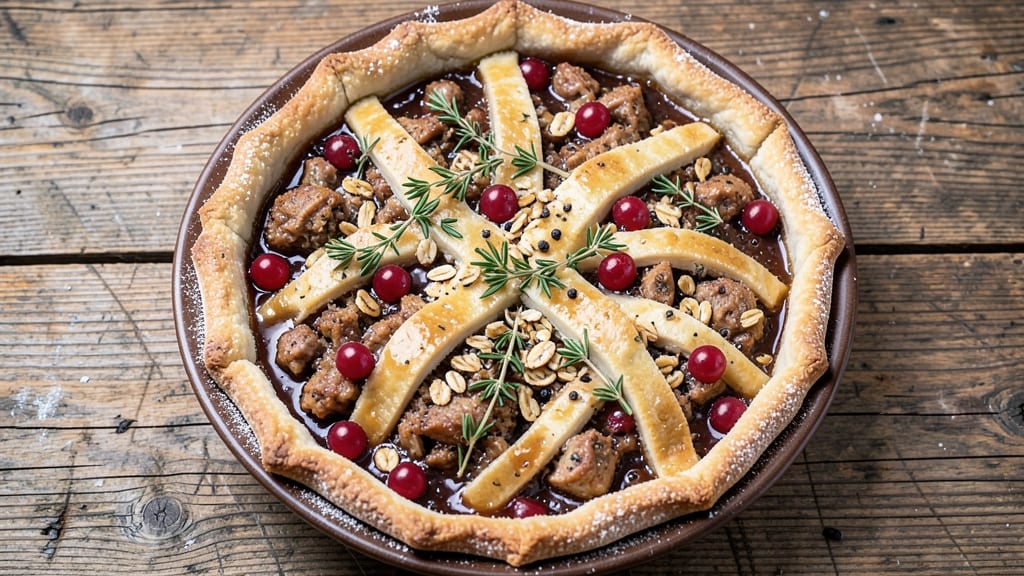
This pigeon pie recipe brings back the rich traditions of Victorian-era baking, where game birds were transformed into hearty desserts with a pressed oat crown that seals in every flavor.
The technique requires patience—first preparing the pigeon with aromatic herbs and spices, then layering it with a suet-based filling before encasing it in a golden, crisp pastry. It’s a dish that demands respect but rewards with unmatched comfort.
The foundation of an authentic pigeon pie lies in the preparation of the bird itself, traditionally roasted with juniper berries, thyme, and a splash of brandy to deepen the flavor.
The filling often includes suet, breadcrumbs, and dried fruits, creating a moist, flavorful center that contrasts beautifully with the buttery, flaky crust. For modern adaptations, consider using puff pastry or a gluten-free crust to accommodate dietary preferences while preserving the dish’s historic charm.
What makes this pie truly special is the pressed oat crown—a technique where oats are mixed with sugar and butter, then shaped into a decorative lid that bakes into a crisp, caramelized finish.
The result is a dessert that’s both rustic and refined, with layers of savory-sweet flavors that linger long after the last bite. Perfect for special occasions or when you want to recreate a piece of culinary history in your own kitchen.
Whether you’re a seasoned baker or new to game bird desserts, this recipe offers the opportunity to master a classic while adding your own personal touch. The key is precision—from seasoning the pigeon to baking the crust—so that every element comes together harmoniously. Let’s bring this Victorian comfort to life.
Ingredients for pigeon pie
Sixteen ingredients to recreate a Victorian dessert masterpiece with rich game flavors and a crisp oat crown.
| Ingredient | Amount | Notes |
|---|---|---|
| Pigeon 🦜 | 2 whole | Freshly plucked, cleaned, giblets removed |
| Unsalted Butter 🧈 | 1 cup | Cold, cubed for crust, softened for filling |
| All-Purpose Flour 🌾 | 3 cups | Plus 1 tbsp for dusting |
| Suet 🍖 | 1 lb | Beef suet, finely chopped |
| Old-Fashioned Rolled Oats 🥣 | 2 cups | For pressed oat crown |
| Granulated Sugar 🍚 | ½ cup | Plus 2 tbsp for crown |
| Juniper Berries 🌿 | 1 tbsp | Crushed, for pigeon seasoning |
| Fresh Thyme 🌿 | ¼ cup | Stems removed, chopped |
| Brandy 🍷 | ¼ cup | For pigeon marinade |
| Dried Currants 🍇 | ½ cup | Plumped in warm water |
| Puff Pastry 🥧 | 1 sheet | Store-bought or homemade |
| Large Eggs 🥚 | 1 whole | For egg wash |
| Salt 🧂 | 1 ½ tsp | Kosher or sea salt |
| Ground Black Pepper 🌶️ | ½ tsp | Freshly ground preferred |
| Breadcrumbs 🍞 | ½ cup | Fresh or dried |
The pigeon is the heart of this pie, so source it from a reputable game supplier—avoid supermarket birds, as they lack the depth of flavor. Whole Foods or specialty butcher shops often carry game birds, or check with local hunters for fresh, humanely raised options. If you can't find pigeon, quail or partridge work as substitutes, though the texture will differ slightly. For the oats, Bob's Red Mill or Quaker Old-Fashioned are reliable choices—they should be uniformly rolled, not steel-cut. The suet must be beef-based (not vegetable) for authentic flavor, and you'll find it in the baking aisle near shortening. Kirkland Signature brand is a budget-friendly option.
No juniper berries? Substitute with 1 tsp ground allspice, though the flavor won't be identical. Brandy can be swapped for apple cider or rum, but brandy's depth is ideal. For a gluten-free adaptation, replace the all-purpose flour with a 1:1 gluten-free blend and use a gluten-free puff pastry. The dried currants can be omitted if unavailable, but they add a lovely tart contrast. If you're short on time, pre-made suet pastry from the baking aisle (like Mrs. Smith's) works in a pinch, though homemade yields better results. Always plump the currants in warm water for 10 minutes before using—they should be soft but not mushy.
Store the pigeon in the coldest part of your fridge, wrapped tightly in parchment, for up to 3 days before using. The suet filling can be prepped ahead and kept in the refrigerator for 2 days, while the oat crown mixture stays fresh for 1 day when refrigerated. For make-ahead convenience, assemble the pie (unbaked) and refrigerate for up to 6 hours before baking—this allows flavors to meld beautifully. Leftovers keep for 3 days in the fridge, though this pie is best enjoyed fresh. To reheat, cover with foil and warm at 325°F for 15 minutes to restore crispness.
Why You'll Love This Recipe
- No-Fuss Filling: I swear by this recipe when I’m too tired to fuss. The pigeon cooks down tender with just butter, flour, and suet—no fancy marinades or hours of braising. Toss in the oats at the end, and suddenly you’ve got a rustic, hearty filling that practically assembles itself while you prep the crust.
- Rich, Earthy Depth: Between us, pigeon has a flavor that’s next level—gamey but not overpowering, with that satisfying meatiness. The suet and oats add a buttery, crumbly richness that makes every bite feel indulgent, like a hug in pie form. (Yes, even on a Tuesday night.)
- Leftovers That Shine: This pie reheats like a dream—just pop it in the oven, and the filling stays moist while the crust gets crisp again. I’ve had it cold the next day with a sharp cheese, and it’s still the star of the picnic. Honestly, the way it holds up makes it my go-to for gatherings where I’d rather spend time chatting than cooking.
- Budget Game-Changer: Pigeon is often cheaper than chicken, and this recipe stretches it far with the oat filling. I’ve fed a crowd of six for under $20, and everyone leaves happy. The crust doesn’t even need fancy dough—just flour, butter, and a pinch of salt. That’s real value, folks.
Step-by-step instructions for Victorian-era pigeon pie
This classic recipe delivers rich, gamey flavors with a comforting pressed oat crown—authentic technique meets homey tradition.
Prepare the Pigeon Filling
Preheat your oven to 375°F. In a large mixing bowl, combine the 2 whole pigeon, chopped into 1-inch pieces. Add the 1 lb suet, 0.5 cup dried currants, 0.25 cup brandy, 1 tbsp crushed juniper berries, 0.25 cup chopped fresh thyme, 1.5 tsp salt, and 0.5 tsp ground black pepper. Mix thoroughly until the pigeon pieces are evenly coated in the seasoning blend.
Transfer the mixture to a 9x13-inch baking dish and bake for 30 minutes, stirring once halfway through. This initial baking renders the fat and begins breaking down the pigeon meat, creating a rich, moist filling. The filling should be tender but not fully cooked—it will finish in the pie.
Create the Pressed Oat Crown
While the pigeon bakes, prepare the oat crown by combining the 2 cups old-fashioned rolled oats, 0.5 cup granulated sugar, and 0.5 cup breadcrumbs in a mixing bowl. Add 1 tbsp cold unsalted butter and mix until the oats are evenly coated. Press this mixture firmly into a 9-inch round cake pan, creating a thick, even layer.
Bake the oat crown at 350°F for 15-20 minutes until golden brown and crisp. Remove from the oven and let it cool slightly before carefully inverting it onto a plate. The crown should hold its shape—if it crumbles, press it back into place gently. This crown will form the top layer of your pie, adding texture and sweetness to balance the gamey filling.
Assemble the Pie
Return the partially baked pigeon filling to the oven and cook for an additional 15 minutes at 375°F, until the meat is tender and the juices have thickened slightly. Remove from the oven and let it cool for 5 minutes. Meanwhile, roll out the 1 sheet puff pastry on a lightly floured surface to 1/8-inch thickness and cut it to fit the 9x13-inch baking dish. Brush the pastry with the 1 whole large egg, beaten with 1 tbsp water, for a golden finish.
Spread the pigeon filling evenly into the baking dish, then carefully place the puff pastry on top, pressing gently to seal. Trim any excess pastry and crimp the edges with a fork. Slide the pie back into the oven and bake for 25-30 minutes at 375°F, until the pastry is deep golden brown and the filling is bubbling at the edges. The pie is done when the pastry is crisp and the filling is fully set.
Add the Oat Crown and Serve
Remove the pie from the oven and let it rest for 10 minutes to set. Carefully place the pressed oat crown on top of the pie, pressing down lightly to ensure it adheres. The crown should sit securely—if it doesn’t, use a small amount of the remaining 1 tbsp unsalted butter to help it stick. Serve the pie warm, cutting through the oat crown and into the rich pigeon filling beneath.
Each slice should reveal a contrast of textures—crisp oat crown, flaky pastry, and moist, flavorful pigeon filling. The juniper and thyme add a subtle earthiness, while the currants and brandy bring a touch of sweetness. This pie is hearty enough for a cold evening, yet elegant enough for a special occasion, embodying the comfort of Victorian-era home cooking.
Pro Tips For Making Pigeon Pie
- Brown the Pigeon First: Skip the raw meat in the filling—pat the pigeon dry, then sear it in butter until deeply browned before shredding. I learned this the hard way: raw pieces in the pie turn mushy, and that browned crust adds flavor the flour-and-oats mix can’t replicate.
- Toast the Oats: Dry-toast the rolled oats in the same pan you brown the pigeon—just 3-4 minutes until golden. This cuts down on flour later and gives the crust a nutty depth that plain oats miss. (Yes, even if you’re impatient like me.)
- Don’t Overwork the Suet: Rub the suet into the flour with your fingertips until it’s pea-sized lumps, not a paste. Overmixing makes the pie filling greasy; lumps melt evenly and keep the texture tender. I used to blend it into oblivion—big mistake.
- Blind-Bake the Crust: Roll out the pastry, line the pie dish, then blind-bake it for 10 minutes with pie weights or dried beans before adding filling. Prevents a soggy bottom, and the extra step saves you from a gummy disaster. (Your future self will thank you.)
Troubleshooting this recipe
Pigeon Overcooked
If your pigeon filling is dry or rubbery after baking, it likely overcooked during the initial 30-minute bake. To fix this, reduce the baking time to 20-25 minutes and check for tenderness at 165°F internal temperature.
For future attempts, use a meat thermometer to monitor doneness—pigeon should reach 160°F but not exceed it. If the filling is already overdone, stir in 1-2 tbsp brandy or apple cider to restore moisture before assembling the pie.
Oat Crown Crumbles
A crumbling oat crown often happens when the mixture isn’t pressed firmly enough or baked at too high a temperature. Press the oats into the pan with the back of a spoon or a glass, creating a compact, even layer.
Bake at 350°F for no longer than 15 minutes—overbaking dries out the oats. If it still crumbles, mix 1 tbsp cold butter into the oat mixture before pressing to bind it together. For extra stability, chill the crown in the fridge for 10 minutes before inverting.
Pastry Too Pale
Puff pastry that emerges pale instead of golden likely didn’t get enough time in the oven or lacks proper egg wash. Brush the pastry with an egg wash (1 egg + 1 tbsp water) before baking, focusing on the top and edges.
Increase baking time by 5-10 minutes if needed, and tent the pie with foil if it browns too quickly. For a deeper color, add a pinch of turmeric or paprika to the egg wash—just ¼ tsp enhances browning without altering flavor.
Filling Too Watery
A watery filling usually means the pigeon wasn’t cooked long enough to render its fat properly. After the initial 30-minute bake, let the filling cool slightly, then spoon off excess juices.
Thicken the filling by simmering it uncovered on the stovetop over medium-low heat for 5-7 minutes, stirring occasionally. Alternatively, stir in 1 tbsp cornstarch mixed with 1 tbsp cold water to bind the juices. For future pies, ensure the pigeon is fully broken down before assembling.
Oat Crown Won’t Stick
If the oat crown refuses to adhere to the pie, the issue is usually lack of moisture or insufficient pressure. Before placing the crown, brush the top of the pie with a thin layer of melted butter or egg wash to create a sticky surface.
Press the crown firmly into place, then secure it with toothpicks or small weights (like pie weights) to keep it in position while the pie finishes baking. For extra insurance, chill the pie for 10 minutes before serving to help the crown set.
Pie Filling Leaks
Leaking filling is often a sign of overfilling or insufficient pastry sealing. Before baking, ensure the puff pastry fully covers the filling and press the edges tightly with a fork to create a seal.
If the pie leaks during baking, remove it from the oven, let it cool slightly, and press the pastry edges back into place. For future pies, reduce the filling by 10-15% to allow room for expansion.
If the leak persists, consider using a pie crust instead of puff pastry for better containment.
Nutrition facts
Frequently asked questions
Can I substitute pigeon with another bird in this recipe?
Yes, but the flavor will change slightly. Quail or partridge work best as substitutes—they have a similar delicate gamey taste. For larger birds like chicken or turkey, reduce the quantity to maintain the pie's richness, or use just 1 bird instead of 2. Avoid lean white meats like turkey breast, as they lack the fat needed for the traditional suet-based filling.
What makes the pressed oat crown different from regular pie toppings?
The oat crown is a signature Victorian technique that creates a crisp, caramelized lid instead of a flaky pastry top. It’s made by pressing a mixture of oats, sugar, and butter into a pan, then baking until golden. This crown adds a sweet contrast to the savory pigeon filling while keeping the pie intact—no need for extra crust layers. The texture is similar to a shortbread cookie but with a deeper toasted flavor.
How do I know when the pigeon filling is fully cooked?
Use a meat thermometer for accuracy—the filling should reach 160°F (slightly below the usual 165°F for poultry). The meat should be tender but not dry. If you don’t have a thermometer, cut into a piece—juices should run clear, not pink. Overcooking dries out the filling, so aim for 20-25 minutes of initial baking time, stirring halfway.
Can I make this pie ahead of time?
Assemble the pie (unbaked) and refrigerate for up to 6 hours to let flavors meld. For best results, bake it fresh, but if needed, reheat leftovers at 325°F for 15 minutes to restore crispness. The oat crown can be pre-baked and stored separately for up to 2 days, then added just before serving to keep it crisp.
What if I can’t find suet? Can I use butter instead?
Suet is traditional for its rich, gamey flavor, but you can substitute with 1 cup cold butter plus ½ cup lard for moisture. The texture will be slightly different, but the pie will still hold together. Avoid all butter—it won’t render enough fat to keep the filling tender. For a vegetarian version, use vegetable shortening, though the flavor won’t be identical.