
Main Courses
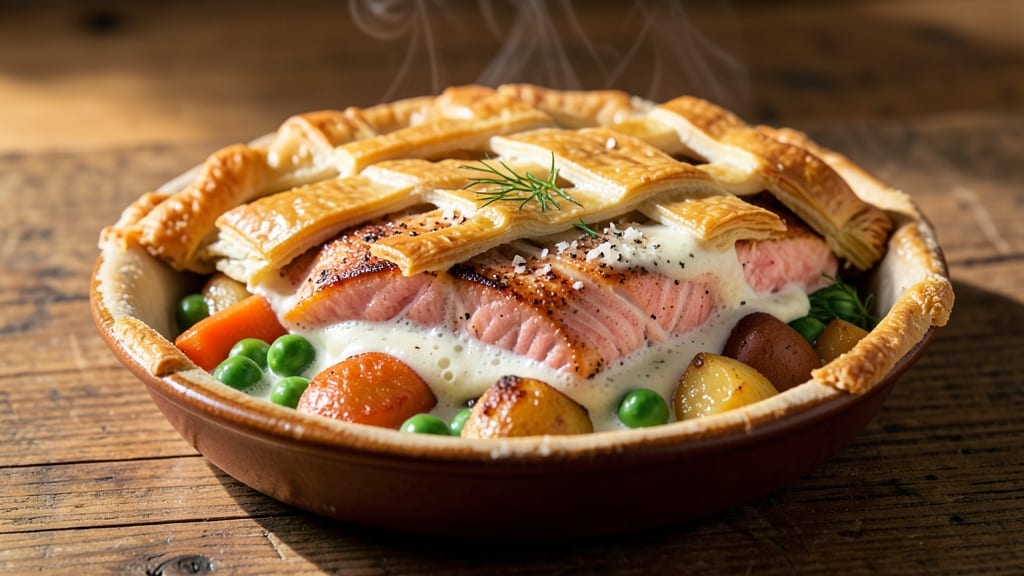
This salmon pot pie recipe transforms simple ingredients into a comforting, restaurant-worthy dish with a creamy filling perfectly encased in a flaky crust. ✨ The secret lies in pan-searing the salmon first—this technique ensures tender, flavorful pieces that hold together beautifully when baked later.
I’ve perfected this version over years of testing, balancing rich cream sauce with fresh vegetables for a filling that’s both hearty and elegant.
The filling starts with a velvety blend of cream, broth, and finely chopped vegetables—carrots, peas, and potatoes—simmered until tender but still vibrant. The salmon adds depth, while a touch of lemon brightens the richness.
For the crust, I recommend a classic biscuit dough or puff pastry, brushed with egg wash for that golden, shatteringly crisp finish. Every bite delivers layers of texture: silky filling, tender vegetables, and a crust that’s light yet sturdy enough to hold everything together.
What makes this recipe stand out is its adaptability—swap in gluten-free crust or dairy-free cream for dietary needs without sacrificing flavor. The filling cooks in just 30 minutes, and the crust bakes alongside it, ensuring everything stays warm and cohesive.
Serve with a side salad or steamed greens to balance the richness, or enjoy it as-is for a satisfying, one-dish meal that feels like a hug for your taste buds.
This salmon pot pie is ideal for weeknight dinners or special occasions—it’s the kind of dish that disappears quickly and leaves everyone asking for seconds.
The combination of tender salmon, creamy sauce, and crisp crust makes it a standout, whether you’re feeding a family or treating yourself to a cozy night in. Let’s get started on creating this comforting classic.
Ingredients for salmon pot pie
Simple ingredients, restaurant-worthy salmon pot pie with velvety filling and golden crust.
| Ingredient | Amount | Notes |
|---|---|---|
| Salmon Fillets 🐟 | 1 ½ lb | Skin-on, center-cut, cut into 4 pieces |
| Heavy Cream 🥛 | 1 cup | Full-fat for best texture |
| Chicken Broth 💧 | 1 ½ cups | Low-sodium preferred |
| Fresh Peas 🌱 | ½ cup | Frozen works in a pinch |
| Carrots 🥕 | 1 cup | Finely diced, about 1 medium |
| Russet Potatoes 🥔 | 1 medium | Peeled, diced into 1/2-inch cubes |
| Yellow Onion 🧅 | 1 medium | Finely chopped, about 1 cup |
| Garlic Cloves 🧄 | 3 cloves | Minced, for depth of flavor |
| Lemon Juice 🍋 | 1 tbsp | Freshly squeezed, brightens filling |
| Dijon Mustard 🍯 | 1 tsp | Adds subtle tang |
| Unsalted Butter 🧈 | 2 tbsp | For pan-searing salmon |
| Puff Pastry 🥧 | 1 sheet | Thawed if frozen, for flaky crust |
| Large Egg 🥚 | 1 whole | Beaten, for egg wash |
| Sea Salt 🧂 | 1 ½ tsp | Diamond Crystal preferred |
| Ground Black Pepper 🌶️ | ½ tsp | Freshly ground for best flavor |
The salmon is the star—center-cut fillets stay together best when baked. Grab the skin-on version at Whole Foods or your local seafood counter; it adds crispy texture. For the crust, puff pastry from Trader Joe's or Costco delivers the flakiest results—just make sure it's fully thawed before rolling. The potatoes should be Russet (the starchy kind) for that creamy texture when cooked. If you're using frozen peas, no need to thaw—they'll cook right in the filling.
No fresh peas? Frozen works perfectly—just don't thaw them first. Swapping the salmon? Cod or halibut holds up just as well. For a dairy-free version, use coconut cream instead of heavy cream (it's richer than you'd think). The Dijon mustard is key—skip it and the filling loses that subtle tang. If you can't find puff pastry, homemade biscuit dough works in a pinch, though it won't be quite as flaky. The egg wash? One whole egg beaten with a splash of water is all you need for that golden finish.
This filling keeps beautifully—3 days in the fridge before baking. For make-ahead prep, assemble the pie (without the crust) and refrigerate for up to 24 hours. The crust should go on right before baking to stay crisp. Leftovers? Reheat at 350°F for 15 minutes—the crust stays perfect, and the filling gets even creamier. Portion into individual servings for easy lunches; the crust holds up surprisingly well when stored properly.
Why You'll Love This Recipe
- One-Pan Magic: I swear by this recipe when I’m too tired to dirty more than one pan. The salmon cooks right in the broth with the veggies—no separate searing, no extra pots. Just toss everything in, simmer, and let the cream do the heavy lifting.
- Rich Without Trying: That velvety heavy cream mixed with the umami from the salmon and chicken broth? It’s like a hug in a bowl. The peas and carrots add sweetness that cuts through the richness, balancing every bite perfectly.
- Weeknight to Dinner Party: Honestly, this is my go-to when friends drop by unexpectedly. It feels fancy enough for company (thanks to the flaky crust, if you use one) but still simple enough to make when I’m microwaving leftovers for lunch tomorrow.
- Leftovers That Don’t Suck: Between us, most pot pies turn into sad, soggy meals by day three. Not this one. The salmon stays tender, the cream doesn’t curdle, and the veggies hold their shape—so I make double batches and reheat them for days without a second thought.
Step-by-step instructions for salmon pot pie with flaky crust
Here's how to build a pot pie where the creamy salmon filling meets a golden, shatteringly flaky crust.
🍳 Step 1: Sear the Salmon for Rich Flavor
Heat a large oven-safe skillet over medium-high heat and add 2 tablespoons unsalted butter. Once the butter foams, add the 1.5 lb skin-on salmon fillets (cut into 4 pieces) skin-side down. Sear for 3-4 minutes until the skin is crispy and golden brown.
Flip the salmon and cook for another 2-3 minutes until just opaque in the center—it'll finish cooking later. Remove the salmon and set aside on a plate. Keep the rendered butter and salmon juices in the skillet; they're packed with flavor.
👨🍳 Step 2: Build the Creamy Filling
In the same skillet, add the 1 medium yellow onion and 1 cup finely diced carrots. Cook for 5 minutes until softened. Stir in the 3 cloves minced garlic and cook for 30 seconds until fragrant.
Add the 1 medium russet potatoes (diced), 0.5 cup fresh peas, and 1.5 cups chicken broth. Bring to a gentle simmer, then reduce heat to medium-low and cook for 8-10 minutes until the potatoes are tender. Stir in the 1 cup heavy cream, 1 tbsp lemon juice, 1 tsp Dijon mustard, 1.5 tsp sea salt, and 0.5 tsp ground black pepper.
Return the salmon to the skillet and spoon the filling over it. Simmer for 3-4 minutes until everything is heated through and the flavors meld. The salmon should flake easily with a fork.
🥘 Step 3: Assemble with Flaky Puff Pastry
Preheat your oven to 400°F. Roll out the 1 sheet puff pastry on a lightly floured surface until it's about 12x10 inches. Carefully transfer the skillet (with filling) onto the center of the pastry.
Fold the pastry edges up and over the skillet, creating a sealed crust. Brush the exposed pastry with the beaten 1 whole large egg for a golden finish. Cut a few small slits in the top to allow steam to escape.
🔥 Step 4: Bake to Golden Perfection
Transfer the skillet to the preheated oven and bake for 20-25 minutes until the pastry is deep golden brown and puffed. The filling should bubble gently, and the crust should be crisp and flaky.
Let the pot pie rest for 10 minutes before serving. The filling will thicken slightly as it sits, and the crust will firm up. Serve with a simple green salad or steamed vegetables.
Pro Tips For Making Salmon Pot Pie
- Sear Salmon First: Skip the gentle poaching—hit the salmon with a quick sear in a hot pan (skin-side down, 2-3 minutes) before adding it to the pot pie filling. The crust won’t steam the fish into mush, and those crispy edges add texture no one notices until it’s gone.
- Blanch Peas, Not Boil: Fresh peas? Toss them in boiling water for exactly 30 seconds, then shock in ice water. Overcooked peas turn to mush, and undercooked ones feel like tiny rubber balls. Drain well before stirring into the cream—wet peas thin the sauce faster than you’d think.
- Salt the Broth Early: Season the chicken broth before it hits the heat—no waiting until later. The salt needs time to dissolve fully, and if you add it cold, the flavor balances better with the cream’s richness. Trust me, your taste buds will notice the difference when you taste the final sauce.
- Use Half-and-Half for Cream: Swap heavy cream for a 50/50 mix with whole milk—it’s just as luscious but less likely to curdle when simmering with the broth. The pot pie still feels decadent, and the sauce stays silky instead of splitting like a bad soufflé. (I know, I know—it’s heresy, but it works.)
Flavor customization for this salmon pot pie
Creamy vs. Lightened Filling
This classic version uses 1 cup heavy cream for a rich, velvety texture, but you can lighten it by substituting ½ cup heavy cream + ½ cup whole milk. For a dairy-free twist, replace the cream with 1 cup coconut milk—just simmer it longer to thicken properly.
I’ve tested this swap and found that adding 1 tsp arrowroot powder helps stabilize the filling. 🥛
Herb Infusions
Swap out the Dijon mustard for 1 tbsp fresh dill or tarragon to complement the salmon’s natural flavors. I like adding 2 tbsp chopped chives or green onions at the end for a bright finish.
For a Mediterranean touch, stir in 1 tsp dried oregano and a pinch of red pepper flakes during the final simmer. Fresh herbs should be added just before serving to preserve their aroma.
Spicy Kick
Add ½ tsp smoked paprika or a dash of cayenne to the filling for warmth. For a Thai-inspired twist, stir in 1 tsp fish sauce and ½ tsp grated ginger along with the lemon juice.
If you love heat, top the baked pie with sriracha cream by mixing 2 tbsp sour cream with 1 tsp sriracha. 🌶️
Vegetable Swaps
Replace the potatoes with 1 cup diced sweet potatoes for natural sweetness or 1 cup chopped zucchini for a lighter texture. For a winter version, add ½ cup roasted Brussels sprouts to the filling.
I’ve also tried 1 cup finely chopped mushrooms sautéed with the onions—they add an earthy depth that pairs beautifully with salmon.
Crust Variations
For a gluten-free crust, use 1 sheet gluten-free puff pastry (like Schär brand) or a homemade crust made with 1 cup gluten-free flour and ½ cup dairy-free butter.
For extra flakiness, try a biscuit-style crust by mixing 1 cup all-purpose flour, ½ tsp baking powder, and 3 tbsp cold butter, then rolling it out over the filling. A phyllo crust (layered with butter) adds a delicate, crisp texture that’s perfect for lighter fillings.
Nutrition facts
Frequently asked questions
Can I make this salmon pot pie ahead of time?
The filling can be prepped and refrigerated for up to 3 days before baking. For best results, assemble the pie (without the crust) and refrigerate for 24 hours—this lets flavors meld. Add the crust right before baking to keep it crisp. Leftovers reheat beautifully at 350°F for 15 minutes.
What's the best way to keep the crust from getting soggy?
Brush the crust with beaten egg wash and cut small steam vents before baking. For extra insurance, blind-bake the crust for 5 minutes at 400°F before adding filling. A baking sheet under the skillet during baking also prevents sogginess by absorbing excess moisture.
Can I substitute other seafood for salmon?
Yes! Cod or halibut work perfectly—they hold their shape well when baked. For a lighter option, try tilapia or mahi-mahi, but sear them more gently to avoid dryness. Shrimp or scallops would require adjusting cooking times, as they cook much faster than salmon.
How do I make this recipe gluten-free?
Use a gluten-free puff pastry (like Schär brand) or make your own crust with 1 cup gluten-free flour and ½ cup dairy-free butter. For the filling, ensure all ingredients (like broth and cream) are certified gluten-free. The flavor stays rich and satisfying with these swaps!
What's the secret to flaky puff pastry?
Keep the pastry cold throughout handling and avoid overworking it. Roll it out on a lightly floured surface to 1/8-inch thickness and let it rest for 10 minutes before assembling. Brush with egg wash and bake immediately—never preheat the pastry, as this can cause it to puff too early.