Desserts
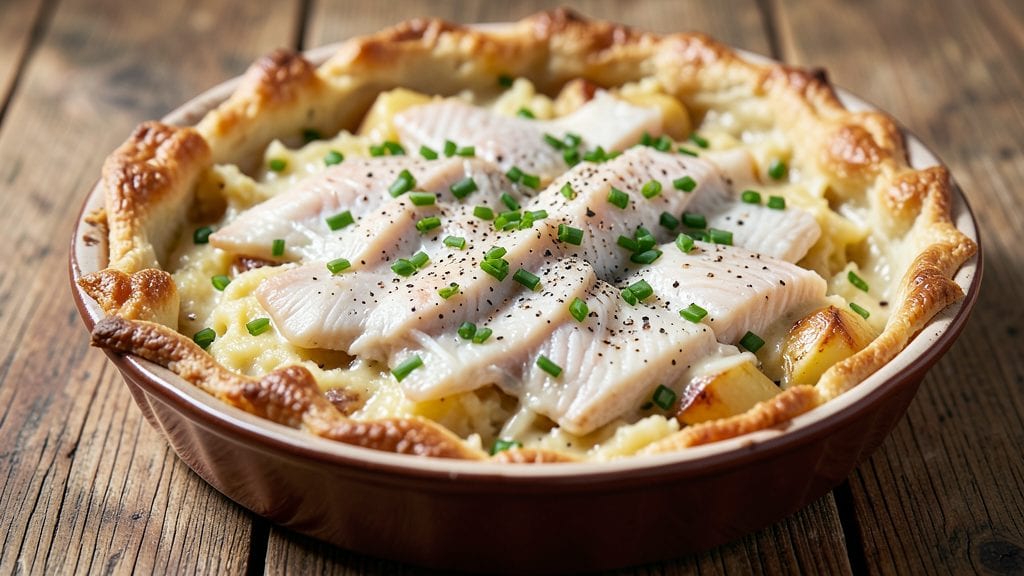
This traditional fish pie recipe brings comfort food history to your kitchen with its iconic layers of flaky fish, velvety mashed potatoes, and a golden cheese crust. The recipe reflects classic British tradition, where every component plays a role in creating that perfect balance of textures and flavors.
What makes this dish truly special is how the tender fish filling transforms into a rich, creamy base when baked beneath a blanket of mashed potatoes.
The secret to an authentic fish pie lies in the preparation of the filling—using fresh white fish like cod or haddock, combined with a rich gravy that keeps the mixture moist.
The mashed potatoes should be light yet sturdy enough to hold their shape, while the cheese topping adds a satisfying crunch and melts into a creamy finish. This dish is not only comforting but also incredibly versatile, perfect for family dinners or special occasions.
By following this recipe, you'll achieve a pie with a crispy, golden top that contrasts beautifully with the tender, creamy layers beneath. The aroma alone will fill your kitchen with warmth, while the first bite delivers a symphony of textures—crispy cheese, fluffy potatoes, and delicate fish.
It’s the kind of dish that feels like a hug in food form, bringing a taste of tradition to your table.
Serve this classic fish pie with a simple green salad or steamed vegetables to balance the richness. The leftovers reheat beautifully, making it an ideal meal prep option for busy weeks. Let’s get started on creating this timeless dish that’s as much about nostalgia as it is about flavor.
Ingredients for traditional fish pie
Fresh fish and creamy potatoes create this comforting classic with golden cheese perfection.
| Ingredient | Amount | Notes |
|---|---|---|
| Fresh Cod Fillets 🐟 | 1 ½ lb | Skinless, boneless, firm texture |
| Fresh Haddock Fillets 🐟 | 1 ½ lb | Skinless, boneless, firm texture |
| Large Russet Potatoes 🥔 | 2 lbs | Peeled, boiled until tender |
| Heavy Cream 🥛 | 1 cup | Full-fat for best texture |
| Whole Milk 🥛 | ½ cup | For extra creaminess |
| Unsalted Butter 🧈 | ½ cup | Cold for flaky mashed potatoes |
| Shallots 🧅 | 2 whole | Finely chopped, aromatic base |
| Garlic Cloves 🧄 | 4 cloves | Minced, aromatic depth |
| Dry White Wine 🍷 | ½ cup | Sauvignon Blanc preferred |
| Fish Stock 💧 | 1 ½ cups | Homemade or high-quality |
| All-Purpose Flour 🌾 | 2 tbsp | For gravy thickening |
| Sharp Cheddar Cheese 🧀 | 1 cup | Shredded, for topping |
| Parmesan Cheese 🧀 | ½ cup | Freshly grated, for topping |
| Salt 🧂 | 1 ½ tsp | Kosher or sea salt |
| Ground Black Pepper 🌶️ | ½ tsp | Freshly ground preferred |
The fish selection is critical—cod and haddock are traditional choices for their delicate, flaky texture. Whole Foods or local fish markets often carry the freshest fillets, but any reputable seafood counter will do. Look for fillets with a bright white color and minimal fishy odor. If using frozen, thaw overnight in the fridge. The potatoes should be large russets—they hold their shape better when baked. Costco or Trader Joe's usually have them in bulk, which saves money for this dish. Avoid waxy potatoes like Yukon Golds; they turn gluey when mashed for pie.
No white wine? Dry chicken broth with a splash of lemon juice works perfectly. Fresh herbs like parsley or dill can replace some of the shallots if needed, but they won’t provide the same depth. For the cheese topping, sharp cheddar and Parmesan are classic, but Gruyère or Gouda add wonderful variations. If you’re short on fish stock, low-sodium chicken stock with a pinch of Old Bay seasoning mimics the flavor. The flour for thickening should be all-purpose—never cake flour, as it lacks the protein to properly gel the gravy.
This pie reheats beautifully—350°F for 15-20 minutes is ideal. Store leftovers in the fridge for up to 4 days, covered tightly to prevent drying. For freezing, assemble the pie, then bake as directed. Cool completely, wrap in foil, and freeze for up to 3 months. Thaw overnight in the fridge before reheating. The mashed potatoes can be prepped ahead and reheated with extra butter and cream to restore their creaminess.
Why You'll Love This Recipe
- One-Pot Magic: I swear by this—just toss the fish, potatoes, and cream into one dish, bake, and boom. No fussing with layers or last-minute assembly. The potatoes soften into fluffy clouds while the fish stays tender, all thanks to that simple milk-and-cream bath.
- Creamy Crisp Perfection: That golden crust on top? Pure satisfaction. The heavy cream and milk create a velvety sauce that clings to flaky cod and haddock, while the potatoes develop a buttery, almost crackly finish. Honestly, it’s the kind of dish that makes you pause mid-bite.
- Lunchbox Hero: Between us, this is my go-to for meal prep. Slice the cooled pie into portions, and you’ve got hearty lunches for days—no reheating drama, just reheat-and-go. My kids even ask for it in their school lunches (yes, even on a Tuesday).
- Budget-Friendly Feast: Fresh cod and haddock stretch further than you’d think, especially when paired with humble potatoes. I’ve fed four people for under $20, and the leftovers? Just as good the next day. It’s comfort food that doesn’t break the bank.
Step-by-step instructions for traditional fish pie
Here's the method I've perfected for a classic fish pie with tender fish, velvety mashed potatoes, and a golden cheese topping.
Prepare the Fish Filling
Preheat your oven to 375°F and place a large skillet over medium heat. Add the 0.5 cup unsalted butter and let it melt completely. Add the 2 whole shallots and 4 cloves garlic cloves (minced), cooking until soft and fragrant, about 3-4 minutes. This forms the aromatic base for your filling.
Pour in the 0.5 cup dry white wine and let it simmer for 2 minutes until mostly evaporated. Stir in the 2 tbsp all-purpose flour and cook for another 1 minute to remove the raw flour taste. Slowly whisk in the 1.5 cups fish stock until smooth, then bring to a gentle simmer.
Cut the 1.5 lb fresh cod fillets and 1.5 lb fresh haddock fillets into 1-inch pieces and add them to the skillet. Simmer gently for 8-10 minutes until the fish is just cooked through and flakes easily with a fork. Remove from heat and let cool slightly while you prepare the mashed potatoes.
Make the Creamy Mashed Potatoes
While the fish cooks, peel and cut the 2 lbs large russet potatoes into 2-inch chunks. Place them in a large pot and cover with cold water by about 1 inch. Add 1 tsp salt (half of the total amount) and bring to a boil. Reduce heat to medium and cook for 15-20 minutes until fork-tender.
Drain the potatoes thoroughly, then return them to the pot. Add the 0.5 cup unsalted butter (cold), 1 cup heavy cream, and 0.5 cup whole milk. Mash until completely smooth, then season with the remaining 0.5 tsp salt and 0.5 tsp ground black pepper. The potatoes should be light and fluffy with no lumps.
Assemble the Fish Pie
Transfer the cooled fish mixture to a greased 9x13-inch baking dish, spreading it evenly. Spoon the mashed potatoes over the fish, spreading them into an even layer. Use a spatula to create gentle swirls in the mashed potatoes for presentation.
In a small bowl, combine the 1 cup sharp cheddar cheese and 0.5 cup parmesan cheese, breaking up any large clumps with your fingers. Sprinkle this cheese mixture evenly over the mashed potatoes, pressing down gently to help it adhere.
Bake to Golden Perfection
Transfer the baking dish to the preheated oven and bake for 25-30 minutes until the cheese topping is golden brown and bubbly. The internal temperature should reach 165°F when checked with an instant-read thermometer.
Remove from the oven and let rest for 10 minutes before serving. This resting time allows the filling to set slightly and makes slicing easier. Serve with a simple green salad or steamed vegetables for a complete meal.
Pro Tips For Making Traditional Fish Pie
- Boil Potatoes Until Fork-Tender: I learned this the hard way—undercooked potatoes turn to mush under the cream. Boil those Russets until they collapse like overripe fruit (about 15 minutes for large pieces), then mash while still hot. No one likes a soggy base, especially when you’ve got flaky fish on top.
- Salt Fish Immediately: Fresh cod and haddock need seasoning right after skinning. Sprinkle lightly with salt and let sit 10 minutes before cooking—it keeps them from curling and makes them absorb the cream better. (Yes, even if you’re impatient like me.)
- Strain the Cream: Heavy cream and milk can make the sauce greasy if not handled right. After simmering, strain through a fine-mesh sieve to remove any fish bits or cooked starch. Sounds weird, but it works—your sauce will be silky, not slimy.
- Bake Covered First: Skip the urge to rush—cover the pie with foil and bake at 375°F (190°C) for 20 minutes. This locks in moisture so the top doesn’t dry out when you uncover it for browning. (Your future self will thank you.)
Common mistakes when making your traditional fish pie
Overcooking the Fish
Fish cooks quickly, and once it reaches 145°F internal temperature, it starts to break apart. I’ve ruined more pies than I’d like to admit by letting the fish simmer too long in the skillet—8-10 minutes maximum is the sweet spot.
Use an instant-read thermometer to check; the fish should flake easily but still hold together just enough to stay in the pie. If it turns mushy, your pie will have a watery, sad filling. 🐟
Skipping the Wine Deglaze
That 0.5 cup dry white wine isn’t just for flavor—it deglazes the pan, lifting all those delicious browned bits from the shallots and garlic. Without it, your gravy will taste flat and one-dimensional.
If you’re avoiding alcohol, substitute with apple cider vinegar or lemon juice, but reduce the liquid by half since it’s more acidic. Don’t rush this step; let the wine simmer until it’s nearly evaporated to build proper flavor depth.
Underseasoning the Gravy
The fish filling relies on the gravy for moisture and flavor, so don’t hold back on seasoning. After adding the fish stock, taste the mixture before adding the fish—it should be slightly salty and well-seasoned.
Many cooks forget that the fish itself is mild and needs bold flavors to shine. A pinch of Old Bay seasoning or smoked paprika can elevate the dish if you’re worried about overpowering it. 🧂
Using Waxy Potatoes
Russet potatoes are a must for this pie—they’re high in starch and hold their shape when baked. Waxy potatoes like Yukon Golds or red potatoes will turn gluey and collapse under the weight of the cheese topping.
If you’re out of russets, Idaho potatoes (a close relative) work in a pinch. Always boil them until fork-tender, not mushy, to avoid a gummy texture in your mashed potatoes.
Overmixing the Mashed Potatoes
Once you add butter and cream to your potatoes, resist the urge to mash aggressively. Overworking them introduces air, which can make the potatoes dry out during baking. Use a potato masher or ricer for a smoother texture without lumps.
If your mashed potatoes look too thick, stir in a splash of warm milk or cream—just enough to reach a light, spreadable consistency. 🥔
Baking Without a Rest
Skipping the 10-minute rest after baking is a common mistake that leads to a messy, runny pie. The filling needs time to set and redistribute its juices so it holds together when sliced.
If you’re impatient, cover the pie loosely with foil for the first 5 minutes of resting to prevent the top from overbrowning. Trust me, that extra wait makes all the difference in texture and presentation.
Nutrition facts
Frequently asked questions
Can I substitute cod and haddock with other fish?
Yes! Firm white fish like halibut, pollock, or tilapia work well, but avoid delicate fish like flounder or sole—they'll fall apart in the pie. For a richer flavor, try smoked haddock or add a pinch of Old Bay seasoning to compensate for milder fish.
How do I make this dish vegetarian?
Replace the fish with chickpeas or mushrooms sautéed with the same aromatics (shallots, garlic, wine). Use vegetable stock instead of fish stock and add 1 tsp seaweed flakes for umami depth. The texture will differ but still be delicious!
Can I make this pie ahead of time?
Assemble the pie up to 24 hours ahead and refrigerate uncovered. Bake straight from the fridge, adding 10-15 extra minutes to ensure the center reaches 165°F. For freezing, bake first, then cool completely, wrap tightly, and freeze for up to 3 months. Reheat at 350°F for 20 minutes.
What's the secret to extra crispy cheese topping?
Use a mix of sharp cheddar and Parmesan for best results. Press the cheese firmly into the mashed potatoes and broil for 2-3 minutes at the end of baking. For extra crunch, sprinkle 1 tbsp breadcrumbs on top before baking.
Why did my mashed potatoes turn out gummy?
This usually happens from overcooking the potatoes or using waxy varieties. Always boil russets until fork-tender (not mushy) and mash with cold butter to prevent starch breakdown. For extra insurance, stir in 1 tbsp cream cheese while mashing.