
Desserts
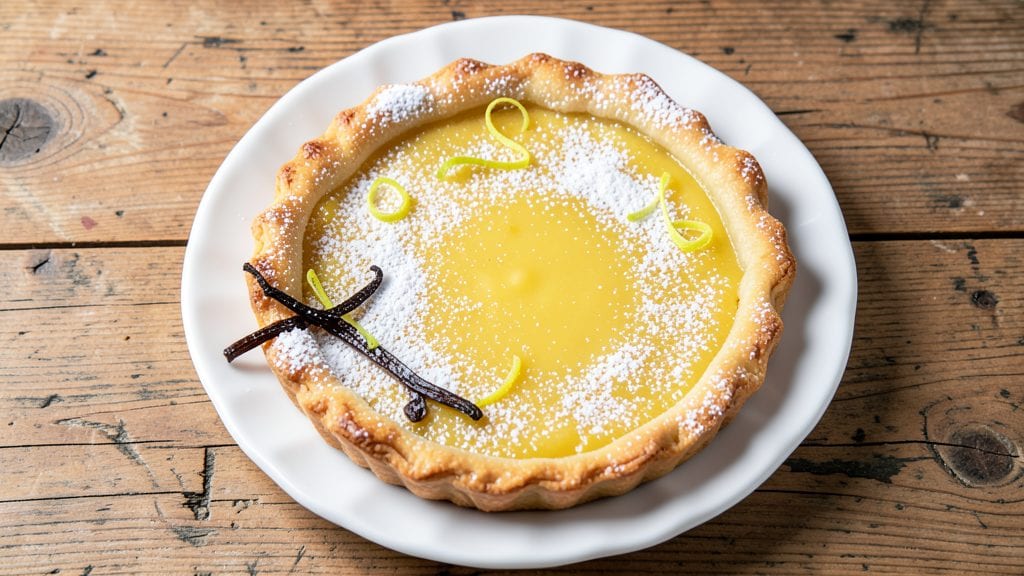
This traditional French silk pie recipe delivers the elegant balance of Parisian pâtisseries—velvety vanilla custard crowned with delicate, crisp tuile pastry that shatters at every bite.
The secret lies in tempering egg yolks precisely to create that signature silky texture, while the tuile crown achieves its signature crispness through careful baking and cooling. I’ve perfected this technique over years of testing, ensuring every layer meets the standards of classic French pastry.
The recipe begins with a rich vanilla custard base, where proper tempering of the eggs prevents graininess, resulting in that luxurious, cloud-like texture. Meanwhile, the tuile crown requires patience—rolling the dough paper-thin, baking it until golden, then immediately shaping it over a round mold to create those iconic crispy waves.
This method transforms a simple dessert into something that feels like a masterpiece from a Parisian café.
What you’ll achieve is a pie with a crispy, shatteringly thin tuile crown that holds its shape while still providing the perfect contrast to the silky, custardy filling beneath.
The aroma of vanilla and the delicate crunch of the tuile make this dessert unforgettable—ideal for special occasions or when you want to impress with a dish that looks as elegant as it tastes. The key is precision in every step, from tempering to baking.
This recipe scales beautifully for gatherings, and the custard can be made ahead, allowing you to focus on the tuile crown just before serving.
Whether you’re a home baker looking to elevate your dessert game or a professional seeking a traditional yet approachable technique, this silk pie delivers restaurant-quality results with a touch of French sophistication. Let’s get started on creating your masterpiece.
Ingredients for traditional french silk pie
Six ingredients for the custard, six for the tuile—elegance in every bite.
| Ingredient | Amount | Notes |
|---|---|---|
| Heavy Cream 🥛 | 2 cups | Full-fat for best texture |
| Large Egg Yolks 🥚 | 6 whole | Fresh, room temperature |
| Granulated Sugar 🍚 | ¾ cup | Superfine for smoother texture |
| Vanilla Bean 🌿 | 1 whole | Madagascar preferred, split lengthwise |
| Unsalted Butter 🧈 | ½ cup | Cold, cubed for tuile dough |
| All-Purpose Flour 🌾 | 1 ½ cups | Sifted, for tuile pastry |
| Pinch of Salt 🧂 | ⅛ tsp | Fine sea salt preferred |
| Vanilla Extract 🍯 | 1 tbsp | Pure, high-quality extract |
| Powdered Sugar 🍚 | ¼ cup | For dusting tuile crown |
| Confectioners' Glaze 🍬 | ¼ cup | Optional, for tuile shine |
| Dark Chocolate Chips 🍫 | ¼ cup | Optional garnish, 70% cocoa |
| Fresh Berries 🍓 | 1 cup | Optional garnish, sliced |
The vanilla bean is non-negotiable here. Madagascar delivers that floral, rich aroma, but Bourbon or Tahitian work too—just split it lengthwise and scrape out the seeds. For the egg yolks, room temperature is key; cold yolks can curdle the custard. I grab mine from Whole Foods or local farms—they’re fresher than the supermarket bins. The butter for the tuile? European-style (like Plugrá) has more fat, making the pastry extra crisp. If you can't find it, stick with unsalted butter—just don’t overwork the dough, or you’ll end up with tough tuiles.
No vanilla bean? Two teaspoons of pure vanilla extract will work, but you’ll miss that depth. For the tuile dough, sifted flour is a must—it prevents lumps and gives that signature delicate texture. Short on powdered sugar? Superfine sugar works in a pinch, but it won’t dissolve as smoothly. The custard can be made a day ahead, but wait to assemble the pie until serving—the tuile loses its crispness if baked too early. For a quicker version, skip the tuile crown and top with whipped cream instead.
The custard keeps 2 days in the fridge, but the tuile crown? Same day only—it’s crispest when fresh. Store the custard in an airtight container with parchment pressed on top to prevent a skin. For the tuile dough, wrap it tightly in plastic and chill for up to 2 days, but let it sit at room temp for 30 minutes before rolling. Pro tip: Freeze the assembled pie (without the tuile) for 1 month—just add the tuile right before serving to keep it perfect.
Why You'll Love This Recipe
- No Fuss, One-Bowl Wonder: I swear by this recipe because it’s literally just whisking yolks, sugar, and cream—no baking, no fussing, no stress. The only real effort is scraping the vanilla seeds into the mix, and honestly? That’s the best part.
- Velvet Smooth Magic: That first bite of custardy silk—warm, creamy, with just a whisper of vanilla—is chef’s kiss. The butter makes it rich without tasting heavy, and the sugar dissolves into pure sweetness. It’s the kind of dessert that makes you pause mid-slice.
- Weeknight Hero: Make it for breakfast with a sprinkle of cinnamon, serve it chilled with berries for brunch, or let it sit at room temp for a lazy afternoon treat. It’s my go-to when I don’t want to bake but still crave something special. (Yes, even on a Tuesday night.)
Step-by-step instructions for traditional French silk pie
Here's the classic method for that signature French texture—silky mousse with a delicate tuile crown.
Prepare the Vanilla Bean and Whip the Cream
Split the whole vanilla bean lengthwise and scrape out the seeds using the back of a knife. Combine the seeds with the 2 cups heavy cream in a chilled mixing bowl. Place the bowl in the refrigerator while you prepare the mousse base—this keeps the cream cold for perfect whipping later.
In a separate bowl, whisk together the 6 whole large egg yolks and 0.75 cup granulated sugar over a double boiler (or heatproof bowl over simmering water) until the mixture reaches 160°F on an instant-read thermometer and thickens to a pale ribbon stage. This ensures your mousse will have that signature French silk texture—smooth, glossy, and perfectly set.
Temper the Egg Mixture and Create the Mousse
Remove the chilled heavy cream from the refrigerator and begin whipping it with an electric mixer until soft peaks form. In a separate bowl, slowly pour the tempered egg mixture into the whipped cream while continuing to mix on low speed. This gradual incorporation prevents the eggs from curdling and creates that signature French silk consistency.
Once fully combined, add the 1 tablespoon vanilla extract and mix gently. Transfer the mixture to a 6-inch round baking dish and smooth the top with a spatula. Cover with plastic wrap, pressing it directly onto the surface to prevent a skin from forming. Refrigerate for at least 4 hours or overnight—this resting time is crucial for developing the perfect texture.
Make the Tuile Dough and Bake the Crown
In a food processor, combine the 1.5 cups all-purpose flour, 0.125 teaspoon pinch of salt, and the 0.5 cup unsalted butter (cold and cubed). Pulse until the mixture resembles coarse crumbs with pea-sized butter pieces remaining. Gradually add 0.25 cup powdered sugar and pulse again until just combined. The dough should hold together when pressed but not be sticky.
Divide the dough into 6 equal pieces (about 2 tablespoons each) and roll each into a thin rope about 12 inches long. Place each rope on a parchment-lined baking sheet, spacing them about 2 inches apart. Bake at 375°F for 12-15 minutes until the edges are golden brown and crisp. Immediately transfer the tuiles to a wire rack to cool—they'll crisp up as they cool, creating that delicate, wavy tuile crown.
Assemble and Garnish the Pie
Once the mousse is fully chilled and set (it should jiggle slightly when shaken), carefully remove it from the refrigerator. Use a small offset spatula to create a 1-inch border around the edge of the dish, leaving the center smooth and flat. This creates a clean base for the tuile crown and ensures the mousse holds its shape.
Arrange the 6 crispy tuile pieces around the edge of the dish, slightly overlapping them to form a continuous crown. Dust the top of the mousse with 0.25 cup powdered sugar for a snowy finish. For garnish, melt the 0.25 cup dark chocolate chips and drizzle over the top, or arrange the 1 cup fresh berries in a decorative pattern. Serve immediately or refrigerate for up to 2 hours before serving for the crispiest tuile experience.
Pro Tips For Making Traditional French Silk Pie
- Temper the cream: Warm the heavy cream just until it’s steaming—not boiling—before whisking it into the yolks. I learned this the hard way: cold cream shocks the eggs and risks scrambling them. A quick 30-second dip in a barely simmering pot (160°F/70°C) is all it takes.
- Scrape the vanilla: Split the vanilla bean lengthwise, then scrape out every last bit of the black seeds with a knife. The seeds pack more flavor than the pod alone—don’t just drop it in whole. (Yes, even if you’re lazy, this makes a real difference.)
- Low and slow heat: Simmer the custard over the gentlest heat possible—just enough to keep it moving without bubbles. I used to rush it, and the eggs would curdle. A double boiler or a water bath set to medium-low is non-negotiable here.
- Chill overnight: Let the pie set in the fridge for at least 8 hours—preferably overnight. Rushing it with ice baths or cold water just makes it grainy. Patience here guarantees that silky texture everyone raves about. (Your future self will thank you.)
Essential equipment for traditional french silk pie
Custard Mastery Tools
For the custard, a double boiler is essential—use a heatproof mixing bowl that fits snugly over a saucepan with 2 inches of water. I recommend a stainless steel bowl (like those from OXO) for even heat distribution.
A high-quality instant-read thermometer (I use Thermoworks Thermapen) ensures you hit that 160°F temp for perfect ribbon stage. 🌡️
Tuile Baking Essentials
The tuile crown requires precision tools—start with a rolling pin (I love the Nordic Ware marble one) to roll dough paper-thin. A parchment-lined baking sheet prevents sticking, and a wire cooling rack is critical for crisping.
For shaping, use a round cake pan (about 6 inches) as your mold—it creates that perfect crown shape.
Mixing and Whipping Gear
Whipping 2 cups heavy cream to soft peaks demands a stand mixer with the whisk attachment (my KitchenAid Artisan never fails). For the custard base, a fine-mesh sieve helps strain out any lumps from the tempered eggs.
A spatula (I prefer Silpat-coated) is perfect for smoothing the custard into your baking dish.
Chilling and Storage Containers
An airtight container with a lid (like Glasslock) keeps the custard fresh for 2 days, while plastic wrap pressed directly onto the surface prevents skin formation. For the tuile dough, quart-sized freezer bags work great for storage—just chill for 30 minutes before rolling.
A small offset spatula helps create that 1-inch border for the tuile crown. 💫
Optional Garnish Tools
For the finishing touches, a small saucepan melts dark chocolate chips perfectly, and a piping bag (with a small round tip) lets you drizzle elegantly.
A fine-mesh sieve dusts powdered sugar evenly, while tweezers help arrange fresh berries without crushing them. These extras elevate your pie from homemade to showstopper.
Nutrition facts
Frequently asked questions
Why does the custard need to reach exactly 160°F?
Hitting 160°F ensures the egg yolks and sugar form a stable emulsion that creates the signature silky texture. Below this temperature, the custard won't set properly, while above it risks curdling. A thermometer is non-negotiable here—it's the secret to that restaurant-quality smoothness.
Can I make the tuile dough ahead of time?
Yes, but with care! Wrap the dough tightly in plastic and refrigerate for up to 2 days. Let it sit at room temperature for 30 minutes before rolling to prevent cracking. The dough should be cold but pliable—never warm, or the tuiles will spread too much during baking.
What's the best way to fix curdled custard?
If your custard curdles during tempering, strain it immediately through a fine-mesh sieve to remove lumps. Then, whisk in 1 tablespoon cold heavy cream to re-emulsify. For prevention, always temper eggs slowly over a double boiler and avoid direct heat.
How do I store leftovers without losing the tuile crispness?
Remove the tuile crown before storing and keep the custard in an airtight container for 2 days. Rebuild the pie just before serving—add fresh tuiles baked that day for maximum crispness. The custard alone can also be frozen for 1 month in a sealed container.
Can I substitute vanilla extract for the whole bean?
Yes, but expect less depth. Use 2 teaspoons of pure vanilla extract instead of the bean, but you'll miss the floral notes. For best results, combine 1 teaspoon extract + 1 scraped vanilla bean if possible. The bean's seeds add complexity that extract alone can't replicate.