
Desserts
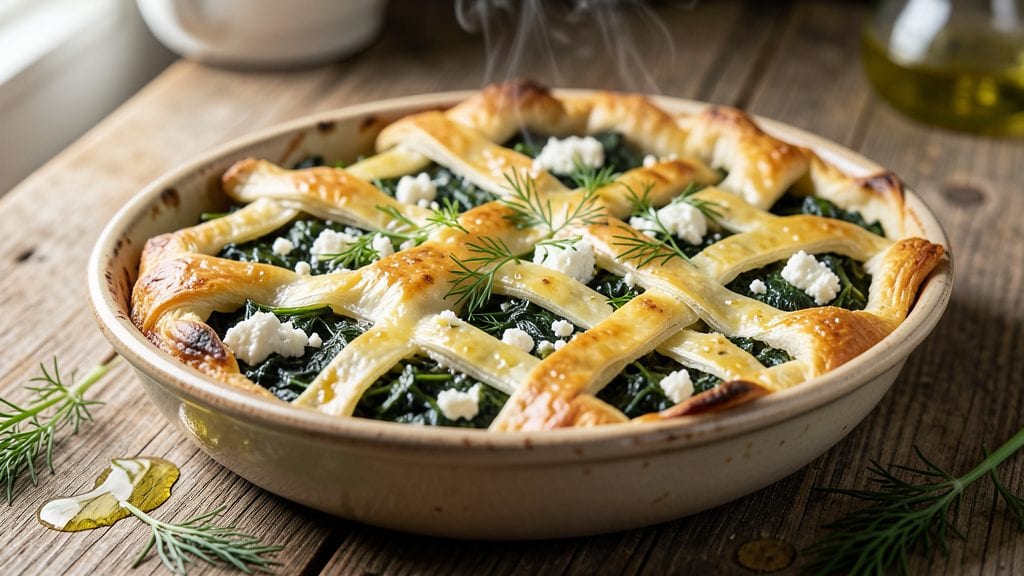
This traditional Greek spinach pie recipe delivers the flaky, layered perfection of spanakopita that tastes like home. The secret lies in crisp phyllo dough and a creamy filling of wilted spinach, herbed feta, and fresh dill—each component balanced to create that signature melt-in-your-mouth texture.
I've perfected this recipe over years of testing, ensuring every bite captures authentic Greek flavors without shortcuts that compromise quality.
The magic begins with thin layers of phyllo dough brushed with melted butter, creating delicate, crispy sheets that hold up to the rich filling. Inside, tender spinach blends with tangy feta, aromatic herbs, and a touch of lemon zest for brightness.
This isn't just a pie—it's a celebration of Mediterranean cooking, where each ingredient plays a crucial role in creating harmony on your plate.
What you'll achieve is a golden, flaky pie with a creamy yet slightly firm filling that holds its shape when sliced. The contrast between the crispy phyllo and the velvety spinach-feta mixture makes every bite satisfying.
This recipe stays true to tradition while being approachable for home cooks, delivering restaurant-quality results in your own kitchen.
Serve warm with a side of tzatziki or a crisp Greek salad for the full experience. The leftovers keep well for 2-3 days, making this an excellent dish for meal prep or entertaining. Let's get started on creating your own piece of Greece.
Ingredients for traditional greek spinach pie
Thin phyllo sheets, creamy feta, and bright herbs—everything you need for authentic Greek spinach pie.
| Ingredient | Amount | Notes |
|---|---|---|
| Phyllo Dough Sheets 🍞 | 12 pieces | Thawed if frozen, kept covered |
| Unsalted Butter 🧈 | 1 cup | Melted, cooled slightly |
| Fresh Spinach 🍃 | 10 oz | Wilted and drained well |
| Feta Cheese 🧀 | 1 ½ cups | Crumbled, traditional Greek |
| Fresh Dill 🌿 | ½ cup | Chopped, stems removed |
| Fresh Parsley 🌿 | ¼ cup | Chopped, for freshness |
| Garlic Cloves 🧄 | 3 cloves | Minced, fresh preferred |
| Extra-Virgin Olive Oil 🫒 | ¼ cup | For sautéing, high quality |
| Lemon Zest 🍋 | 1 tsp | From 1 medium lemon |
| Lemon Juice 🍋 | 1 tbsp | Freshly squeezed |
| Eggs 🥚 | 1 whole | Large, lightly beaten |
| Diamond Crystal Kosher Salt 🧂 | ½ tsp | For seasoning |
| Ground Black Pepper 🌶️ | ¼ tsp | Freshly ground |
| Nutmeg 🌿 | ¼ tsp | Freshly grated |
Phyllo dough is the star here, so buy the good stuff. Filoflo or Fillo Factory are my go-tos—they thaw fast and don't dry out. Keep it covered with a damp towel while you work, or it'll crack like day-old bread. The feta? Grab the block from the deli section—pre-crumbled gets gummy. If you can't find traditional Greek feta, Kalamata or domestic feta works in a pinch, but it won't be the same. The spinach should be fresh—baby spinach or tender young leaves wilt best without turning to mush.
No fresh dill? Dried works at one-third the amount, but it lacks that bright, herbal punch. Short on parsley? Cilantro or basil can stretch it, though the flavor will shift slightly. The garlic can be pre-minced from a jar (the good kind, not the paste), but fresh is always better. For the olive oil, use something fruity and peppery—none of that bland supermarket stuff. The lemon zest is non-negotiable for brightness, but if you're out, a splash of lemon juice will save you. Want to make this ahead? Prep the filling and freeze it—just thaw before assembling.
Assembled pie keeps 2-3 days in the fridge, but it's best eaten fresh. Wrap tightly with foil to keep the phyllo crisp. For leftovers, reheat in a 350°F oven for 10-15 minutes—the phyllo gets crispy again. Freezing? Slice first, then freeze—they reheat beautifully straight from frozen. Serve with a side of tzatziki or Greek salad to soak up that herby, cheesy goodness.
Why You'll Love This Recipe
- No-Fuss Assembly: I swear by this—just brush, fold, repeat. The phyllo layers melt into crispy perfection with almost no effort, and honestly? That’s my kind of magic.
- Tangy, Herby Magic: The feta’s salty bite cuts through the spinach’s earthiness, while fresh dill brightens every bite. It’s the kind of flavor combo that makes you reach for seconds without thinking.
- Leftovers That Shine: This pie actually improves the next day—crispier edges, richer taste. I make a double batch on Sundays so I can grab slices for lunches all week.
- Budget-Friendly Crowd-Pleaser: Spinach and feta stretch far, and phyllo’s cheaper than you’d expect. Plus, it’s the kind of dish that disappears fast at gatherings—no one ever leaves with leftovers.
Step-by-step instructions for traditional Greek spinach pie
Here's how to build that signature flaky crust and herbed filling that makes this pie unforgettable.
Prepare the Spinach Filling
Start by wilting the 10 oz fresh spinach in a large skillet over medium heat. Add 3 cloves minced garlic and 0.25 cup extra-virgin olive oil, then sauté for 3-4 minutes until the garlic becomes fragrant but doesn't brown. The spinach should collapse into a dense, vibrant green pile.
Drain the spinach thoroughly in a colander, pressing out all excess moisture with a clean kitchen towel. This step is crucial—wet spinach will make your pie soggy. In a large bowl, combine the drained spinach with 1.5 cups crumbled feta cheese, 0.5 cup chopped fresh dill, 0.25 cup chopped fresh parsley, 1 tsp lemon zest, 1 tbsp lemon juice, 1 whole lightly beaten egg, 0.5 tsp diamond crystal kosher salt, 0.25 tsp ground black pepper, and 0.25 tsp freshly grated nutmeg. Mix gently with a wooden spoon until just combined—you want the feta to stay in chunks for authentic texture.
Assemble the Phyllo Layers
Preheat your oven to 375°F. Line a 9x13-inch baking dish with parchment paper, leaving an overhang on the sides for easy removal. Working quickly (phyllo dries out fast), brush the bottom of the dish with 1 tablespoon of the melted, slightly cooled butter. Place 4 pieces of phyllo dough sheets in the dish, overlapping them slightly and brushing each piece with butter as you go. Fold the overhanging parchment up the sides to create a seal.
Spread the spinach filling evenly over the phyllo, leaving a ½-inch border around the edges. This border is essential—it prevents the filling from bubbling over during baking. Sprinkle any remaining filling over the top if needed, then cover with another 4 pieces of phyllo dough sheets, again brushing each layer with butter and overlapping the edges. For extra flakiness, I like to make small cuts in the top phyllo layer with kitchen shears before the final 4 sheets—this allows steam to escape and creates beautiful, crispy layers.
Create the Signature Crimp and Bake
Brush the top phyllo layer with the remaining melted butter, then fold the parchment overhang inward to create a sealed edge. This technique traps the steam and creates that iconic crispy crust. Cut a few small slits in the top to allow steam to escape—this prevents the pie from puffing up unevenly. Bake for 45-50 minutes until the phyllo is golden brown and the filling is set. The edges should be crispy while the center remains soft and creamy.
For the final touch, let the pie cool for 10 minutes before slicing. This resting period allows the filling to set properly and makes it easier to serve clean slices. The result should be layers of delicate, flaky phyllo surrounding a rich, herbed filling with just the right balance of tangy feta and bright lemon. Serve warm with a simple Greek salad or crusty bread for the full experience.
Pro Tips For Making Traditional Greek Spinach Pie
- Brush Butter Thinly: Use a pastry brush and just enough melted butter to coat each phyllo sheet—about 1 teaspoon per layer. Too much butter makes the pie soggy; too little makes it brittle. I learned this after my first attempt ended up tasting like a greasy pastry instead of a flaky, buttery masterpiece.
- Squeeze Spinach Dry: Wring the spinach in a clean kitchen towel like you’re trying to extract every last drop of water. Wet fillings ruin the phyllo layers, and no one wants a spinach pie that feels like a damp rag. (Yes, even if you’re impatient like me.)
- Preheat Pan Properly: Heat your baking dish on the middle rack for 5 minutes before adding the pie—this ensures even browning and prevents a pale, undercooked bottom. I used to skip this, and my pies would always turn out uneven, with some parts looking raw.
- Feta First, Then Dill: Mix the feta into the spinach filling first, then fold in the dill at the very end. If you add the dill too early, it gets overworked and loses its bright, fresh flavor. My grandmother swore by this order, and she was right—it makes a real difference.
Common mistakes when making this recipe
Phyllo Handling Errors
Phyllo dough is delicate—never let it dry out while working. I’ve ruined countless pies by forgetting to keep it covered with a damp towel between layers. If it cracks or becomes brittle, brush it with melted butter and let it sit for 5 minutes to soften before continuing.
Also, thaw frozen phyllo completely before using—ice crystals can make it tear. 💫
Over-Wilting Spinach
Soggy pie is the worst, and it’s usually from not draining spinach enough. After wilting, press the spinach hard in a clean towel to remove all moisture. I’ve seen recipes suggest pre-cooking spinach in boiling water, but that’s unnecessary—sautéing with garlic is enough.
If your filling still looks wet, add 1-2 tbsp all-purpose flour to absorb excess moisture before mixing with feta.
Skipping the Border
The ½-inch border around the filling is non-negotiable—it prevents overflow during baking. I’ve watched pies explode in the oven because someone packed filling right to the edges. Use the parchment overhang to create a seal, and don’t overfill the pie.
If you’re worried about space, press the filling down firmly before adding the top layers.
Under-Baking or Over-Baking
Bake until the phyllo is golden brown (not pale) but the center is still slightly soft—overbaking turns it dry. Use an instant-read thermometer to check the filling’s internal temp: it should reach 160°F (not boiling).
If the top browns too fast, cover loosely with foil for the last 10 minutes of baking. Let it rest 10 minutes before slicing—this ensures clean cuts and prevents filling from oozing out. 🔥
Using Wrong Feta
Pre-shredded feta is a crime—it releases moisture and turns gummy. Always use block feta from the deli section, and crumble it yourself just before mixing. If you can’t find traditional Greek feta, Kalamata is a decent substitute, but it’s saltier.
Taste the filling before assembling and adjust salt if needed—too much salt ruins the balance of flavors.
Ignoring Steam Escape
Forgetting to cut small slits in the top phyllo layer leads to uneven puffing and a tough crust. I like to make 1-inch cuts in a crosshatch pattern before adding the final layers.
This lets steam escape evenly, preventing the pie from becoming a dense, chewy mess. If you skip this, your pie might look like a phyllo brick instead of flaky layers. ⚡
Nutrition facts
Frequently asked questions
Can I make this Greek spinach pie ahead of time?
Assemble the pie up to 24 hours ahead and refrigerate it uncovered. Cover tightly with foil before baking—this prevents the phyllo from drying out. For best results, bake it straight from the fridge (add 5-10 extra minutes to the baking time). The filling will stay creamy, and the crust will still be crispy when reheated.
What if I can't find phyllo dough?
You can substitute with thin puff pastry for a similar texture, though it won't be as delicate. For a closer match, layer thin sheets of lasagna noodles (cooked al dente) with butter between layers. Neither substitute will be identical, but they'll still create a satisfying pie. If you're committed to authenticity, order phyllo online—it's worth the wait!
How do I know when the pie is fully baked?
Look for golden brown edges and a slightly crisp top, but the center should still feel soft when pressed gently. The internal temperature should reach 160°F. If the top browns too quickly, loosely cover with foil for the last 10 minutes of baking to prevent over-browning while ensuring the filling cooks through.
Can I make this pie without eggs?
Yes, but the texture will differ slightly. Replace the egg with 1 tbsp olive oil or melted butter to help bind the filling. The filling may be less cohesive, but it will still hold together. For a vegan version, you could also use 1 tbsp ground flaxseed mixed with 3 tbsp water as an egg substitute, though the result won't be identical to the traditional recipe.
What's the best way to serve this pie?
Serve warm with a cool Greek salad or tzatziki sauce for the perfect balance of flavors. For a traditional touch, drizzle with a bit of extra-virgin olive oil and sprinkle with freshly cracked black pepper. It also pairs beautifully with crusty bread or a simple tomato-cucumber salad to round out the meal.