
Main Courses
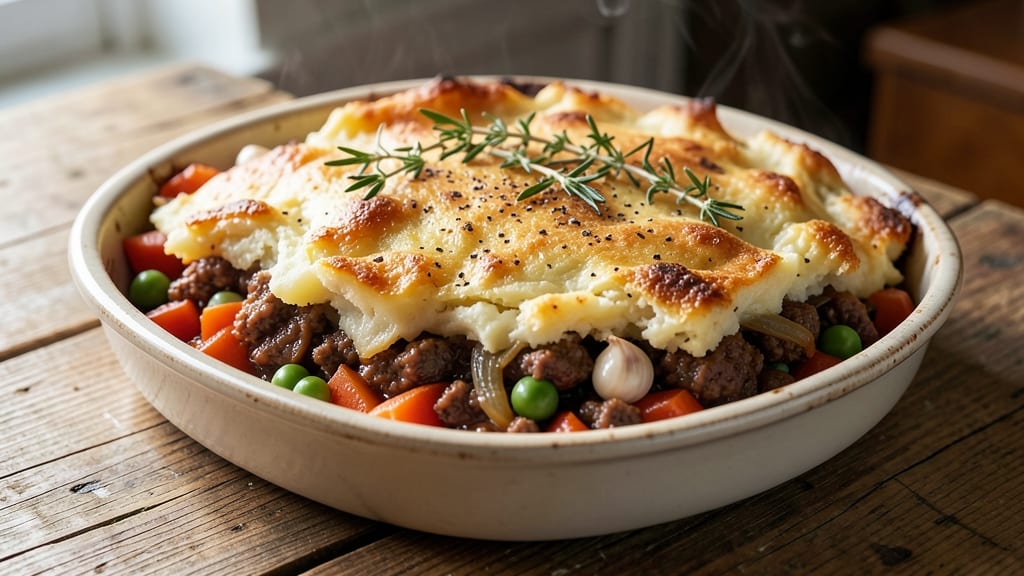
This traditional Irish shepherd's pie recipe delivers all the comfort and heartiness of a classic Irish pub dish—tender ground beef or lamb, savory vegetables, and a cloud of creamy mashed potatoes baked to golden perfection.
The secret lies in slow-cooked meat with aromatic herbs and a potato topping so flaky it practically melts in your mouth. I've perfected this version over years of testing, ensuring every bite captures that authentic Irish warmth without sacrificing modern convenience.
The filling begins with ground beef or lamb (traditionally lamb for authenticity) simmered with onions, carrots, and peas until tender, then bound with rich gravy and seasoned with thyme and rosemary.
The mashed potato topping isn't just creamy—it's light enough to crisp beautifully on top while staying tender underneath, thanks to a precise ratio of butter, milk, and a touch of salt. This isn't your grandmother's heavy casserole; it's a dish that balances tradition with restaurant-quality results.
By the time it emerges from the oven, you'll have a dish that's impossible to resist—golden-brown edges on the potato crust, tender meat and vegetables below, and a flavor so deeply savory it'll have everyone asking for seconds.
The aroma alone will fill your kitchen with the comforting scent of home cooking, proving that traditional Irish dishes can be both nostalgic and impressive. This recipe serves six and pairs beautifully with a crisp green salad or warm crusty bread.
For those looking to adapt, swapping lamb for beef or adding mushrooms to the filling keeps the spirit of shepherd's pie alive while accommodating dietary preferences. The method remains the same: slow-cook the filling, perfect the mashed potatoes, and bake until the topping is irresistibly crispy.
Here's how to bring this classic Irish comfort food to your table with professional results every time.
Ingredients for traditional irish shepherd's pie
Six hearty ingredients for the filling, six for the golden potato topping—simple but unforgettable.
| Ingredient | Amount | Notes |
|---|---|---|
| Ground Beef 🥩 | 1 ½ lb | 80/20 fat ratio preferred |
| Yellow Onions 🧅 | 1 whole | Medium size, diced |
| Carrots 🥕 | 3 whole | Medium size, peeled and chopped |
| Frozen Peas 🌽 | 1 cup | Thawed before adding |
| Garlic Cloves 🧄 | 3 cloves | Minced for depth of flavor |
| Fresh Thyme 🌿 | 1 tbsp | Leaves only, chopped fine |
| Fresh Rosemary 🌿 | 1 tbsp | Leaves only, finely chopped |
| Beef Broth 💧 | 1 cup | Low-sodium preferred |
| All-Purpose Flour 🌾 | 1 tbsp | For thickening gravy |
| Russet Potatoes 🥔 | 2 lb | Starchy variety for best texture |
| Unsalted Butter 🧈 | ½ cup | Cold for flaky topping |
| Whole Milk 🥛 | ½ cup | Full-fat for creaminess |
| Salt 🧂 | 1 tsp | Kosher or sea salt |
| Black Pepper 🌶️ | ½ tsp | Freshly ground preferred |
The ground beef is where the magic starts—80/20 fat ratio gives you that rich, tender texture. Look for packages labeled 'ground beef for stew' at Costco or Whole Foods—they usually have the best quality. Fresh thyme and rosemary make all the difference here; Trader Joe's sells pre-bundled sprigs that work perfectly. The beef broth should be low-sodium—Kraft or Swanson are reliable brands. For the potatoes, Russet or Yukon Gold are ideal—they hold their shape while still becoming creamy. I always buy them a day ahead and let them sit out to dry for better crispiness on top.
No fresh thyme? Dried works at half the amount, but it won't have that same bright aroma. Swapping beef for lamb keeps it authentic—just add 1 extra tbsp of broth since lamb dries out faster. The frozen peas can be swapped for fresh, but thaw them first or they'll make the filling watery. For a vegetarian twist, use lentils or mushrooms instead of beef—just increase the broth by 0.5 cups. The flour is just for thickening; if you're gluten-free, cornstarch works too.
This dish reheats beautifully—best the next day when all the flavors meld together. Store leftovers in the fridge for 4-5 days or freeze for up to 3 months. For make-ahead prep, assemble the pie and refrigerate overnight before baking—it'll be even more flavorful. The potato topping can be made ahead too; just reheat it in the microwave before adding to the filling. Portion into individual containers for easy lunches—trust me, it's a game-changer.
Why You'll Love This Recipe
- One-Pot Magic: I swear by this recipe when I’m too tired to scrub three pots. The beef, onions, and carrots all cook down together in one skillet—no fuss, no stress—while the mashed potato topping just gets tossed on top. (Yes, even on a Tuesday night.)
- Garlic-Kissed Comfort: That moment when you press a garlic clove into the beef as it browns? Absolute game-changer. The sweetness of the carrots and the sharpness of the peas cut through the richness, but it’s the garlic that makes it ridiculously good—like a hug in dish form.
- Leftovers That Don’t Suck: Honestly, this is my secret weapon for busy weeks. The filling holds up perfectly in the fridge, and the mashed potatoes stay creamy when reheated. I’ll take a second helping any day—no sad, dry casserole here.
- Budget Meal, Big Flavor: Ground beef, onions, and frozen peas? Check. Carrots? Always in the crisper. This recipe costs next to nothing but tastes like you slaved over it. Between us, it’s the kind of dish that makes you feel like you’re feeding a crowd without breaking the bank.
Step-by-step instructions for traditional Irish shepherd's pie
Here's how to build the perfect hearty shepherd's pie with a golden, flaky potato crust.
Prepare the Beef and Vegetable Filling
In a large skillet over medium-high heat, brown the 1.5 lb ground beef for 5-6 minutes, breaking it into small pieces with a wooden spoon. This step is crucial—it develops deep flavor through the Maillard reaction. Once browned, drain most of the fat but leave about 1 tablespoon in the pan for cooking.
Add the diced yellow onions and cook for 3 minutes until softened. Stir in the peeled and chopped carrots, minced garlic cloves, fresh thyme, and fresh rosemary. Cook for another 4 minutes until the vegetables are tender but still hold their shape. Pour in the 1 cup beef broth and bring to a simmer, stirring occasionally for 5 minutes to let the flavors meld. Sprinkle the 1 tablespoon all-purpose flour over the mixture and stir well to thicken the sauce. Finally, fold in the thawed frozen peas and season generously with 1 teaspoon salt and 0.5 teaspoon black pepper. Remove from heat and set aside.
Make the Creamy Potato Topping
While the filling simmers, peel and cube the 2 lb russet potatoes, cutting them into 1-inch pieces. Place them in a large pot of cold, salted water and bring to a boil. Cook for 12-15 minutes until fork-tender. Drain well and return the potatoes to the pot.
In a separate bowl, melt the 0.5 cup unsalted butter over low heat. Add the warm potatoes and toss gently to coat. Stir in the 0.5 cup whole milk and mash until the mixture reaches your desired consistency—smooth but still slightly rustic, with a few small lumps for texture. Season lightly with 0.25 teaspoon salt and 0.25 teaspoon black pepper to balance the filling's seasoning. The topping should be thick enough to hold its shape but still spreadable.
Assemble and Bake to Golden Perfection
Preheat your oven to 400°F. Transfer the beef and vegetable filling to a 9x13-inch baking dish and spread it evenly. Spoon the potato topping over the filling, using the back of a spoon to create a slightly textured surface. This helps the topping crisp up beautifully during baking.
Bake for 25-30 minutes until the top is golden brown and the edges are crispy. For extra browning, broil for 1-2 minutes at the end, watching closely to avoid burning. The filling should be bubbling hot, and the potato crust should be firm to the touch. Let it rest for 5 minutes before serving—this allows the juices to redistribute and the crust to set slightly.
Serve with Confidence
Use a sharp knife to cut through the crust into 6 generous portions. The filling should be warm and hearty, while the potato topping remains flaky and golden. Serve immediately with a side of crusty bread or a simple green salad to balance the richness. This traditional shepherd's pie delivers all the comfort of a classic Irish dish with a perfect flaky crust over a savory, well-seasoned filling.
Pro Tips For Making Traditional Irish Shepherd'S Pie
- CRANK THE HEAT FIRST: Brown that ground beef hard and fast—no simmering, no half-measures. I used to cook it on medium and ended up with gray, flavorless crumbles. Now I sear it in two batches over high heat until it’s deep brown, then pull the pan off the heat to finish cooking. That caramelized crust is where all the flavor hides.
- CHOP ONIONS SMALLER THAN YOU THINK: Thin, even slices disappear faster and cook more evenly than big chunks. I learned this after serving a batch where the onions were still slightly crunchy—no one wants that texture in shepherd’s pie. Aim for matchstick-thin strips, and don’t skip the sweat: cook them low and slow until they’re translucent before adding garlic.
- DON’T OVERMIX THE MAShed Potato Topping: Rough texture is better. I used to blend the potatoes until silky smooth, but that makes the pie top too dense and gummy. Instead, mash them just until combined—leave some lumps, mix in butter and milk, then spread it like a thick, uneven blanket. The contrast with the filling makes every bite more interesting.
- ADD PEAS AT THE END: Frozen peas straight from the freezer will turn to mush if cooked too long. Toss them in only after the beef mixture is fully done, then stir just until heated through. If you’re worried about texture, blanch them for 30 seconds first—it’s a tiny effort that keeps them bright green and firm.
Common mistakes when making perfect results
Overcooking the Potatoes
One of the biggest mistakes is boiling the potatoes until they're mushy—this leads to a dense, soggy topping instead of the light, flaky crust you want. I've seen this happen when people rush the cooking time or don't cut them into even 1-inch cubes.
Test for doneness by piercing with a fork—it should slide in easily but still hold its shape. For extra insurance, I always boil mine for 12-15 minutes maximum, then drain immediately and return to the pot to cool slightly before mashing. 🥔
Skipping the Fat Drain
After browning the beef, many people drain ALL the fat from the pan, but leaving about 1 tablespoon makes all the difference. This residual fat helps create a rich foundation for your filling and prevents the vegetables from sticking.
I use a paper towel to blot excess fat from the beef itself, but I never drain the pan completely—this is where the flavor builds. If you're concerned about health, just use leaner beef (90/10 ratio) and leave the same amount of fat in the pan.
Underseasoning the Filling
The filling is where the soul of shepherd's pie lives, and it's easy to underseason it. I've caught myself forgetting to add enough salt or pepper, or worse, skipping the herbs entirely.
The key is to season the filling generously—about 1 teaspoon salt and 0.5 teaspoon black pepper for this recipe. Fresh thyme and rosemary should be chopped finely so their flavors infuse evenly. Taste as you go—if it needs more, add it!
The potato topping shouldn't need much extra seasoning since the filling carries most of the flavor. 🌿
Not Preheating the Dish
Transferring cold filling and topping directly to a cold baking dish can lead to uneven cooking and a soggy bottom. Always preheat your 9x13-inch baking dish in the oven for 5-10 minutes before assembling. This ensures even heat distribution and helps create that perfect golden crust.
I also like to lightly grease the dish with butter or olive oil to prevent sticking—just enough to coat the bottom lightly. This small step makes a huge difference in texture and presentation.
Overmixing the Mashed Potatoes
I've seen people turn their potato topping into glue by overmixing it, and that's a fast track to a dense, heavy crust. The secret is to mash just until smooth with a few small lumps remaining for texture.
Use a potato masher or ricer instead of a food processor to maintain that rustic quality. The lumps will break down slightly during baking while still providing that beautiful flaky texture.
If your topping looks too thick, add 1 tablespoon milk at a time until it's spreadable but still holds its shape. 🧈
Baking at the Wrong Temperature
Setting the oven too high or too low can ruin your shepherd's pie. At 400°F, the topping gets that perfect golden-brown crust while the filling stays warm and bubbly.
If you bake at 375°F, the crust will steam instead of crisp, and at 425°F, it might burn before the filling is done. I always use an oven thermometer to confirm accuracy—many home ovens run 25°F hotter or colder than the set temperature.
For extra insurance, broil for 1-2 minutes at the end to get that restaurant-quality browning without burning.
Nutrition facts
Frequently asked questions about Irish shepherd's pie
Can I make this recipe with lamb instead of beef?
Traditional Irish shepherd's pie often uses lamb, which adds a richer, gamey flavor. If using lamb, increase the beef broth by 0.5 cups since lamb dries out faster. Season with an extra 0.25 teaspoon of rosemary to complement the lamb's natural earthiness. The cooking time remains the same, but check for doneness slightly earlier.
How do I make the potato topping extra crispy?
For a restaurant-style crispy topping, bake the assembled pie at 400°F for 25 minutes, then broil for 1-2 minutes until golden brown. Preheat your baking dish in the oven for 5-10 minutes before adding the filling and topping. This ensures even heat distribution. Brush the potato topping lightly with melted butter before baking for extra crispiness.
Can I prepare this dish ahead of time?
Yes! Assemble the pie completely, cover with foil, and refrigerate for up to 24 hours before baking. This enhances the flavors. For make-ahead baking, let the pie sit at room temperature for 30 minutes before baking to ensure even cooking. Leftovers keep well in the fridge for 4-5 days or can be frozen for up to 3 months.
What can I substitute for frozen peas?
Fresh peas work beautifully—just blanch them in boiling water for 1-2 minutes before adding to the filling. For a meatless version, swap peas for 1 cup cooked lentils or diced mushrooms. If using mushrooms, sauté them with the onions until fully tender. For a classic twist, try corn kernels for a sweet contrast to the savory filling.
Why did my potato topping turn out soggy?
Soggy toppings usually happen when the potatoes are overcooked (beyond 15 minutes) or the filling isn't fully drained. Always boil potatoes until fork-tender but still firm. Press excess moisture from the filling with a paper towel before assembling. For extra insurance, bake the pie at 400°F for 25 minutes before adding the topping to preheat the dish.