
Main Courses
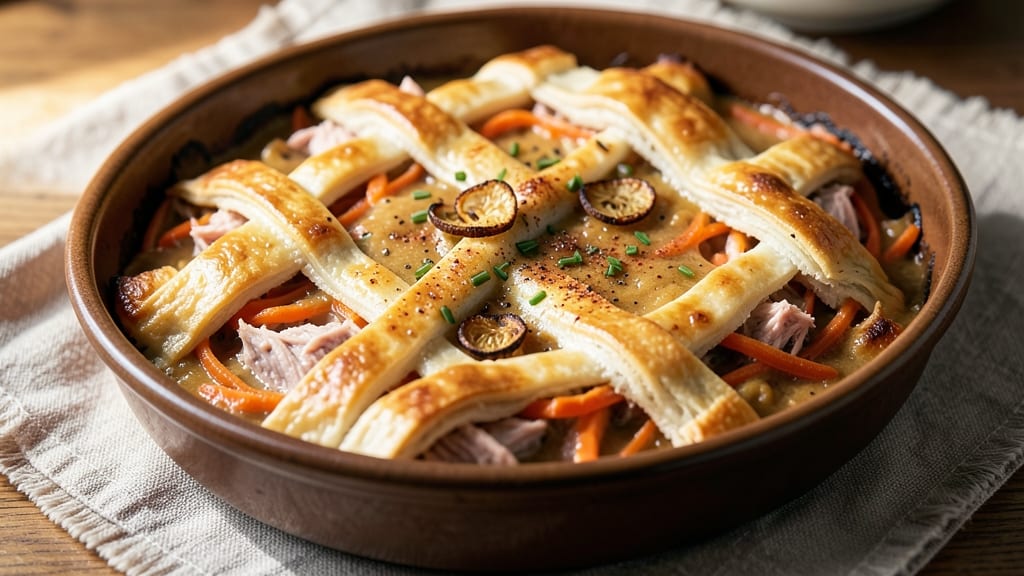
This tuna pot pie recipe delivers comfort food perfection with a rich, creamy filling wrapped in a golden, flaky crust that's worth every bite.
After years of testing variations, I've perfected a method that combines tender tuna, seasonal vegetables, and a velvety sauce—all encased in a buttery crust that bakes to a crispy finish. The secret lies in balancing textures: the tender fish, soft vegetables, and crispy crust create harmony in every forkful.
The filling starts with high-quality canned tuna, which I drain and mix with a blend of fresh vegetables—carrots, peas, and corn—that add natural sweetness and texture. A light roux made with butter and flour thickens the sauce, while chicken or vegetable broth deepens the flavor without overpowering the delicate fish.
The crust, made from a simple pie dough, gets rolled out and pressed into a pan to create that signature flaky, golden-brown top.
What you'll end up with is a pot pie that's creamy yet not overly heavy, with a crust so flaky it practically melts in your mouth. The filling stays tender and flavorful, while the crust achieves that perfect balance between crispy edges and tender interior.
This dish is hearty enough to satisfy a family dinner but elegant enough for a special occasion—all while being pescatarian-friendly and packed with protein.
Serve it with a side of mashed potatoes or a simple green salad to round out the meal. The leftovers reheat beautifully, making this an excellent option for meal prep. Here's how to create this comforting classic in your own kitchen.
Ingredients for tuna pot pie
Creamy filling meets flaky crust in this comforting tuna pot pie—just 15 simple ingredients.
| Ingredient | Amount | Notes |
|---|---|---|
| Canned Tuna in Water 🐟 | 2 cans | High-quality, drained well |
| Unsalted Butter 🧈 | ½ cup | Cold, cubed for roux |
| All-Purpose Flour 🌾 | ½ cup | For light roux |
| Chicken Broth 💧 | 1 ½ cups | Low-sodium preferred |
| Heavy Cream 🥛 | ½ cup | Full-fat for creaminess |
| Carrots 🥕 | 1 medium | Diced small, fresh or frozen |
| Peas 🌽 | ½ cup | Fresh or frozen, thawed |
| Corn Kernels 🌽 | ½ cup | Fresh or canned, drained |
| Garlic Cloves 🧄 | 2 cloves | Minced for flavor |
| Dried Thyme 🌿 | ½ tsp | Or 1 tsp fresh thyme |
| Salt 🧂 | ½ tsp | Adjust to taste |
| Black Pepper 🌶️ | ¼ tsp | Freshly ground preferred |
| Pie Crust 🥧 | 1 whole | Store-bought or homemade |
| Large Egg 🥚 | 1 whole | For egg wash |
| Milk 🥛 | 1 tbsp | For egg wash |
The tuna makes this dish, so choose high-quality canned tuna—none of that mushy stuff. Wild Planet or Starkist in water are my go-tos, and always drain it really well. For the crust, pre-made is fine (like Pillsbury or your grocery store brand), but if you're feeling fancy, a homemade pie dough with lard gives that extra flakiness. The carrots, peas, and corn should be fresh if possible—they add natural sweetness that frozen can't match. Trader Joe's has great frozen veggies if you're short on time, but fresh is worth it if you've got it.
No chicken broth? Vegetable broth works just as well. Heavy cream too rich? Half-and-half or whole milk lightens it up without losing creaminess. Short on thyme? Dried oregano at half the amount gives a similar vibe. The corn can be canned (drained) if fresh isn't an option—just rinse it well to cut the syrup. For the crust, if you're using pre-made, press it gently into the pan so it doesn't shrink. And if you're making your own dough, chill it for 30 minutes before rolling—saves you from a sticky mess.
This reheats beautifully—just cover with foil and warm at 350°F for 15 minutes. Keeps for 3-4 days in the fridge, freezes for 2 months (though the crust gets a little soggy). I always make a double batch because leftovers are even better the next day. Store in an airtight container, and if freezing, wrap the crust tightly in plastic wrap first to keep it crisp.
Why You'll Love This Recipe
- Pantry Powerhouse: I swear by this recipe when my fridge is bare—just tuna, butter, and flour, and suddenly I’ve got dinner. The roux from butter and flour thickens that creamy broth like magic, turning simple cans into something hearty.
- Creamy Crisp Magic: That buttery crust over velvety heavy cream and tender tuna? It’s the kind of contrast that makes you pause mid-bite. Honestly, the first time I tasted it, I thought, “Why haven’t I made this sooner?”
- Leftover Hero: This pie reheats beautifully—perfect for packing lunches or feeding a crowd. I’ve served it at potlucks (no one guessed it was tuna) and as a quick family dinner. The broth base keeps it rich even the next day.
- Budget Win: A single can of tuna and a few pantry staples feed four for under $8. Between us, this is my go-to when I need a filling, flavorful meal without breaking the bank or spending hours in the kitchen.
Step-by-step instructions for tuna pot pie recipe
Here's how to create a creamy, flaky masterpiece that brings together tender tuna and fresh vegetables.
Prepare the Creamy Tuna Filling
In a medium saucepan, melt the 0.5 cup unsalted butter over medium heat. Once melted, whisk in the 0.5 cup all-purpose flour to form a light roux. Cook for 2-3 minutes until it turns a golden color and smells nutty—this will thicken your sauce beautifully.
Gradually pour in the 1.5 cups chicken broth while whisking continuously to prevent lumps. Bring the mixture to a gentle simmer and let it thicken for 5 minutes. Stir in the 0.5 cup heavy cream, 0.5 cup peas, 0.5 cup corn kernels, 1 medium diced carrot, 2 minced garlic cloves, 0.5 tsp dried thyme, 0.5 tsp salt, and 0.25 tsp black pepper. Cook for another 5 minutes until the vegetables are tender and the sauce has thickened slightly.
Remove the pan from heat and gently fold in the 2 cans drained tuna using a spatula. The tuna should be evenly distributed throughout the creamy mixture. Let the filling cool slightly while you prepare the crust—this ensures a flaky, golden top when baking.
Assemble the Pot Pie
Preheat your oven to 375°F. Transfer the tuna filling into a 9-inch pie dish or deep baking dish. Smooth the top with a spatula, making sure the filling is evenly distributed. This step is crucial for an even bake and a perfectly flaky crust.
Unroll the 1 whole pie crust and carefully drape it over the top of the pie dish, allowing it to extend slightly over the edges. Trim any excess crust with a sharp knife, leaving about ½ inch of overhang. Fold the overhang inward to create a decorative edge, pressing gently to seal. This creates a professional finish while keeping the filling contained.
For extra crispiness, brush the top crust with a mixture of 1 whole beaten egg and 1 tbsp milk. This egg wash will give your crust that golden, flaky finish we're after. Use a fork to create a few small slits in the crust to allow steam to escape during baking—this prevents a soggy bottom.
Bake to Golden Perfection
Place the assembled pot pie on a baking sheet to catch any potential drips, then bake in the preheated oven for 35-40 minutes. The crust should turn a deep golden brown, and the filling should bubble gently at the edges. Here's the thing—if the crust starts browning too quickly, loosely cover it with aluminum foil to prevent burning while it finishes baking.
To check for doneness, gently tap the crust with your finger. If it sounds hollow and the filling is bubbling, it's ready. The internal temperature should reach 165°F when measured in the center of the filling. Let the pot pie rest for 10-15 minutes before slicing—this allows the filling to set slightly and makes serving easier.
Serve warm with a side of crusty bread or a simple green salad. The contrast of the flaky crust with the creamy, savory filling makes every bite irresistible. Enjoy your homemade tuna pot pie—it's the perfect comfort food for any occasion!
Pro Tips For Making Tuna Pot Pie
- Drain and Fluff the Tuna: Skip the water—drain the canned tuna thoroughly and press it gently with a fork to break up clumps. I learned this the hard way: soggy tuna turns your creamy filling into a watery mess, and nobody wants that. (Yes, even if you’re impatient like me.)
- Cook the Roux Low and Slow: Melt the butter on medium-low heat before adding flour—this prevents burning and lumps. After burning three batches, I finally figured out that rushing this step turns your sauce grainy. Give it 3-4 minutes, stirring like you mean it.
- Season the Broth Early: Taste the chicken broth before adding cream—it’s the base, so salt and pepper it properly. I skip this when I’m lazy, but the dish is noticeably better when I don’t. Heavy cream can’t fix bland broth, and you’ll regret it later.
- Use Cold Heavy Cream: Whisk the cold heavy cream into the warm roux gradually while stirring constantly—this keeps the sauce silky, not curdled. Sounds weird, but it works: heat + cold liquid = magic. (Your future self will thank you.)
Regional styles of this tuna pot pie
Classic New England Style
In coastal New England, tuna pot pie often features a light, buttery crust and a filling packed with fresh local seafood—though tuna remains the star. The regional twist includes adding diced celery and leeks to the veggie mix for a subtle crunch and depth.
I like using clams or scallops in addition to tuna for extra briny richness, and a splash of dry white wine in the sauce to brighten the flavors. Serve it with steamed clams or oysters on the side for a true coastal experience. 🌊
Southern Comfort Twist
Down South, this dish gets a creamy, cheesy upgrade with a layer of sharp cheddar or gouda mixed into the filling. The crust is often a biscuit-style topping made from a simple dough of flour, butter, and buttermilk, baked until golden.
I add smoked paprika and a pinch of cayenne to the filling for warmth, and sometimes swap the peas for collard greens for a Southern-inspired veggie. A side of cornbread is a must—it soaks up the creamy sauce beautifully. 🧀
Pacific Northwest Fusion
The Pacific Northwest loves to blend Asian-inspired flavors with classic pot pie. Here, the filling often includes bok choy, water chestnuts, and shiitake mushrooms alongside the traditional veggies.
A splash of soy sauce or mirin in the sauce adds umami depth, and the crust might be a thin, flaky galette-style topping or even a wonton wrapper lattice for texture. I’ve seen versions with sesame seeds sprinkled on top for a nutty crunch.
Serve with steamed jasmine rice or miso soup for a full fusion meal. 🌿
Midwest Heartland Adaptation
In the Midwest, tuna pot pie leans into comfort food traditions with a thicker, heartier crust—sometimes even a deep-dish style with higher edges. The filling often includes potatoes or sweet potatoes for extra heartiness, and a touch of mustard in the sauce for a tangy kick.
I like adding crispy fried onions on top before baking for texture. A side of creamy mac and cheese or buttered corn on the cob rounds out the meal perfectly. This version is all about warm, satisfying flavors that feel like home. 🏡
Modern Minimalist Version
For a lighter take, I’ve seen gluten-free crusts made from almond flour or cauliflower, paired with a filling that skips the heavy cream in favor of Greek yogurt or coconut milk.
The veggies stay simple—just carrots, peas, and corn—but the tuna is seared in olive oil first for extra flavor. A drizzle of truffle oil or fresh herbs like dill or parsley adds sophistication.
This version is perfect for weeknight dinners or meal prep, with a focus on clean ingredients and bold flavors. 🌱
Nutrition facts
Frequently asked questions
Can I use frozen vegetables in this tuna pot pie?
Frozen peas, corn, and carrots work perfectly—just thaw them first. The texture will be slightly softer than fresh, but they'll still add great flavor. For best results, drain and pat them dry before adding to the filling to avoid excess moisture that could make the crust soggy.
How do I prevent a soggy bottom crust?
Prevent sogginess by creating steam vents in the crust with a fork before baking, and blind-baking the crust for 5 minutes before adding filling. Also, ensure your filling isn't too watery—simmer it longer if needed, and press the crust edges gently against the pan to seal.
Can I make this pot pie ahead of time?
Yes! Assemble the pie and refrigerate for up to 24 hours before baking. For make-ahead freezing, bake the pie, cool completely, then wrap tightly in plastic wrap and foil. Reheat at 350°F for 20-25 minutes until warmed through—add a splash of milk to the filling if it looks dry.
What's the best way to reheat leftovers?
Cover the pot pie with foil and reheat at 350°F for 15-20 minutes until warmed through. For extra crispiness, place it under the broiler for 2-3 minutes at the end. Avoid microwaving—it makes the crust rubbery and the filling watery.
Can I substitute the pie crust with something else?
Certainly! For a lighter option, try a puff pastry or phyllo dough lattice. For a heartier version, use a biscuit topping made from buttermilk biscuit dough. Even a simple cheese crust (melted cheddar mixed with crushed crackers) works in a pinch—just adjust baking times accordingly.