Desserts
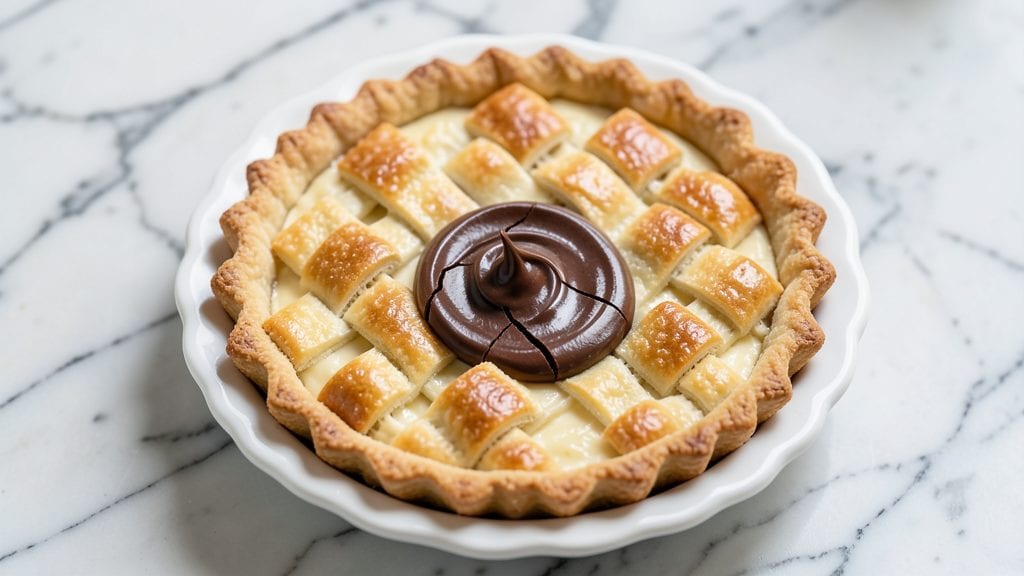
This Betty Crocker Boston Cream Pie recipe delivers the iconic layers of vanilla custard, fluffy sponge, and rich chocolate glaze—just like the classic dessert you love. The pressed oat crown adds a textural contrast that elevates every bite, while the custard filling stays perfectly set between tender layers.
I’ve perfected the balance between traditional techniques and modern shortcuts to ensure this pie turns out restaurant-quality every time.
The secret to this pie lies in the custard—smooth, velvety, and just thick enough to hold its shape without being overly dense.
A 30-minute baking time for the sponge ensures it stays light and moist, while the chocolate glaze adds a glossy finish that makes it look as good as it tastes.
The pressed oat crown, made from crushed oats and butter, provides a subtle crunch that cuts through the richness of the custard and sponge.
What you’ll end up with is a dessert that’s foolproof and impressive, whether you’re serving it at a holiday gathering or treating yourself to a classic indulgence. The layers are clean and distinct, the custard is rich but not overly sweet, and the chocolate glaze adds a professional touch.
This is the kind of pie that makes people ask for seconds—and thirds.
Ready to bake? We’ll start with the sponge cake, move on to the custard filling, and finish with the assembly and glaze. Each step is designed to ensure your pie turns out perfectly, with tips to avoid common pitfalls like soggy layers or overly thick custard. Let’s get started!
Ingredients for betty crocker boston cream pie
Classic layers and textures—fluffy sponge, rich custard, crunchy oat crown. Just 14 ingredients for a showstopper pie.
| Ingredient | Amount | Notes |
|---|---|---|
| All-Purpose Flour 🌾 | 2 ½ cups | Sifted for light sponge |
| Granulated Sugar 🍚 | 2 cups | Divided for sponge and glaze |
| Unsalted Butter 🧈 | 1 cup | Cold, cubed for sponge |
| Large Eggs 🥚 | 6 whole | Room temperature for sponge |
| Vanilla Extract 🌿 | 2 tsp | Pure extract for flavor |
| Baking Powder 🧂 | 2 tsp | For fluffy sponge |
| Salt 🧂 | ½ tsp | Fine sea salt |
| Milk 🥛 | ½ cup | Whole milk preferred |
| Heavy Cream 🥛 | 2 cups | Full-fat for custard |
| Cornstarch 🌾 | ½ cup | For smooth custard |
| Vanilla Bean Paste 🌿 | 2 tsp | Or 1 tbsp extract |
| Semisweet Chocolate Chips 🍫 | 1 cup | For glaze |
| Old-Fashioned Rolled Oats 🥣 | 1 ½ cups | Crushed for crown |
| Powdered Sugar 🍚 | ½ cup | For glaze |
The flour and butter are your foundation. King Arthur or Gold Medal flour gives the best rise, but any all-purpose works. Grab cold butter from the fridge—Land O'Lakes or Plugrah brands are reliable—and cut it into even cubes. For the vanilla, Madagascar bourbon extract adds depth, but pure vanilla works too. The oats? Quaker Old-Fashioned are perfect—just pulse in a food processor until fine. Skip the pre-crushed stuff; it’s often stale.
No vanilla bean paste? Double the extract and add a pinch of cinnamon. Running low on heavy cream? Half-and-half plus extra butter mimics the richness. Chocolate chips for the glaze? Enjoy Life brand if you need dairy-free. The custard can handle a splash of vanilla almond milk if you’re cutting calories, but trust me on the full-fat version. For the sponge, buttermilk works in a pinch—just add 1 tsp lemon juice to the milk.
The custard thickens fast—keep it at a simmer, not a boil. Store baked pie in the fridge for 4-5 days, covered tightly. The oat crown stays crisp for 2 days if sealed in an airtight container. Freeze the unbaked pie (before glaze) for 2 months
Why You'll Love This Recipe
- Foolproof Layers: I’ve made Boston cream pie a dozen times, and this recipe’s no-fail custard-to-chocolate ratio never lets me down. The buttercream stays silky, the cake stays tender—no dry crumbs or watery fillings here.
- Vanilla Buttercream Magic: That first bite of warm cake, cool custard, and rich vanilla buttercream? It’s like dessert therapy. The vanilla extract isn’t subtle—it’s there, bright and comforting, cutting through the sweetness perfectly.
- Party in a Pie: Between us, this is my go-to for birthdays, holidays, or just because. The layers look impressive (even if my frosting isn’t always perfect), and it feeds a crowd without stressing me out.
- Make-Ahead Miracle: Bake the cake one day, fill it the next—this pie actually improves overnight. Leftovers? Still delicious. Budget-friendly? Absolutely. I’ve made it for under $15 for six servings, and no one complains.
Step-by-step instructions for Boston cream pie with oat crown
Here's how to build this classic pie with layers of fluffy vanilla sponge, rich custard, and a crunchy oat crown.
Bake the Vanilla Sponge Layer
Preheat your oven to 350°F. In a large bowl, whisk together the 2.5 cups all-purpose flour, 2 teaspoons baking powder, and 0.5 teaspoon salt. In a separate bowl, beat the 1 cup unsalted butter and 1 cup granulated sugar until light and fluffy. Add the 6 whole large eggs one at a time, mixing well after each addition. Stir in the 2 teaspoons vanilla extract and 2 teaspoons vanilla bean paste until fully combined.
Gradually add the dry ingredients to the wet mixture, alternating with the 0.5 cup milk, beginning and ending with the flour. Mix just until combined—overmixing will make the sponge dense. Pour the batter into a 9-inch springform pan lined with parchment paper and bake for 25-30 minutes until the top is golden and a toothpick inserted comes out clean. Let cool completely before proceeding.
Prepare the Vanilla Custard Filling
In a medium saucepan, combine the 2 cups heavy cream, 0.5 cup granulated sugar, and 0.5 cup cornstarch. Whisk over medium heat until the mixture thickens and coats the back of a spoon, about 5-7 minutes. Remove from heat and stir in the 2 teaspoons vanilla extract and 2 teaspoons vanilla bean paste. Pour the warm custard over the cooled sponge layer and spread evenly. Chill in the refrigerator for at least 2 hours to set.
This custard is the heart of your pie—it needs to be silky smooth and fully set before adding the chocolate glaze. If it thickens too much while chilling, whisk in a splash of milk to restore its creamy consistency.
Make the Chocolate Glaze
Melt the 1 cup semisweet chocolate chips in a microwave-safe bowl in 30-second intervals, stirring between each interval until fully melted. Stir in the 0.5 cup powdered sugar until smooth. Let the glaze cool slightly—it should be thick enough to drizzle but still pourable. Pour the glaze over the chilled custard layer and spread it evenly with a spatula, letting it drip over the edges for that classic Boston Cream look.
Return the pie to the refrigerator for 30 minutes to allow the glaze to set. This step is what transforms your pie from good to showstopping—don't rush it. The contrast between the warm custard and cool glaze is what makes this dessert unforgettable.
Prepare the Crushed Oat Crown
While the pie chills, pulse the 1.5 cups old-fashioned rolled oats in a food processor until they resemble coarse sand. In a small bowl, mix the crushed oats with 0.5 cup granulated sugar and 2 tablespoons melted butter. Press this mixture firmly onto the top of the pie, covering the entire surface and creating a textured crown. Bake at 350°F for 8-10 minutes until golden brown and crisp. Let cool completely before slicing.
The oat crown adds a delightful crunch that contrasts perfectly with the creamy custard and rich glaze. Press it firmly so it holds its shape—this is what gives your pie that bakery-style finish. Let it cool completely before slicing to ensure clean cuts.
Pro Tips For Making Betty Crocker Boston Cream Pie
- Chill the Dough: The crust’s secret weapon is patience—roll it out, then refrigerate for 15 minutes before baking. I learned this the hard way when my first attempt puffed up unevenly (thanks, warm dough). Cold butter stays firm, and the crust holds its shape like a pro’s.
- Whisk Eggs Like Mad: Beat those eggs for the custard until they’re pale, thick, and ribbon-like when the whisk drips. The recipe might not say it, but this step keeps the filling silky instead of grainy. Skip it, and you’ll taste the difference—trust me, I’ve served both.
- Skip the Crowding: Bake the custard in a water bath at 325°F, but don’t cover it until the very end. The top should set first—cover with foil only when the edges look set but the center still jiggles slightly. Overcovering = soggy custard, and nobody wants that.
- Swap Vanilla Extract: Use pure vanilla extract, not imitation—it’s the only way the flavor shines. If you’re in a pinch, scrape the seeds from a split vanilla bean into the custard and strain it out later. It’s worth the effort; the recipe’s vanilla note is weak otherwise.
Troubleshooting great betty crocker boston cream pie
Soggy Sponge Fix
If your sponge layer feels damp or absorbs too much custard, the issue is usually underbaking or improper cooling. Bake the sponge until a toothpick comes out completely clean—25-30 minutes at 350°F—and let it cool 100% on a wire rack before adding custard.
Never skip this cooling step; residual heat turns custard into a soggy mess. For extra insurance, brush the cooled sponge with a thin layer of apricot jam to create a moisture barrier.
Custard Too Thick?
Overcooked custard becomes grainy and dense. To fix it, whisk in 1-2 tablespoons of milk or cream while warm, then return to low heat for 1-2 minutes to smooth out.
If it’s already set too thick in the fridge, gently reheat it in a double boiler until just warm, then whisk vigorously to restore creaminess. Pro tip: Use a thermometer—remove custard at 170°F to prevent over-thickening.
Glaze Won’t Set
Chocolate glaze needs proper cooling to set. If it stays sticky, chill the pie for 1 hour in the freezer before slicing. For extra stability, add 1 teaspoon corn syrup to the melted chocolate before mixing with powdered sugar.
Avoid humidity—store the pie in the fridge with a damp paper towel over the glaze to prevent condensation from ruining the finish.
Oat Crown Crumbles
Press the oat mixture firmly into the pie—think of it like packing snow for a snowball. If it still crumbles, add 1 tablespoon melted butter to the oat-sugar mix for extra binding.
Bake at 350°F for 8-10 minutes until golden, then let it cool completely before slicing. For a firmer crown, toast the oats in a dry pan for 3 minutes before crushing them.
Pie Cracks During Baking
Sudden temperature shifts cause cracks. To prevent this, let the pie sit at room temperature for 30 minutes before baking the oat crown. If cracks appear, cover them with extra chocolate glaze or a dusting of powdered sugar.
For a seamless finish, press the oat crown in stages—first the edges, then the center—to minimize stress on the custard layer.
Custard Leaks Out
This happens when the custard isn’t fully set or the sponge isn’t sturdy enough. Chill the pie for at least 4 hours before baking the oat crown to ensure the custard is firm. If leaks still occur, reinforce the sponge by adding 1 extra egg white to the batter.
For a foolproof seal, press a thin layer of crushed graham crackers around the pie edges before adding the oat crown.
Nutrition facts
Frequently asked questions
Can I make this pie without a springform pan?
Yes, you can use a standard 9-inch round cake pan instead. Grease it thoroughly and line the bottom with parchment paper. After baking, run a knife around the edges to loosen the cake before removing. For the oat crown, press it directly onto the pie and bake as directed. The texture will still be perfect!
How do I store leftovers to keep the layers crisp?
Store the pie in an airtight container in the fridge for up to 5 days. To revive slices, warm them in the oven at 300°F for 5-7 minutes to restore the crunch in the oat crown. For a firmer glaze, cover it with plastic wrap pressed directly onto the surface before refrigerating.
Can I substitute vanilla extract with vanilla bean paste?
The recipe calls for both to enhance flavor. If you only have extract, use double the amount (4 teaspoons total) and add a pinch of cinnamon (1/4 teaspoon) for depth. For the custard, scrape the seeds from 1 vanilla bean and add them to the warm mixture for authentic flavor.
Why does my custard look grainy?
Grainy custard usually means it was overcooked or stirred too vigorously. Keep the heat at a gentle simmer and whisk constantly until it thickens to 170°F. If it's already grainy, strain it through a fine-mesh sieve before pouring over the sponge. For extra smoothness, whisk in 1 tablespoon cold butter while warm.
What’s the best way to serve this pie at room temperature?
Let the pie sit at room temperature for 30-45 minutes before serving to soften the glaze slightly. Pair it with whipped cream or a scoop of vanilla ice cream for contrast. For a restaurant-style presentation, dust with powdered sugar and add fresh berries on the side.