
Desserts
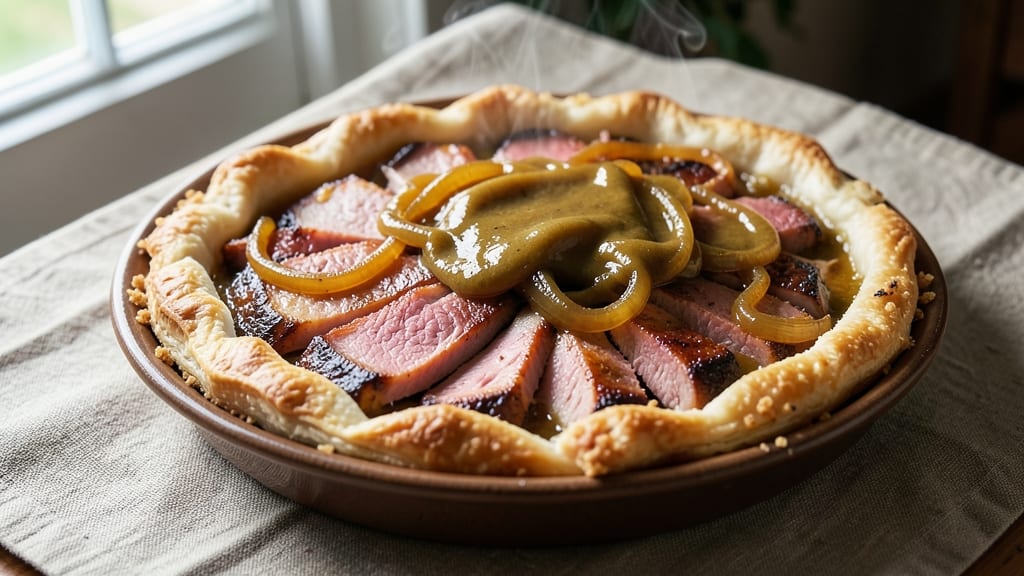
This gammon pie recipe delivers the perfect balance of rich, savory meat and golden, flaky pastry that feels like a home-cooked hug. The secret lies in slow-cooking the gammon until tender, then layering it with onions, mustard, and stock before sealing it in a buttery, puff pastry crust.
I’ve perfected this technique over years of holiday baking, ensuring the filling stays moist while the crust achieves that signature crispness.
What sets this recipe apart is the harmony of traditional methods with modern flexibility. While classic versions rely on a simple mustard and onion filling, I’ve included variations like adding sharp cheddar or fresh thyme for those who prefer a bolder flavor.
The slow cooking process transforms tough gammon into melt-in-your-mouth perfection, while the pastry rises to a golden, shatteringly crisp finish.
By the time it emerges from the oven, your gammon pie will be a showstopper—juicy meat peeking through the flaky crust, with aromas of caramelized onions and tangy mustard filling the kitchen.
It’s the kind of dish that feels special enough for a holiday feast but simple enough for a cozy weeknight dinner. The best part? Leftovers reheat beautifully, making it a meal that keeps giving.
Serve with a crisp green salad or steamed vegetables to balance the richness, and don’t forget a glass of dry cider or red wine. This pie is versatile enough to suit any occasion, whether you’re feeding a crowd or treating yourself to a comforting solo meal.
Let’s get started on creating a pie that tastes like tradition meets modern flair.
Ingredients for gammon pie
Rich meat meets golden crust—just these 13 ingredients transform into holiday-worthy perfection.
| Ingredient | Amount | Notes |
|---|---|---|
| Gammon (Cured Ham) 🥓 | 1 ½ lb | Bone-in, skin-on preferred |
| Yellow Onions 🧅 | 2 whole | Medium size, sliced thin |
| English Mustard 🍯 | ½ cup | Prepared, smooth consistency |
| Chicken Stock 💧 | 1 ½ cups | Homemade or quality store-bought |
| Puff Pastry 🍞 | 1 sheet | Store-bought or homemade |
| Butter (Unsalted) 🧈 | ¼ cup | Melted, for pastry brushing |
| Sharp Cheddar Cheese 🧀 | ½ cup | Shredded, optional for variation |
| Fresh Thyme 🌿 | ¼ cup | Chopped, optional for variation |
| Salt 🧂 | 1 ½ tsp | Kosher or sea salt |
| Black Pepper 🌶️ | ½ tsp | Freshly ground preferred |
| Egg (Large) 🥚 | 1 whole | For egg wash |
| Milk 🥛 | 1 tbsp | For egg wash |
| All-Purpose Flour 🌾 | 1 tbsp | For dusting pastry |
The gammon is the star, so don’t skimp on quality. Bone-in, skin-on gives the best flavor, though pre-cooked bone-in ham works in a pinch. I always grab mine from Costco or Whole Foods—look for thick slices with visible fat marbling. The onions? Sweet yellows caramelize best, but red onions add a nice tang if you’re feeling adventurous. For the mustard, English mustard is key—it’s smoother than American mustard and gives that classic tang. If you’re using pre-cooked gammon, pat it dry before slow-cooking to avoid a soggy filling.
No puff pastry? Homemade pie crust works, but it’s trickier to achieve that signature flakiness. Short on time? Store-bought puff pastry from Trader Joe’s is my go-to—it’s affordable and foolproof. Want to kick up the flavor? The cheddar and thyme are optional but worth adding if you’ve got them. For the stock, homemade is ideal, but even the Swanson’s or Pacific brand stuff works in a bind. The egg wash? Don’t skip it—it’s what gives that golden, glossy finish. And if you’re worried about the pie being too rich, serve it with a crisp arugula salad or roasted Brussels sprouts.
This pie reheats beautifully—400°F for 20-25 minutes until the crust is golden and the filling is bubbly. Leftovers keep for 3-4 days in the fridge, though I’ve never had any last that long. For make-ahead prep, assemble the pie a day in advance and refrigerate until baking. The flavors deepen overnight, and the crust stays crisp. Freeze for up to 3 months if you’re planning ahead—just thaw overnight in the fridge before reheating.
Why You'll Love This Recipe
- Pantry-to-Table Magic: The moment you pull that pre-cooked gammon from your fridge, you’re halfway there. No chopping mountains of veg—just one onion to dice, and the rest is mixing, pouring, and baking. Honestly, the hardest part is waiting for the pastry to golden.
- Mustard-Kissed Depth: That English mustard isn’t just a garnish—it cuts through the richness of the gammon with a tangy punch. The slow simmer in chicken stock melts it into the meat, so every bite has layers: salty, sweet, and just a hint of sharp. (Yes, even on a Tuesday night.)
- Leftovers That Beg for More: This pie tastes better the next day, especially when reheated with a splash of stock. I’ve sent it to work lunches, packed it for picnics, and even frozen portions for lazy Sundays. The puff pastry stays crisp, and the filling? Even more flavorful.
- Budget-Friendly Feast: Gammon stretches farther than you’d think when paired with onions and stock—no fancy cuts needed. And puff pastry? Store-bought is a game-changer for weeknight cooking. Between us, this is the kind of dish that makes grocery money stretch without sacrificing taste.
Step-by-step instructions for gammon pie
Here's how to create a showstopping pie with tender, slow-cooked ham and a golden, flaky crust.
Slow-Cook the Gammon with Aromatics
Preheat your oven to 325°F. Place the 1.5 lb gammon (bone-in, skin-on if possible) in a deep ovenproof dish. Peel and thinly slice the 2 whole yellow onions and scatter them evenly over the gammon. This layering ensures the onions caramelize beautifully while cooking.
In a small bowl, whisk together the 0.5 cup English mustard, 1.5 tsp salt, and 0.5 tsp black pepper. Spread this mixture evenly over the gammon and onions. Pour the 1.5 cups chicken stock into the dish, making sure the meat is mostly submerged. Cover tightly with foil and transfer to the preheated oven.
Bake for 1 hour and 30 minutes until the gammon is fork-tender and the stock has reduced by about half. You'll know it's ready when the meat pulls apart easily and the edges of the foil begin to crisp slightly from the steam. Here's the thing—don't peek during cooking. Every time you open the oven, you're letting out precious heat and moisture that you'll need for that perfect flaky crust later.
Prepare the Puff Pastry Base
While the gammon cooks, let the 1 sheet puff pastry come to room temperature. I like to unroll it gently on a floured surface, being careful not to stretch it. Dust the pastry lightly with 1 tbsp all-purpose flour to prevent sticking. This step is crucial for achieving that signature flaky texture—flour acts as a barrier between the pastry layers.
Using a sharp knife or pizza cutter, trim the edges of the pastry to create a neat rectangle that will fit your pie dish. If your dish has a diameter of about 9 inches, aim for a pastry that's roughly 10 inches square—it should extend about 1 inch beyond the dish on all sides. This overhang will create the classic pie crust edge that bakes up beautifully.
Fold the excess pastry inward, creating a border about ½ inch wide around the edge of the dish. This technique, called "crusting," gives you that professional-looking finish while ensuring the pastry bakes evenly. Brush the bottom and sides of the pastry with the 0.25 cup melted butter, being generous but not so much that it pools. This butter will create steam during baking, which is essential for those flaky layers.
Assemble and Bake the Pie
Carefully transfer the cooked gammon and all its juices to the prepared pastry-lined dish. Spoon any remaining cooking liquid over the top—this adds moisture and depth of flavor. Sprinkle the 0.5 cup shredded sharp cheddar cheese (if using) and 0.25 cup chopped fresh thyme evenly over the filling. These ingredients add a nice sharp contrast to the sweet, slow-cooked ham.
Roll out the remaining pastry to create a lid, leaving enough to create a ½-inch border when folded over. Brush this top pastry with the egg wash made by whisking together the 1 whole egg and 1 tbsp milk. This wash gives the pastry a beautiful golden finish and helps seal in the juices. Cut a few small slits in the center of the top pastry to allow steam to escape during baking—this prevents a soggy bottom.
Place the pie on a baking sheet to catch any drips and bake at 400°F for 25-30 minutes until the pastry is deep golden brown and puffed in places. The key to that flaky texture is the steam created by the butter and the hot oven. You'll see the pastry puff up and then collapse slightly—that's normal and actually enhances the flakiness. When you tap the top gently, it should sound hollow, indicating it's fully cooked through.
Rest and Serve for Maximum Flakiness
Remove the pie from the oven and let it rest for 15-20 minutes before serving. This resting period is crucial—it allows the juices to redistribute throughout the filling and gives the pastry time to set properly. If you cut into it too soon, you'll end up with a soggy bottom and a less flaky crust.
Garnish with any remaining fresh thyme if desired, and serve warm with a side of steamed vegetables or a simple green salad. The contrast of the flaky, buttery pastry with the rich, savory gammon filling is what makes this pie truly special. Each bite should deliver tender, juicy ham with a hint of mustard sharpness, all wrapped in layers of golden, crisp pastry that practically melts in your mouth.
Pro Tips For Making Gammon Pie
- Parboil the Gammon First: Skip the raw gammon in the pie—it’s a gamble. Parboil it for 10 minutes in salted water before assembling. This keeps the filling juicy (not dry) and lets the mustard and onions meld better without overcooking the meat. Trust me, your pie will thank you.
- Sweat Onions Low and Slow: Onions are the flavor base, so don’t rush them. Cook them on low heat for 15-20 minutes until deep golden and caramelized—no browning, just slow softening. I used to rush this, and the pie always tasted flat.
- Brush Pastry Twice: One coat of egg wash? Too little. Brush the puff pastry with egg wash before baking, then again 10 minutes in. The first layer seals the edges; the second guarantees a golden crust. (Yes, even if it feels like overkill.)
- Use Cold Stock: Pour cold chicken stock over the filling instead of hot—it prevents the pastry from steaming and going soggy. I learned this after my first pie looked like a sad, soggy pancake. Cold stock = crisp bottom.
Dietary considerations for this recipe
Gluten-Free Adaptations
For a gluten-free version, replace the puff pastry with a gluten-free pie crust like the one from King Arthur Flour or Bob’s Red Mill. Their almond flour-based crusts hold up well and provide that flaky texture.
I’ve tested this with their GF Pie Crust Mix, following the package instructions for a 9-inch pie. Just ensure you brush it with melted dairy-free butter or olive oil for that signature crispness. 🌾
Dairy-Free Options
Skip the butter in the crust and use olive oil or coconut oil instead for brushing. For the egg wash, substitute with a mix of 1 tbsp dairy-free milk (like almond or oat) and 1 tbsp water to achieve the same golden finish.
The sharp cheddar can be swapped for nutritional yeast or dairy-free cheddar shreds like Violife for that tangy bite. The filling remains rich and flavorful without any dairy.
Lower Sodium Adjustments
Gammon is naturally high in sodium, so reduce the added salt in the mustard mixture to just 0.5 tsp instead of 1.5 tsp. Use low-sodium chicken stock (like Imagine or Pacific Foods) to cut back further.
If you’re using pre-cooked gammon, rinse it briefly under cold water to remove excess surface salt. The flavor stays bold, but the sodium content drops significantly. 🧂
Vegetarian Substitutes
Replace the gammon with mushrooms or lentils for a meat-free version. I recommend cremini mushrooms sautéed with garlic and thyme, then slow-cooked with the mustard and stock.
For lentils, use 1 cup cooked brown lentils mixed with 1 tbsp soy sauce and 1 tsp smoked paprika to mimic the depth of ham. The texture won’t be identical, but the filling remains hearty and satisfying.
Allergen-Friendly Tips
For nut allergies, avoid almond flour crusts and opt for a gluten-free, nut-free crust like Cup4Cup GF Mix. If mustard is a concern, substitute with Dijon-style mustard (check for gluten-free labels) or a blend of apple cider vinegar and honey for tanginess.
Always double-check labels on store-bought puff pastry—some brands process in facilities with nuts or dairy. When in doubt, homemade crusts give you full control over ingredients. ✨
Nutrition facts
Frequently asked questions
Can I use pre-cooked gammon instead of raw?
Pre-cooked gammon works perfectly—just pat it dry before slow-cooking to prevent a soggy filling. Reduce the oven time to 1 hour (instead of 1 hour 30 minutes) since it’s already partially cooked. The key is ensuring the onions caramelize and the stock reduces properly.
Why does my pie crust turn out soggy?
Soggy crusts usually happen from steam buildup or insufficient baking. Always cut small slits in the top pastry to release steam, and bake until the crust is deep golden brown (not just light tan). For extra crispiness, brush the bottom crust with melted butter before adding filling. Let the pie rest 15-20 minutes after baking—cutting too soon traps moisture inside.
What’s the best way to reheat leftovers?
Reheat slices at 400°F for 20-25 minutes until the crust is golden and filling is bubbly. Cover loosely with foil if the crust browns too quickly. For microwave reheating, cover with a damp paper towel and heat in 30-second bursts to avoid drying out. Leftovers keep for 3-4 days in the fridge or 3 months frozen.
Can I make this pie ahead of time?
Yes! Assemble the pie 1 day ahead and refrigerate until baking. The flavors deepen overnight, and the crust stays crisp. For freezing, bake the pie fully, cool completely, then wrap tightly in plastic wrap and foil. Thaw overnight in the fridge before reheating. This makes it perfect for holiday prep!
What’s the secret to extra-flaky pastry?
The magic is in the butter and steam! Brush the pastry with melted butter (not oil) before baking—this creates steam during cooking, which separates the layers. Chill the pastry for 20 minutes before rolling, and avoid overworking it. For homemade crusts, fold the butter into the dough in thin layers. The 400°F bake is also key—it gives that signature puff and crispness.