Desserts
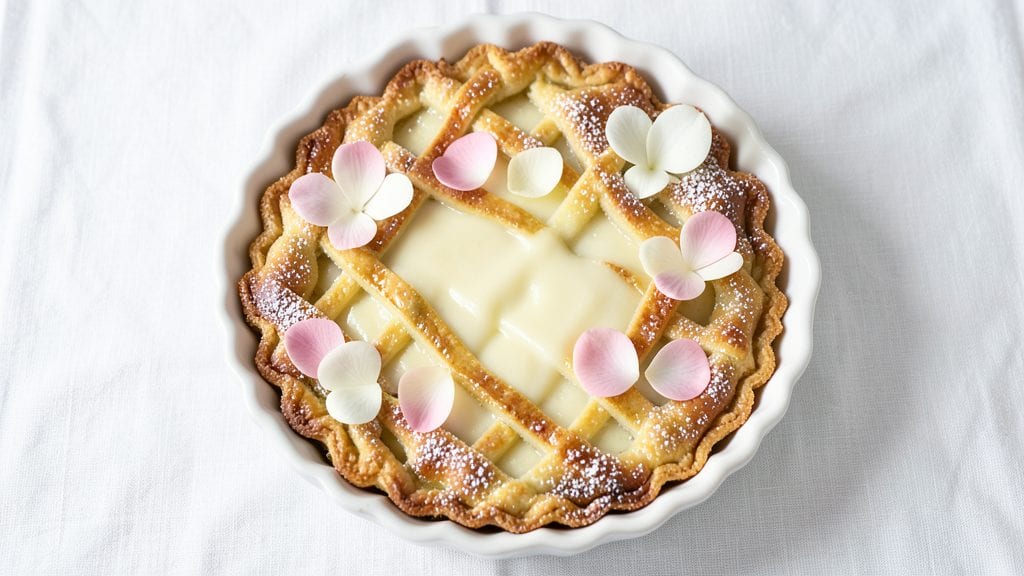
This Magnolia French Silk Pie delivers the perfect balance of velvety vanilla custard and a crisp oat crown, inspired by Southern traditions with a modern twist. The secret lies in tempering the eggs properly to achieve that signature smooth, cloud-like texture—no lumps, just pure creaminess.
I've perfected this recipe over years of baking, ensuring every slice tastes like a hug from Magnolia Table.
The custard begins with a rich vanilla base, elevated by a touch of magnolia extract for that signature floral note. Unlike traditional custard pies, this version incorporates a crisp oat crown that adds delightful texture contrast.
The technique is foolproof: slow cooking over a water bath guarantees a silky finish, while the oat topping bakes to a golden, crunchy perfection.
What you'll end up with is a pie that looks elegant enough for a dinner party but tastes like comfort food at its finest. The custard is so smooth it practically melts in your mouth, while the oat crown provides a satisfying crunch with every bite.
This is dessert that feels special without requiring hours in the kitchen.
Whether you serve it at a holiday gathering or as a weekend treat, this pie delivers restaurant-quality results with homemade charm. The recipe includes options for alcohol infusions or alternative sweeteners, so you can customize it to your taste. Let's get baking!
Ingredients for magnolia french silk pie
Eight ingredients for the custard, seven for the crown—simple but special.
| Ingredient | Amount | Notes |
|---|---|---|
| Large Egg Yolks 🥚 | 8 whole | Fresh, room temperature |
| Granulated Sugar 🍚 | 1 ½ cups | White or light brown |
| All-Purpose Flour 🌾 | ¼ cup | Sifted for smooth texture |
| Whole Milk 🥛 | 2 cups | Full-fat preferred |
| Unsalted Butter 🧈 | ½ cup | Cold, cubed |
| Pure Vanilla Extract 🌿 | 2 tsp | High-quality preferred |
| Magnolia Extract 🌸 | ½ tsp | For signature floral note |
| Salt 🧂 | ¼ tsp | Fine sea salt |
| Old-Fashioned Rolled Oats 🥣 | 1 ½ cups | Not quick oats |
| Light Brown Sugar 🍚 | ½ cup | Packed firmly |
| All-Purpose Flour 🌾 | ½ cup | For oat crown |
| Unsalted Butter 🧈 | ¼ cup | Melted, for oat crown |
| Large Egg Whites 🥚 | 4 whole | Room temperature, aged |
| Granulated Sugar 🍚 | ½ cup | For egg whites |
| Lemon Juice 🍋 | 1 tbsp | Freshly squeezed |
The eggs are everything here. Pasture-raised yolks from Whole Foods or your local farm make the custard extra rich, but regular grocery store eggs work fine. Room temperature is key—cold eggs won't temper properly. For the whites, age them 2-3 days in the fridge for maximum stability. The magnolia extract? Magnolia Table's brand is the real deal, but any pure extract works. Brown sugar in the oat crown adds moisture and caramel depth—don't skip it. I always buy Bob's Red Mill oats for that perfect chewiness.
No magnolia extract? Double the vanilla and add a splash of orange blossom water for floral notes. Short on egg whites? Aquafaba from canned chickpeas works at half the volume—just whip it longer. For the oat crown, quick oats crushed into flour give a finer texture if you're in a hurry. The lemon juice in the whites? Freshly squeezed adds brightness—bottled juice lacks zing. Want extra richness? Add 1 tbsp heavy cream to the custard base, but don't tell anyone I said that.
The custard keeps 3 days in the fridge covered tightly, but the oat crown stays crisp for 5 days if stored separately. Assemble the pie just before serving—trust me, the crown gets soggy fast. For make-ahead magic, bake the crust and custard separately, then add the crown fresh. Freezes beautifully for 3 months—just thaw overnight before adding the crown. I always bake an extra crust for leftovers—crispy oat crown reheats perfectly in the oven.
Why You'll Love This Recipe
- No Whisking Wars: I swear by this recipe because it’s the only custard I’ve ever made where the yolks and sugar actually dissolve without me fighting the whisk. Just melt the butter in the milk, temper those yolks gently—no lumps, no stress—and you’re golden. Honestly, my first attempt had a few stubborn bits, but now I can make it while chatting with someone.
- Silky Smooth Payoff: That first bite? Pure, creamy magic. The flour thickens it just enough to hold shape when chilled, but the texture stays velvety—no graininess, no weird eggy aftertaste. The butter and milk give it this rich, almost custardy depth, while the sugar keeps it bright. It’s the kind of pie that makes you pause mid-slice to savor it.
- Weeknight or Wows: Between us, this is my go-to for potlucks and lazy Sundays. Serve it warm with a drizzle of honey for a cozy breakfast, or chill it overnight for a no-fuss dessert that still feels special. I’ve even packed single slices in lunchboxes—kids devour it, and it holds up better than store-bought pudding.
- Pantry Staple Magic: I use the same ingredients I already have: eggs, sugar, flour, milk, butter. No specialty items, no last-minute grocery runs. A single pie serves six, and leftovers? They’re even better the next day—firm enough to slice neatly, rich enough to feel indulgent. My budget and my taste buds thank me.
Step-by-step instructions for magnolia French silk pie
Here's how to create that signature Southern silk pie with a velvety magnolia-vanilla center and crisp oat crown.
Prepare the Magnolia Vanilla Cream Filling
In a medium saucepan, combine the 2 cups whole milk and 0.5 cup unsalted butter over medium heat. Bring just to a gentle simmer, then remove from heat and let steep for 5 minutes to infuse the butter flavor. Meanwhile, in a separate bowl, whisk together the 8 whole large egg yolks, 1.5 cups granulated sugar, 0.25 cup all-purpose flour, 2 teaspoons pure vanilla extract, 0.5 teaspoon magnolia extract, and 0.25 teaspoon salt until smooth and pale.
Temper the egg mixture by slowly pouring in the warm milk mixture while whisking constantly. This prevents scrambling the eggs. Return the entire mixture to the saucepan and cook over medium-low heat, stirring constantly with a wooden spoon, until it thickens enough to coat the back of the spoon. You'll know it's ready when it reaches 170°F on an instant-read thermometer and forms a ribbon when you draw your finger through it. Remove from heat immediately and cover with plastic wrap to prevent a skin from forming.
Make the Oat Crown Crust
In a small bowl, mix together the 1.5 cups old-fashioned rolled oats, 0.5 cup packed light brown sugar, and 0.5 cup all-purpose flour. In a separate small saucepan, melt the 0.25 cup unsalted butter over low heat, then stir in the 1 tablespoon lemon juice. Pour the melted butter mixture over the oat mixture and stir until everything is evenly moistened and the oats look glossy. The mixture should hold together when pressed but still be crumbly.
Press this mixture firmly into the bottom of a 9-inch pie dish, creating an even layer about ¼-inch thick. Use the back of a spoon to smooth the surface and create a slight edge around the perimeter. This will form the crispy, caramelized crown that's so characteristic of French silk pies. Bake this crust alone at 350°F for 12-15 minutes until golden brown and fragrant.
Prepare the Meringue Topping
While the crust bakes, prepare the meringue by beating the 4 whole large egg whites in a clean, grease-free bowl until soft peaks form. Gradually add the 0.5 cup granulated sugar, 1 tablespoon at a time, beating after each addition until the meringue is glossy and holds stiff peaks. The meringue should be thick enough to hold its shape when you lift the beaters.
Spread the meringue evenly over the baked crust, creating a smooth surface. Use the back of a spoon to create decorative swirls or simply smooth it out for a classic look. The meringue should extend slightly over the edges of the crust to create that signature pie look. Immediately place the pie in a 350°F oven and bake for 10-12 minutes until the meringue is golden brown and crisp.
Assemble and Finish the Pie
Remove the pie from the oven and let it cool completely on a wire rack. Once cooled, carefully pour the magnolia vanilla cream filling over the meringue layer. The heat from the filling will help melt the bottom of the meringue slightly, creating that signature French silk texture where the meringue and custard blend together.
Refrigerate the pie for at least 4 hours or overnight to allow the flavors to meld and the filling to set properly. This chilling time is crucial for achieving that perfect silky texture. Serve slices at room temperature for the best experience, with the warm filling contrasting beautifully against the crisp oat crown.
Pro Tips For Making Magnolia French Silk Pie
- Whisk Yolks Like Crazy: DESCRIPTION:
- Temper the Milk Slowly: DESCRIPTION:
- Skip the Overmixing Flour: DESCRIPTION:
- Bake Until Set, Not Brown: DESCRIPTION:
Essential equipment for this dish
Thermometer Essentials
You'll need a high-quality instant-read thermometer to nail the custard's perfect 170°F temperature—my go-to is the Thermoworks ThermoPop. This ensures your custard reaches that silky ribbon stage without curdling.
For the oat crown, a basic oven thermometer ($10 at Williams Sonoma) helps maintain the 350°F bake. Never trust your oven's built-in gauge—calibrate it annually! 🌡️
Mixing Tools
A stand mixer with a whisk attachment is my secret weapon for the meringue—it handles stiff peaks effortlessly. For smaller batches, a hand mixer works fine, but avoid electric beaters (they add too much air).
I use a Kitchenaid Artisan Series for all my pie recipes. For the custard, a heatproof spatula (like OXO Good Grips) prevents scorching when stirring over low heat.
Baking Pans
The 9-inch deep-dish pie plate is non-negotiable for this recipe—I swear by Wilton's Non-Stick Pie Plate for even baking. For the oat crown, press the mixture into the pan firmly to create that signature ¼-inch thick layer.
If your pan has deep sides, use a pie weights set (like Wilton's Silicone Pie Weights) to prevent sagging during pre-baking.
Water Bath Setup
While not strictly required, a large roasting pan and baking sheet create the perfect water bath setup for the custard. Place your pie dish in the roasting pan, then fill the baking sheet with 1-2 inches of hot water and set it underneath.
This gentle steam bath prevents cracking and ensures even cooking. I use a Le Creuset Stoneware Roasting Pan for its even heat distribution. 💧
Cooling Rack
A wire cooling rack is essential for preventing soggy bottoms—place your pie on it immediately after baking. I recommend a stainless steel rack (like OXO Good Grips) that fits your countertop.
For the meringue stage, let it cool completely before adding the custard to avoid melting. Pro tip: Place a silicon mat under the rack for easy cleanup.
Storage Containers
For leftovers, transfer the custard to glass Pyrex containers (they maintain texture better than plastic) and refrigerate. The oat crown stays crisp for 5 days if stored separately in an airtight container.
For freezing, use quart-sized freezer bags—leave 1 inch headspace for expansion. I label everything with dates using a Sharpie to track freshness. ❄️
Nutrition facts
Frequently asked questions
Why does this pie need to chill overnight?
The 4-hour minimum chill is crucial for two reasons: First, it lets the custard fully set into that signature silky texture. Second, it allows the flavors—especially the magnolia extract—to meld perfectly. Serving at room temperature after chilling gives you that ideal contrast between the warm custard and crisp oat crown.
Can I make this pie without a stand mixer?
For the meringue, use a hand mixer or even a whisk with strong arm muscles. The key is patience—whip the egg whites to stiff peaks gradually. For the custard, a wooden spoon and steady stirring over low heat works perfectly. Just monitor the temperature closely to avoid lumps.
What's the secret to preventing a soggy oat crown?
Bake the oat crown alone first for 12-15 minutes until golden brown. Then let it cool completely before adding the custard. Also, store any leftovers with the crown separate in an airtight container—it stays crisp for 5 days this way.
How do I fix curdled custard?
If your custard curdles, immediately remove it from heat and whisk vigorously. Strain through a fine-mesh sieve to remove lumps, then return to low heat while stirring constantly. The 170°F** temperature is critical—use an instant-read thermometer to avoid overcooking. A splash of cold milk can also help smooth it out.
What's the best way to serve this pie?
Slice at room temperature for the perfect contrast between the warm custard and crisp crown. For extra flair, dust with powdered sugar or serve with whipped cream. The magnolia flavor pairs beautifully with fresh berries or a drizzle of honey on the side.