
Desserts
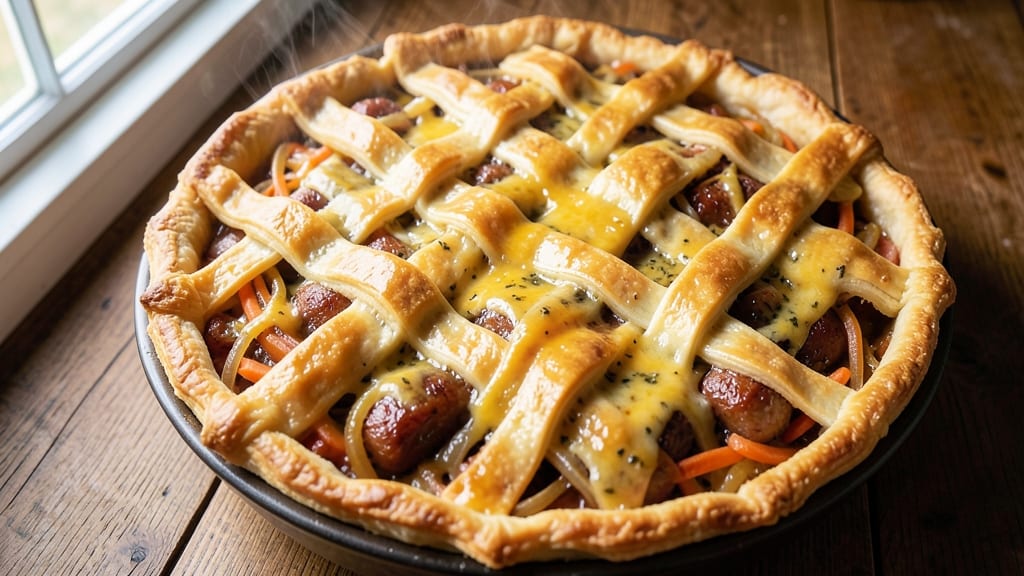
This sausage pie recipe delivers the perfect balance of flaky pastry and hearty meat filling that tastes like a home-cooked hug. The secret lies in a precise pie crust method—using cold butter and minimal handling—that creates layers so delicate they practically melt in your mouth.
I first mastered this technique during a particularly chilly British winter, when the aroma of baking pies filled the air and neighbors would gather around the oven door.
The filling is where the magic happens: tender sausage, caramelized onions, and a rich gravy that binds everything together. What makes this recipe special is how the pastry maintains its crisp edges while staying tender underneath, creating that satisfying contrast with each bite.
The process is straightforward but requires patience—letting the dough rest properly ensures that flaky texture we all crave.
By the time you pull this pie from the oven, golden and steaming, you'll have a dish that's perfect for family dinners or holiday gatherings. The aroma alone will have everyone gathering around, and the first bite delivers that perfect harmony of savory filling and buttery crust.
This is comfort food at its finest, and it's the kind of recipe that gets passed down through generations.
Pair it with a simple green salad or crusty bread to soak up every last drop of that savory gravy. The beauty of this recipe is its versatility—it works as a main course or even as a hearty appetizer when sliced into smaller portions. Let's get baking!
Ingredients for sausage pie
Fourteen ingredients. One unforgettable pie. The secret's in the cold butter and caramelized onions.
| Ingredient | Amount | Notes |
|---|---|---|
| All-Purpose Flour 🌾 | 3 ½ cups | Sifted for flaky layers |
| Cold Unsalted Butter 🧈 | 1 cup | Cut into small cubes |
| Ice Water 💧 | ½ cup | For dough elasticity |
| Kosher Salt 🧂 | 1 tsp | For dough and filling |
| Ground Black Pepper 🌶️ | ½ tsp | Freshly cracked |
| Cheddar Cheese 🧀 | 1 cup | Shredded, sharp variety |
| Yellow Onions 🧅 | 1 ½ cups | Finely chopped, caramelized |
| Pork Sausage 🥓 | 1 lb | Sweet or mild variety |
| Beef Gravy 🍲 | 1 ½ cups | Homemade or quality store-bought |
| Fresh Parsley 🌿 | ¼ cup | Chopped, for garnish |
| Egg 🥚 | 1 whole | For egg wash |
| Milk 🥛 | 1 tbsp | For egg wash |
| Garlic Cloves 🧄 | 2 cloves | Minced for filling |
The cold butter is non-negotiable—it creates those dreamy layers. Grab European-style butter if you can (Plugrá or Kerrygold are my go-tos), but regular unsalted works too. The flour should be all-purpose, not cake flour—it's got the protein for that flaky texture. King Arthur or Gold Medal are reliable brands. For the sausage, Johnsonville or Bob Evans are solid choices, but any good-quality pork sausage will do. The onions? Sweet yellows caramelize best—skip the red unless you want color over flavor. Pre-chopped is fine, but fresh is always better if you've got time.
No cold butter? Freeze your butter for 20 minutes—it'll work in a pinch. Short on time? Pre-made pie crust from Pepperidge Farm is a lifesaver (just blind-bake it first). The gravy can be homemade (beef stock + cornstarch) or store-bought—Annie's or Hormel are decent. For the cheese, sharp cheddar is a must, but Gruyère or Gouda add depth. The parsley? Fresh is ideal, but dried works at one-third the amount. No parsley? Skip it—this pie is still delicious without it.
Assemble the pie up to 24 hours ahead—it keeps beautifully in the fridge. The filling reheats well, but the crust gets best when fresh from the oven. For leftovers, 3-4 days in the fridge or freeze for 3 months. I always make a double batch—one for dinner, one for lunch the next day. The aroma alone will have your whole house gathering around, and that's a good thing.
Why You'll Love This Recipe
- No-Fuss Dough: The crust comes together in minutes—just flour, butter, ice water, and a pinch of salt. No rolling pins, no stress, just a handful of cold butter cut into dry flour until it’s crumbly and ready to press into a pan. (Yes, even my 10-year-old can handle it.)
- Savory Crisp Magic: That golden crust hides a flaky, buttery secret—thanks to cold butter and ice water. The contrast between the crispy top and tender sausage filling? It’s the kind of texture combo that makes you slow down and savor every bite.
- Weeknight Workhorse: Packed with protein and carbs, this pie reheats like a dream for lunches or dinner leftovers. I’ve sent it to work with my husband, and he’s always back for seconds—no complaints, just empty plates.
- Budget-Friendly Feast: A few pounds of sausage, basic pantry staples, and you’ve got a meal that feeds four for under $15. Honestly, it’s the kind of recipe that makes me feel like I’m winning at life without even trying.
Step-by-step instructions for sausage pies recipe
Here's how to create those irresistible sausage pies with layers so flaky they'll disappear in seconds.
Make the Perfect Pastry Dough
In a large mixing bowl, combine the 3.5 cups all-purpose flour and 1 tsp kosher salt. Cut in the 1 cup cold unsalted butter using a pastry cutter or your fingers until the mixture resembles coarse crumbs with pea-sized butter pieces remaining. This texture is crucial for achieving that signature flaky texture.
Gradually add the 0.5 cup ice water, 1 tbsp at a time, mixing gently with a fork until the dough just comes together. Avoid overworking it—just until it forms a shaggy mass. Wrap the dough tightly in plastic wrap and refrigerate for at least 1 hour. This chilling step is non-negotiable; it prevents the butter from melting during baking and ensures those beautiful flaky layers.
Prepare the Savory Filling
In a large skillet over medium heat, brown the 1 lb pork sausage, breaking it into crumbles as it cooks. Once browned, remove the sausage with a slotted spoon and set aside. In the same skillet, add the 1.5 cups finely chopped yellow onions and cook until softened and translucent, about 5 minutes.
Add the 2 minced garlic cloves and cook for another 30 seconds until fragrant. Pour in the 1.5 cups beef gravy and stir to combine. Return the sausage to the skillet and bring everything to a gentle simmer. Remove from heat and stir in the 1 cup shredded cheddar cheese and 0.5 tsp ground black pepper until the cheese is fully melted and the mixture is smooth.
Assemble the Pies
Preheat your oven to 375°F. On a lightly floured surface, roll out about half of the chilled dough to 1/8-inch thickness. Cut circles slightly larger than your pie dish using a round cutter or glass. Place these circles in your pie dishes, pressing gently to form the bottom crust.
Fill each crust with about 1/4 of the sausage mixture, mounding it slightly in the center. Roll out the remaining dough and cut additional circles for the tops. Brush the edges of the bottom crusts with the egg wash (1 whole egg beaten with 1 tbsp milk) and place the top crusts on, pressing the edges together to seal. Use a fork to crimp the edges and create decorative slits on top for steam to escape.
Bake to Golden Perfection
Place the assembled pies on a baking sheet and brush the tops with the remaining egg wash. Bake for 25-30 minutes until the crusts are golden brown and the filling is bubbling through the slits. The pies are done when they're deep golden and the internal temperature reaches 165°F.
Remove from the oven and let them rest for 5 minutes before serving. This resting time allows the filling to set slightly and makes slicing easier. Garnish with the 0.25 cup chopped fresh parsley just before serving to add a pop of color and freshness. These pies are best enjoyed warm when the crust is at its crispiest and the filling is still steaming hot.
Pro Tips For Making Sausage Pie
- Chill the Butter First: Pop that unsalted butter in the fridge for 15-20 minutes before cutting it into the flour—no, don’t skip this. I used to rush it and ended up with a tough crust that tasted more like cardboard than pastry. Cold butter makes flaky layers, and that’s the thing that matters most when you’re covering sausage filling.
- Salt the Dough Twice: Sprinkle half the kosher salt into the flour mix, then add the rest to the ice water. Sounds weird, but it works: the first layer seasons the dough evenly, while the second balances the acidity from the water. I learned this the hard way after a pie tasted bland despite my best efforts.
- Don’t Overfill the Crust: Leave at least a 1-inch border empty around the edge—yes, even if it looks like you’re wasting dough. Overstuffing causes the crust to crack or puff unevenly when baking, and nobody wants a pie that looks like it’s been through a war. Trust me, the extra space is worth it.
- Blind-Bake the Crust: Cover the raw crust with parchment paper and fill it with pie weights or dried beans before baking. This prevents soggy bottoms when the sausage filling steams later. I was skeptical until I tried it—now I blind-bake every time, and the crust stays crisp even after hours in the oven.
Troubleshooting this recipe
Crust Too Tough
If your crust turns out tough instead of flaky, it’s usually from overworking the dough or using warm butter. I’ve made this mistake more times than I’d admit—especially when I’m eager to get baking! The fix? Keep everything cold and handle the dough minimally.
Use your fingers to gently mix the cold butter into the flour until it resembles coarse crumbs, not a smooth paste. Also, avoid rolling the dough more than necessary—just enough to fit your pie dish.
If you’ve already made the dough, try adding a thin layer of applesauce between the crust and filling to add moisture during baking. 💡
Filling Too Dry
A dry filling can happen if the gravy reduces too much or the cheese absorbs too much moisture. To prevent this, simmer the gravy gently and add a splash of milk or broth if it gets too thick.
I like to keep the filling slightly saucy—it should coat the back of a spoon but still hold its shape. If your filling is already dry, try adding a tablespoon of heavy cream or a bit of melted butter to loosen it up before assembling.
The key is balance: the filling should be moist enough to stay cohesive but not so wet that it makes the crust soggy.
Sausage Not Cooked Through
Undercooked sausage is a common issue, especially if you’re baking at too low a temperature or not giving the pies enough time. Always brown the sausage thoroughly before mixing it into the filling—this ensures it’s fully cooked and safe to eat.
When baking, check the internal temperature of the filling with a meat thermometer; it should reach 165°F. If your pies are coming out undercooked, increase the oven temperature to 390°F for the last 5-10 minutes of baking to give them a final boost. 🔥
Filling Leaking
Leaky pies are usually a sign of overfilling or insufficient egg wash sealing the crust. To fix this, don’t overfill—the sausage mixture should be mounded slightly in the center but not overflowing.
Press the edges of the top and bottom crusts together firmly to create a good seal, then crimp them with a fork to lock in the filling. If you’re still having issues, try brushing the edges with a thin layer of egg wash before sealing the top crust.
This creates an extra barrier to keep the filling contained.
Crust Not Browning
A pale crust can be frustrating, especially when you’re craving that golden, flaky finish. The most likely culprits are not enough egg wash or an oven that’s too cool. Brush the crust with egg wash generously—don’t skimp!
If your oven runs hot or cold, try placing a baking sheet on the lower rack while your pies bake; this reflects heat upward for even browning. For an extra crisp edge, sprinkle coarse sugar or poppy seeds on the crust before baking—it caramelizes beautifully and adds texture. 🌟
Preventing Common Mistakes
Most pie disasters can be avoided with a few simple steps. Chill your dough for at least 1 hour before rolling—this keeps the butter cold and ensures flaky layers. Preheat your oven thoroughly and use a light-colored baking sheet to distribute heat evenly.
If you’re short on time, blind-bake the crust for 10 minutes before adding the filling to prevent a soggy bottom. And always rest the pies for 5 minutes after baking—this lets the filling set and makes slicing a breeze. Trust me, these small adjustments make all the difference! ⚡
Nutrition facts
Frequently asked questions about sausage pies
Can I use store-bought pie crust instead of homemade?
For convenience, use a high-quality pre-made crust like Pepperidge Farm or Pillsbury. Just blind-bake it for 10 minutes at 375°F before adding filling to prevent a soggy bottom. The texture won't be quite as flaky, but it's still delicious and saves time.
What type of sausage works best in this recipe?
Pork sausage is traditional, but you can also use Italian sausage for extra flavor. Avoid pre-cooked sausages—they release too much moisture. For a twist, try mild or spicy pork sausage, or even chicken sausage for a lighter option. Always brown the sausage thoroughly before mixing it into the filling.
How do I make individual sausage pies?
Use 4-inch round pie molds or small ramekins. Scale the recipe down proportionally—about 1/4 cup filling per mini pie. Roll out the dough to 1/16-inch thickness for delicate crusts. Bake at 375°F for 18-22 minutes, checking for golden brown edges. These are perfect for appetizers or lunchboxes!
Can I freeze sausage pies?
Yes! Assemble the pies, bake them, then let cool completely. Wrap each pie tightly in plastic wrap followed by aluminum foil. They'll keep in the freezer for up to 3 months. Reheat in a 350°F oven for 20-25 minutes or until warmed through. The crust may lose some crispness but still tastes amazing.
What’s the best way to reheat leftover sausage pies?
For best results, reheat in a 350°F oven for 10-15 minutes covered with foil to keep the crust from drying out. Alternatively, warm in a skillet over medium-low heat for 3-4 minutes per side. Microwaving works in a pinch, but the crust gets rubbery. Always reheat until piping hot to kill any bacteria.